
Why Profitability Matters More Than Revenue Growth
In business, revenue growth often captures the spotlight. It is the metric highlighted in press releases, investor presentations, and market updates. Yet experienced executives, investors, and business owners understand an important truth: revenue alone does not create sustainable value.
Profitability does.
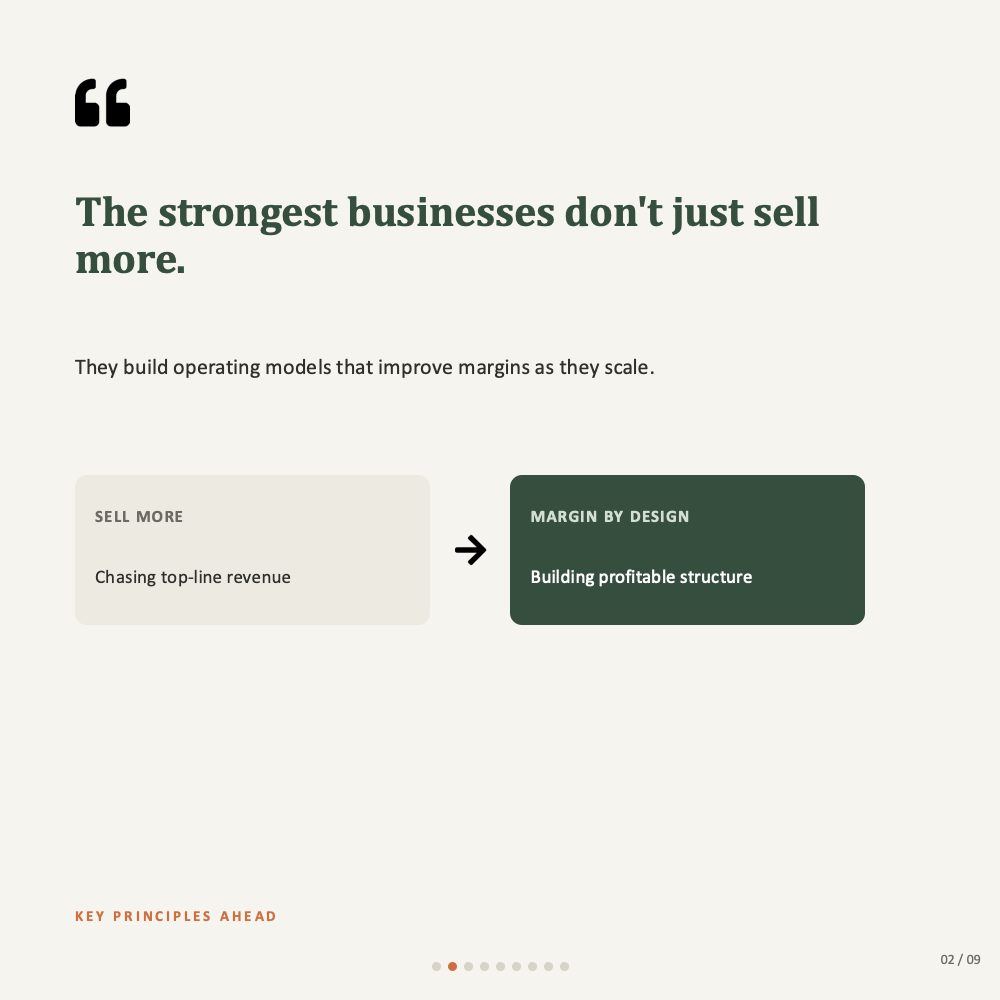
The most successful organizations are not simply those that generate the highest sales. They are the businesses that build operating models capable of producing stronger margins as they grow. They understand that scaling revenue without maintaining profitability can create complexity, strain resources, and ultimately reduce enterprise value.
A high-margin business model is not achieved by chance. It is the result of deliberate strategic choices, disciplined financial management, and a commitment to operational excellence.
The Difference Between Growth and Value Creation
Many companies pursue growth aggressively, believing that increased sales will naturally lead to stronger financial performance. While growth is important, it can become a dangerous objective when pursued without understanding its impact on profitability.
Not all revenue is created equal.
Some customers require extensive support, custom solutions, or significant discounts that reduce profitability. Certain products or services generate impressive top-line numbers but consume disproportionate amounts of time, labor, and resources. In these situations, revenue may increase while margins remain stagnant or even decline.
True value creation occurs when a business can grow revenue while simultaneously expanding profitability. This is what separates high-performing organizations from those that remain trapped in a cycle of constant sales activity without meaningful financial gains.
The most effective leaders focus not only on how much revenue their business generates but also on how much value that revenue contributes to the bottom line.
Focus on Your Most Profitable Customers and Services
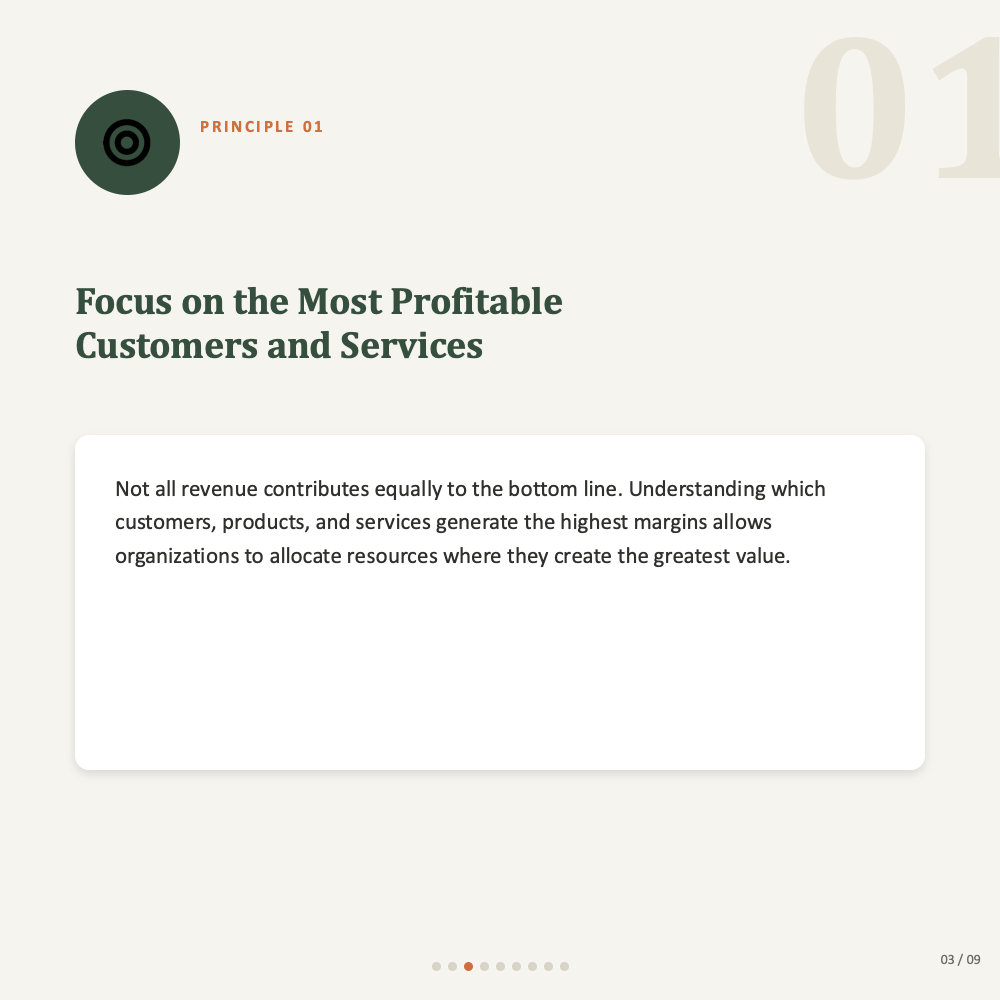
One of the most powerful ways to improve margins is to identify and prioritize the customers, products, and services that generate the greatest profit.
Many organizations discover that a relatively small percentage of their customer base contributes the majority of their profits. At the same time, certain accounts may consume extensive resources while delivering minimal returns.
Executive teams should regularly analyze:
- Customer profitability
- Product and service margins
- Resource utilization
- Cost-to-serve metrics
- Customer lifetime value
These insights often reveal opportunities to invest more heavily in high-value relationships while reevaluating offerings that dilute profitability.
A strategic growth plan should be built around attracting customers and delivering services that align with the organization’s most profitable capabilities.
Reduce Operational Complexity
Complexity is one of the most common barriers to sustainable profitability.
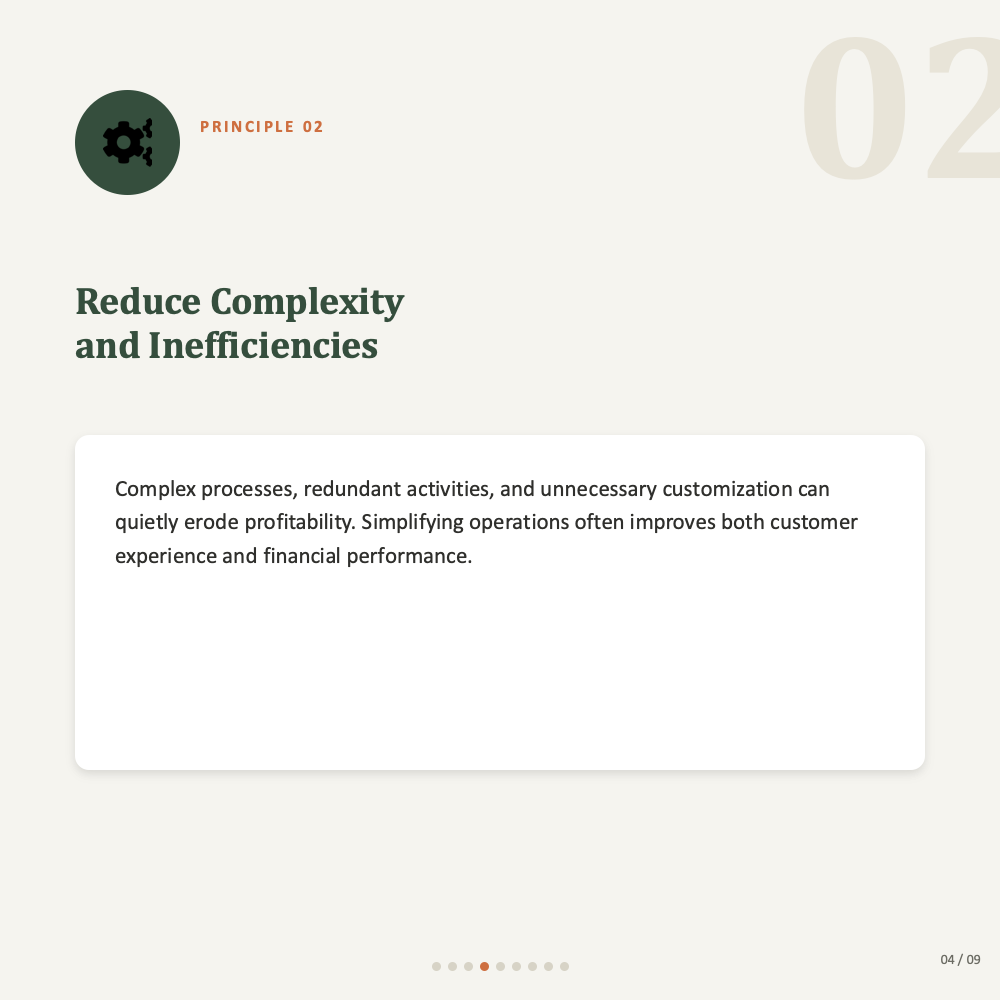
As organizations grow, they often introduce new products, custom service offerings, unique processes, and additional layers of administration. While each change may seem beneficial individually, the collective impact can significantly increase costs and reduce operational efficiency.
High-margin businesses continuously evaluate their operations to identify unnecessary complexity.
This may include:
- Streamlining service offerings
- Standardizing workflows
- Eliminating redundant processes
- Consolidating technology platforms
- Simplifying reporting structures
The goal is not merely cost reduction. It is creating an organization that can operate more efficiently while maintaining quality and customer satisfaction.
Businesses that simplify operations often discover they can scale faster with fewer resources, resulting in stronger margins and improved financial performance.
Use Financial Insights to Understand True Profitability
Strong financial reporting is not simply an accounting requirement. It is a strategic tool.
Many business leaders review revenue and overall profitability but lack detailed visibility into what is actually driving financial performance. Without accurate insights, decision-making becomes partially based on assumptions rather than facts.
Advanced financial analysis provides clarity on:
- Gross profit by product or service
- Customer profitability
- Departmental performance
- Cost drivers
- Margin trends over time
These insights allow leaders to make informed decisions regarding pricing, resource allocation, investments, and growth initiatives.
Organizations that understand the economics behind their operations are better positioned to optimize profitability and avoid investments that generate activity without adequate returns.
Financial intelligence transforms accounting data into strategic advantage.
Automate and Standardize for Scalable Growth
As businesses expand, manual processes become increasingly expensive and difficult to manage.
High-margin organizations recognize that sustainable growth requires systems capable of supporting larger volumes without proportional increases in costs.
Automation and standardization provide that leverage.
Whether through workflow automation, cloud-based accounting systems, customer relationship management platforms, or standardized operating procedures, technology can significantly improve efficiency while reducing the risk of errors.
Benefits include:
- Lower administrative costs
- Faster decision-making
- Improved consistency
- Better customer experiences
- Increased scalability
The objective is not to replace human expertise but to allow employees to focus on higher-value activities that contribute directly to growth and profitability.
Businesses that successfully automate key processes often achieve stronger margins because incremental revenue can be generated without equivalent increases in overhead.
Make Decisions Based on Margins, Not Revenue
One of the most common mistakes businesses make is evaluating success primarily through revenue growth.
Revenue is important, but margins reveal the true health of a business.
When evaluating new opportunities, leaders should ask:
- Will this improve profitability?
- Does this align with our most profitable services?
- Can we deliver this efficiently?
- What impact will this have on operating margins?
- Does it increase enterprise value?
These questions shift the focus from short-term sales results to long-term financial performance.
High-margin organizations create decision-making frameworks that prioritize profitable growth rather than growth at any cost.
As a result, they build stronger businesses that are more resilient, more scalable, and ultimately more valuable.
The Competitive Advantage of Profitability
In uncertain economic environments, profitability becomes a powerful competitive advantage.
Organizations with strong margins have greater flexibility to invest in innovation, talent, technology, and strategic growth initiatives. They can withstand market fluctuations more effectively and are better positioned to capitalize on opportunities when competitors face financial constraints.
Profitability also enhances business valuation, improves cash flow, and provides leadership teams with greater strategic freedom.
The most successful companies recognize that profitability is not a byproduct of growth. It is a deliberate outcome of strategic execution.
Final Thoughts
Revenue growth may attract attention, but profitability creates lasting value.
A high-margin business model is built through focus, discipline, and a deep understanding of the financial drivers behind performance. By concentrating on the most profitable customers and services, reducing complexity, leveraging financial insights, automating operations, and making margin-focused decisions, organizations can create a foundation for sustainable success.
Growth without profitability is simply activity.
Growth supported by strong margins is strategy.
The question every business leader should ask is not, “How fast are we growing?” but rather, “How much profitable value are we creating?”
That distinction often determines the difference between businesses that merely grow and businesses that truly thrive.