
What every Ontario business owner should know before their next HST filing
Most small business owners don’t get into trouble with HST because they’re dishonest. They get into trouble because nobody explained it in plain English.
HST isn’t complicated once you understand a few basic ideas. Owner-operators are busy running the business, and the rules get learned the hard way: through a surprise bill, a penalty, or a letter from the CRA.
After years of working with Ontario business owners, we see the same five slip-ups again and again. Each one is easy to fix once you know it’s there. Here they are, with a simple fix for each.
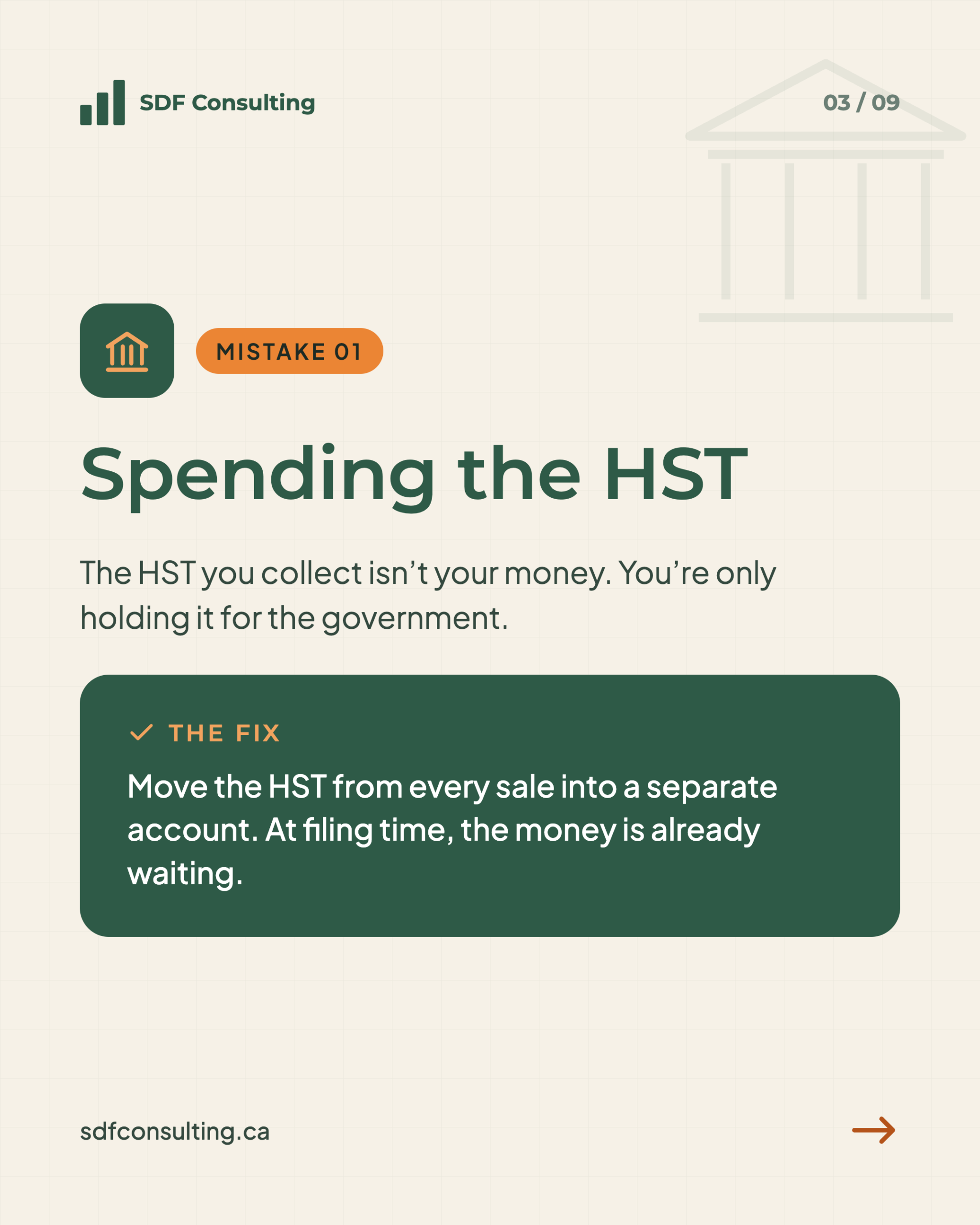
1. Treating the HST you collect as your money
The HST you charge customers was never yours. The CRA treats it as money you hold in trust for the government until you file and pay it over.
The trouble starts when that HST lands in your main business account. It mixes with everything else, it looks like revenue, and it gets spent on payroll, rent or inventory. Then the filing deadline arrives, and the money that should be there isn’t.
The fix: Open a separate savings account just for HST. Each time you deposit a sale, move the HST portion into it. In Ontario, that’s 13% on most sales. When filing time comes, the money is already waiting, and the bill is no longer a surprise.
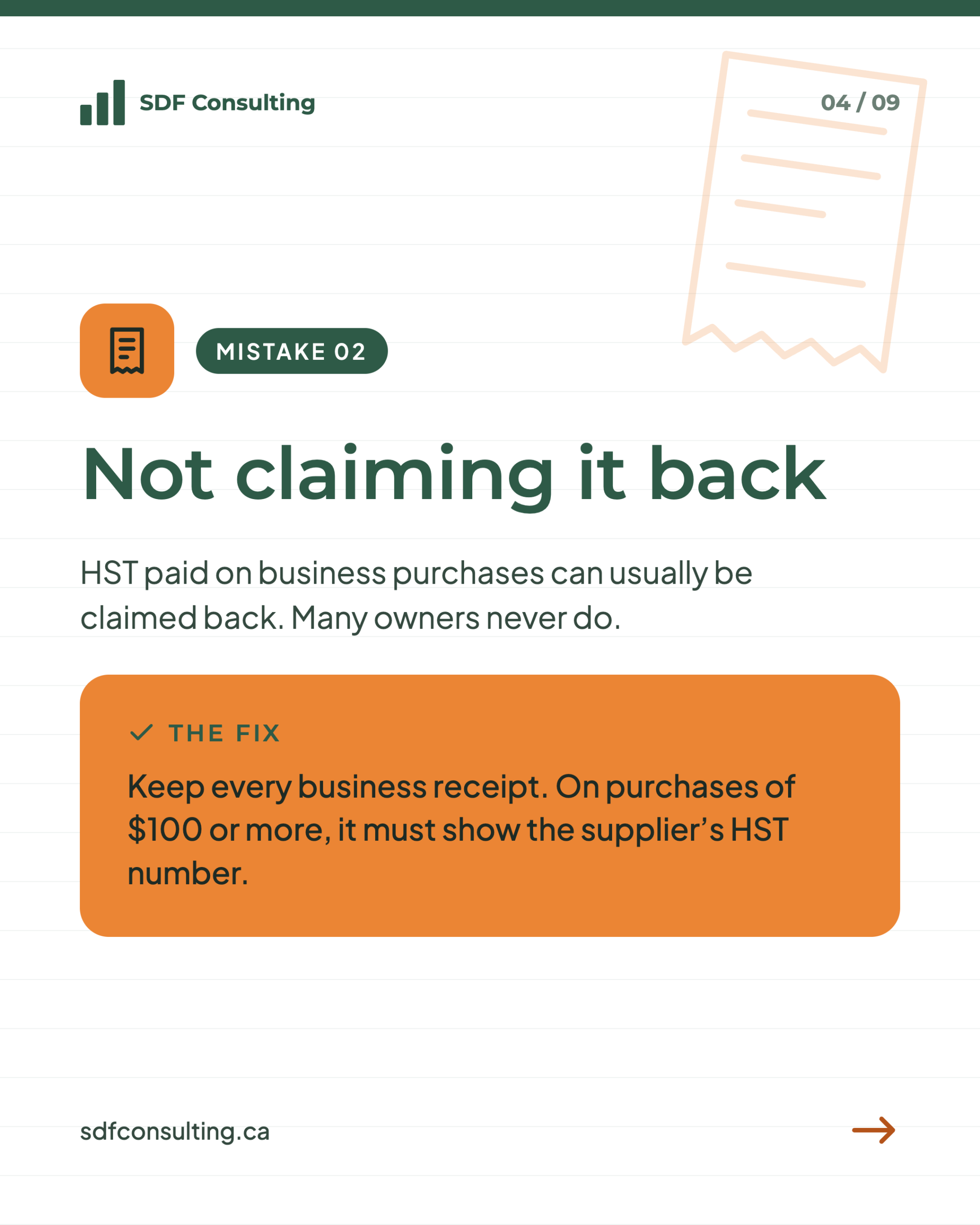
2. Leaving money on the table
The HST you pay on business purchases can usually be claimed back. Supplies, equipment, software, your business phone, professional fees: the HST on all of these reduces what you owe. These claims are called input tax credits, or ITCs.
Many owners never claim them, or only claim some. Usually it’s because the receipts are missing, or nobody connected the purchase to the HST return. That’s real money handed back to the government for no reason.
The fix: Keep every business receipt and invoice, ideally scanned or photographed the day you get it. Check what’s on them, because the CRA’s rules depend on the size of the purchase:
- Under $100: the supplier’s name, the date and the total paid.
- $100 to $499.99: all of the above, plus the supplier’s GST/HST registration number and the tax charged.
- $500 or more: all of the above, plus your business name, the payment terms and a description of what you bought.
Without the right paperwork, the CRA can deny the credit in an audit.
3. Claiming what you shouldn’t
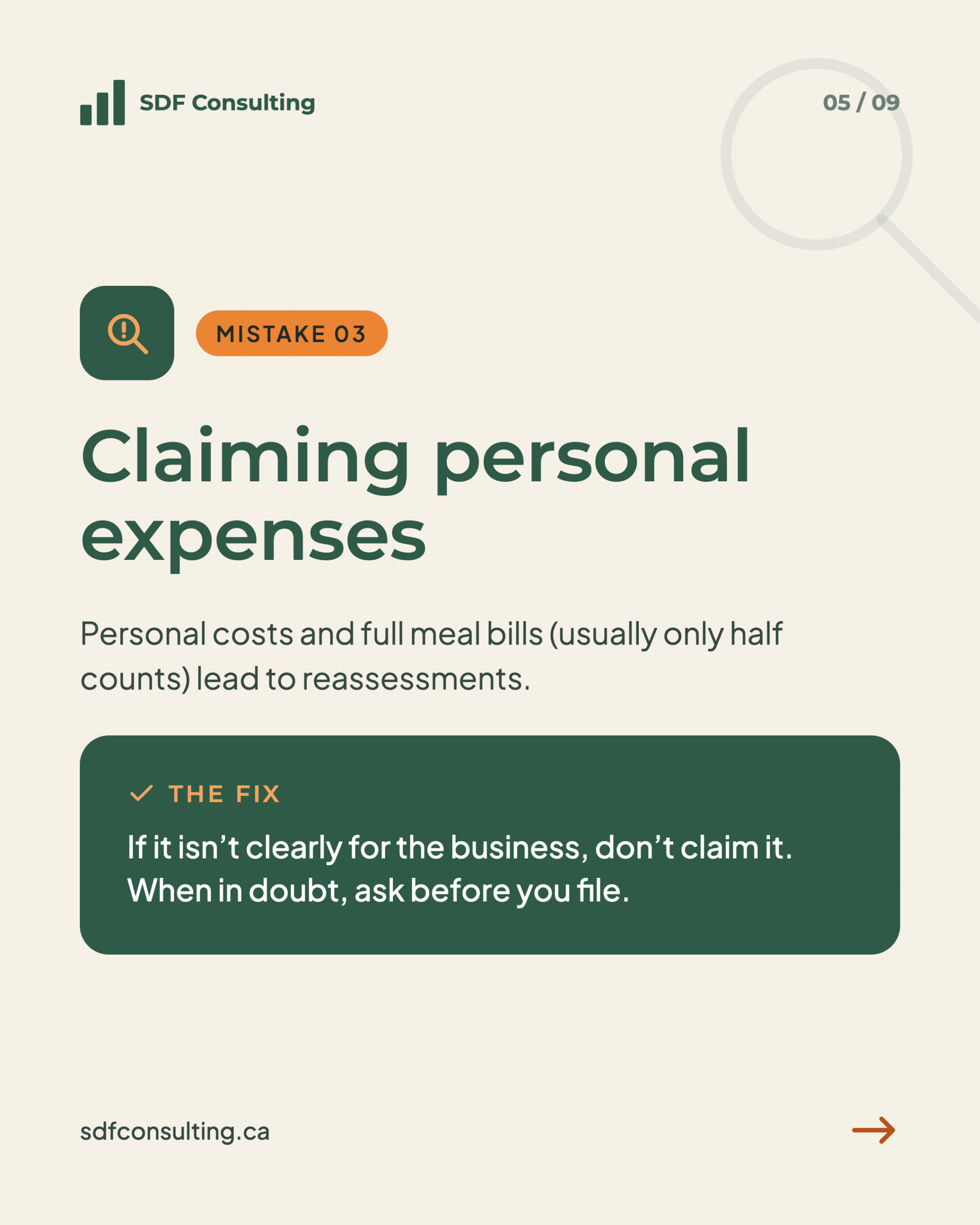
The opposite problem is just as common. Some owners claim HST back on everything that went through the business card, including things that weren’t really for the business.
The usual culprits:
- Personal purchases paid with the business account.
- The personal share of a vehicle, when the same car is used for errands and family trips.
- The full HST on meals and entertainment. In most cases, you can only claim 50% of it.
These claims are a common trigger for reassessments, which means paying the HST back with interest.
The fix: If a purchase isn’t clearly for the business, don’t claim the HST on it. Keep personal spending off business accounts entirely, track business use of any shared vehicle, and claim half the HST on meals. When in doubt, ask before you file, not after.
4. Skipping a return because you owe nothing
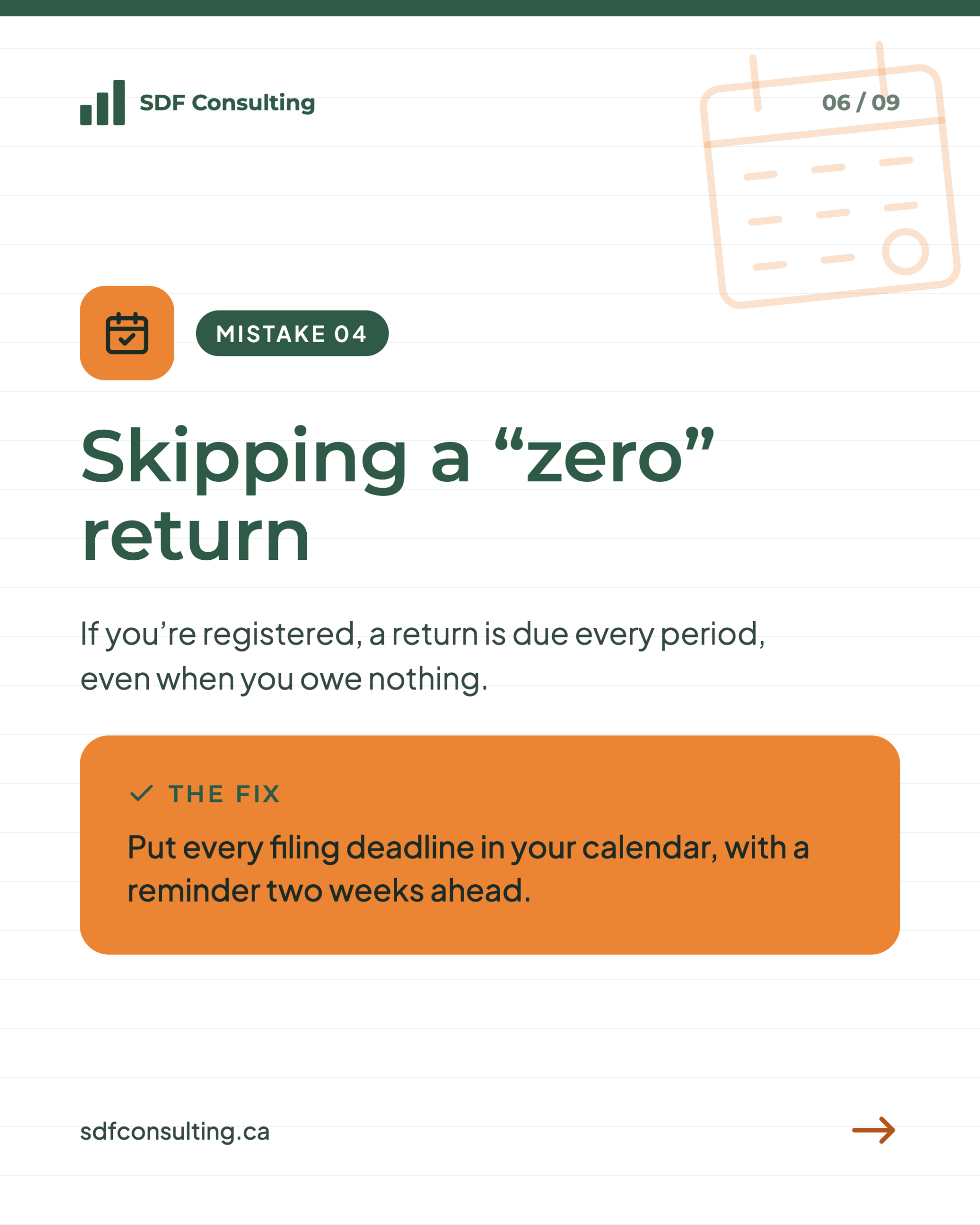
A quiet quarter doesn’t mean you can skip filing. Once you’re registered, a return is due for every reporting period, even if you had no sales and owe nothing. A return with nothing to report is called a nil return.
Missed returns can bring penalties and interest. They can also lead the CRA to estimate what you owe, which is rarely in your favour.
The fix: The day you register, put every filing deadline in your calendar, with a reminder two weeks ahead. A nil return takes a few minutes to file online. Missing one can cost far more.
5. Registering too late
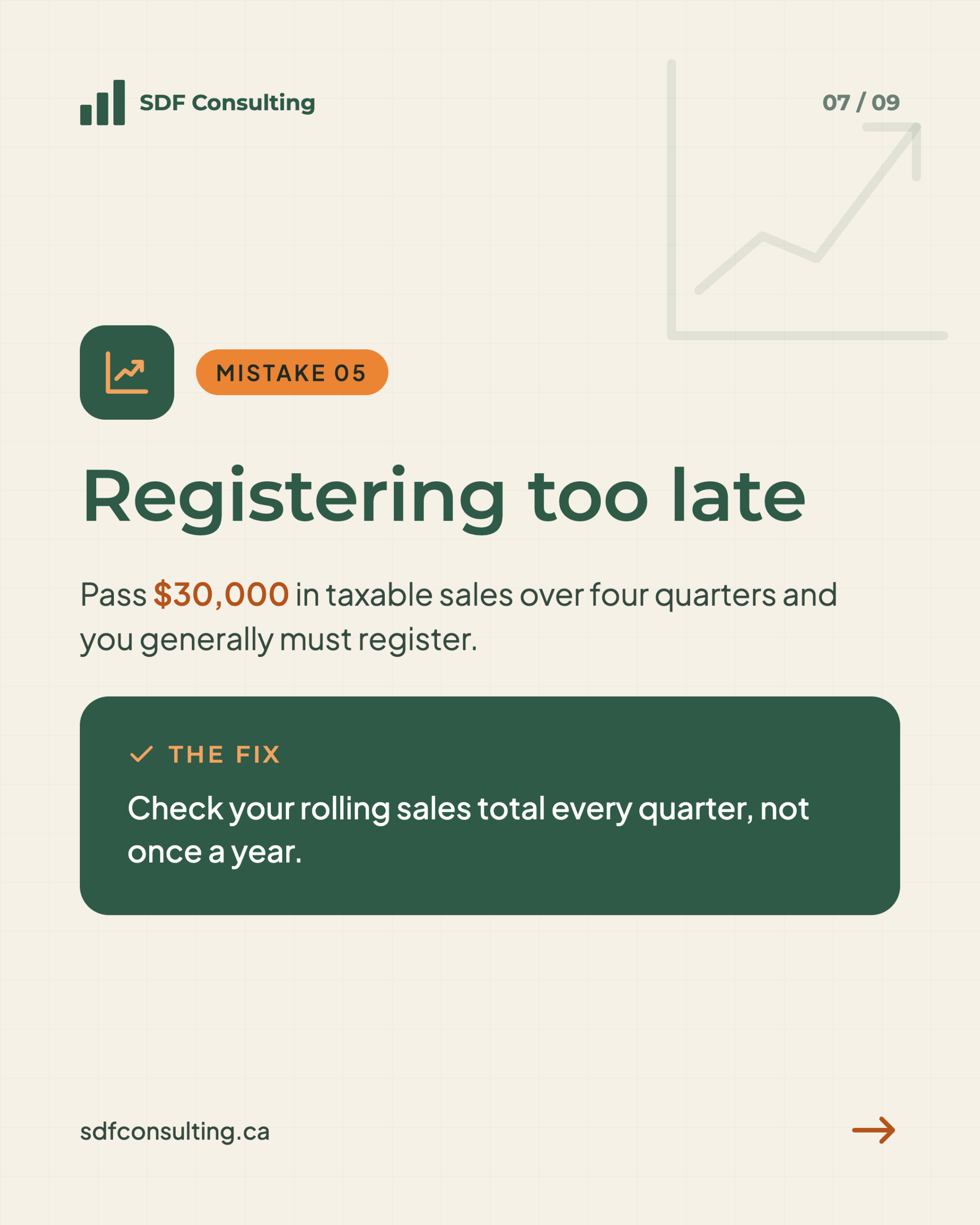
Small businesses don’t have to register for HST right away. You’re considered a small supplier until your taxable sales pass $30,000 over the last four consecutive calendar quarters. Once you cross that line, you generally must register and start charging HST.
The mistake is not noticing when you cross it. Owners who check once a year, or not at all, can keep selling for months without charging HST they were required to collect. The CRA can still expect that tax, and it may end up coming out of your own pocket.
The fix: Check your rolling total of taxable sales every quarter, not once a year. Add up the last four quarters each time. If you’re getting close to $30,000, register before you cross it. Registering early also lets you claim back the HST on your business purchases.
Your HST checklist
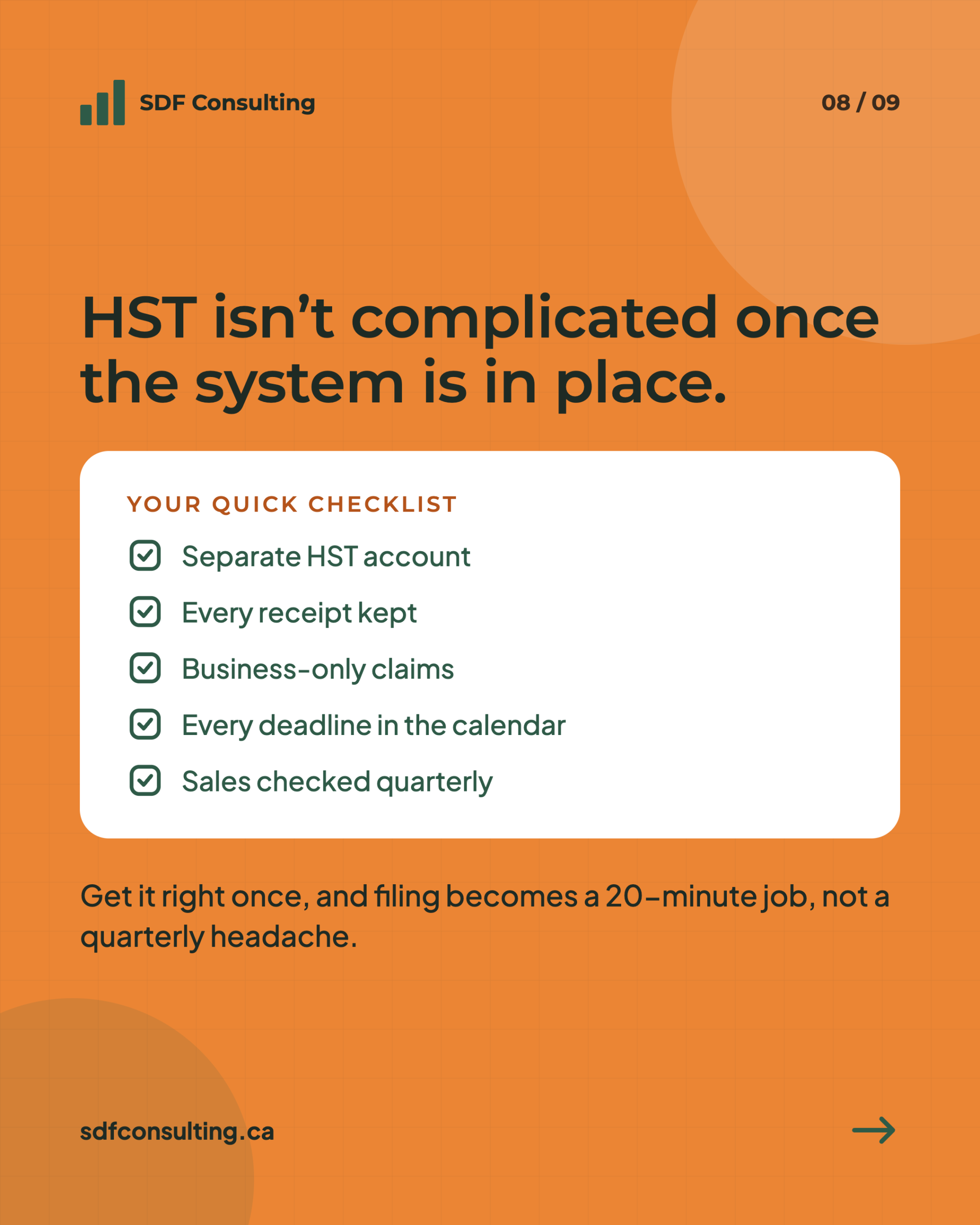
HST isn’t complicated once your system is in place. Run through this list before each filing:
- HST from every sale moved to a separate account
- Every business receipt kept, with the supplier’s HST number on purchases of $100 or more
- Only business expenses claimed, and half the HST on meals
- Every filing deadline in the calendar, including nil returns
- Rolling four-quarter sales total checked against $30,000
Get the system right once, and filing becomes a 20-minute job instead of a quarterly headache.
Not sure your setup is working for you?
At SDF Consulting, we help Ontario owner-operators set up HST systems that run themselves, in plain language and without the jargon. If you’d like a second set of eyes on your setup, let’s talk.