
An honest checklist for owners who sense things are slipping through the cracks.
Your bookkeeper isn’t failing you. Your business just outgrew the job you hired them for.
It happens to almost every growing owner-operator. When you started, a few hours a month of bookkeeping was plenty: record the sales, pay the bills, get everything ready for tax time. Then revenue grew, you hired people, you added services or locations, and the books stayed on the same arrangement.
Nobody did anything wrong. But the cracks show up slowly, and by the time they’re obvious, they’re usually expensive. Late penalties, cash surprises, and decisions made on gut feel instead of numbers all add up.
Below are seven signs that your business has outgrown a part-time bookkeeping setup. Keep score as you read: give yourself one point for every sign that sounds like your business.
The 7 signs
1. You see your numbers months late
If March’s results show up in May, you’re steering your business by looking in the rear-view mirror. By the time you learn that costs crept up or a service stopped making money, you’ve already lost two months you could have spent fixing it.
Decisions about hiring, pricing and spending need numbers within a couple of weeks of month-end, not a couple of months. A growing business changes too quickly to wait.
2. You use your bank balance as your budget
Many owners check the bank app to decide whether they can afford a new hire, a piece of equipment or a bonus. It feels sensible, but your bank balance is not your profit.
That balance doesn’t show the HST you’ve collected but still owe, the bills coming due next week, or the customer who hasn’t paid yet. A healthy-looking balance can hide a cash crunch that’s only a few weeks away.
3. Tax time feels like a fire drill
Your accountant sends a long list of questions every year. There’s a scramble for receipts, and there are adjustments nobody can fully explain.
This usually means the books are being caught up rather than kept up. When the books are clean all year, year-end should be boring, and boring is exactly what you want from tax season.
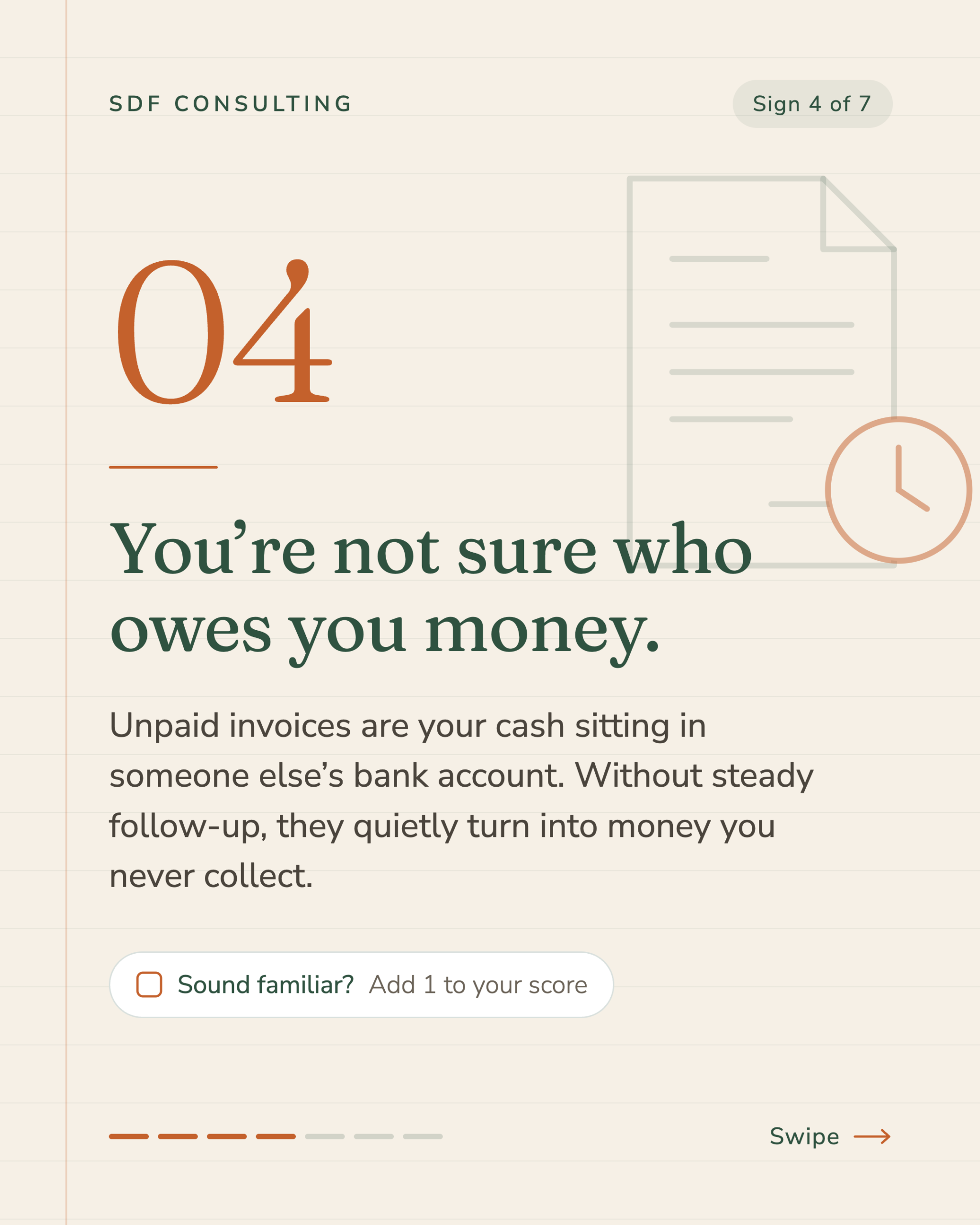
4. You’re not sure who owes you money
Unpaid invoices are your cash sitting in someone else’s bank account. If nobody is following up on a regular schedule, older invoices quietly turn into money you never collect.
A quick test: could you name your three largest unpaid invoices, and how long each has been outstanding, without looking it up? If not, collections probably aren’t getting the attention they need.
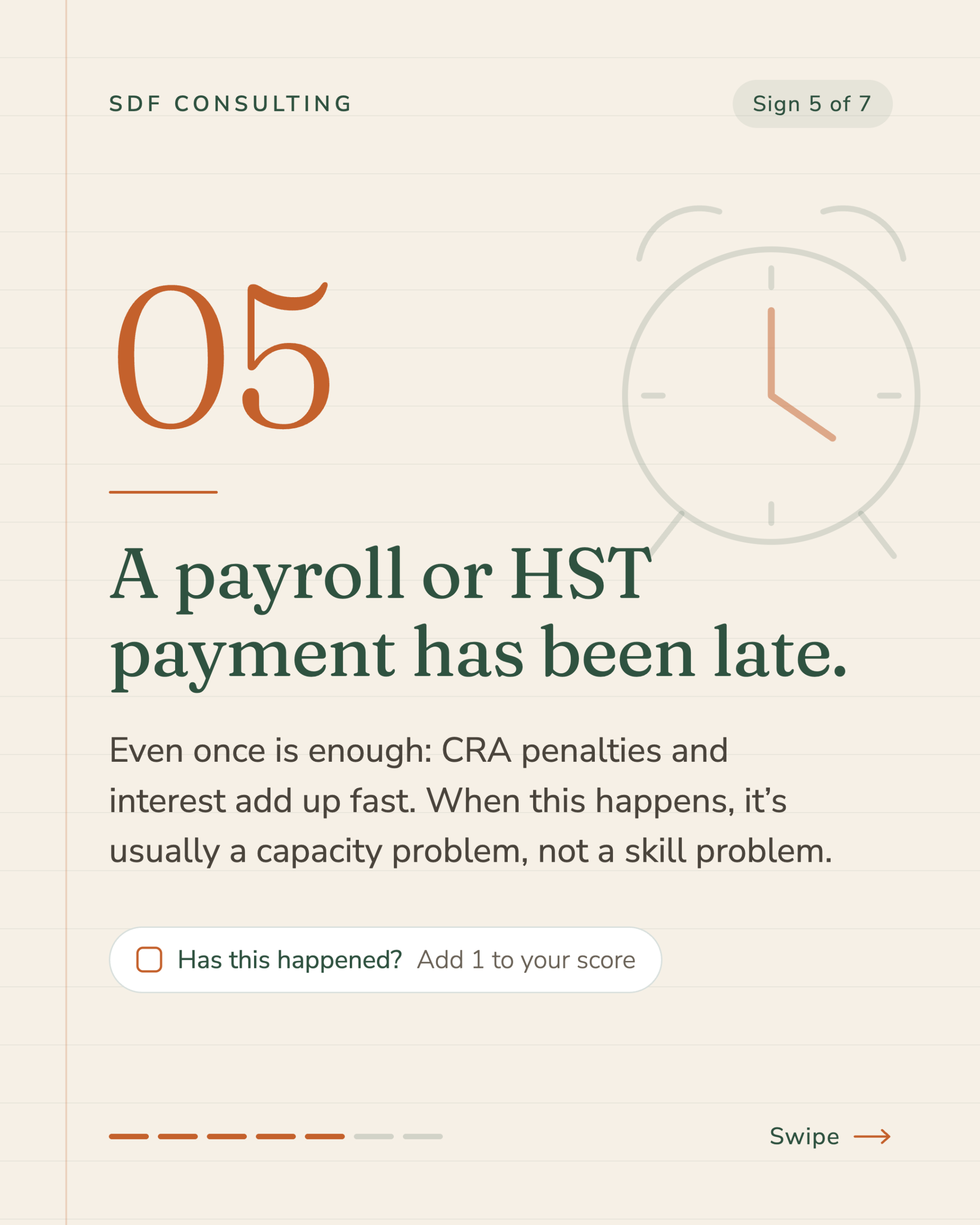
5. A payroll or HST payment has been late
Even once is enough to pay attention. CRA penalties and interest on late payroll remittances and HST add up quickly, and payroll deductions are taken especially seriously because that money is held on behalf of your employees.
When this happens, it’s usually a capacity problem, not a skill problem. Your bookkeeper may simply not have enough hours in the month to stay ahead of every deadline.
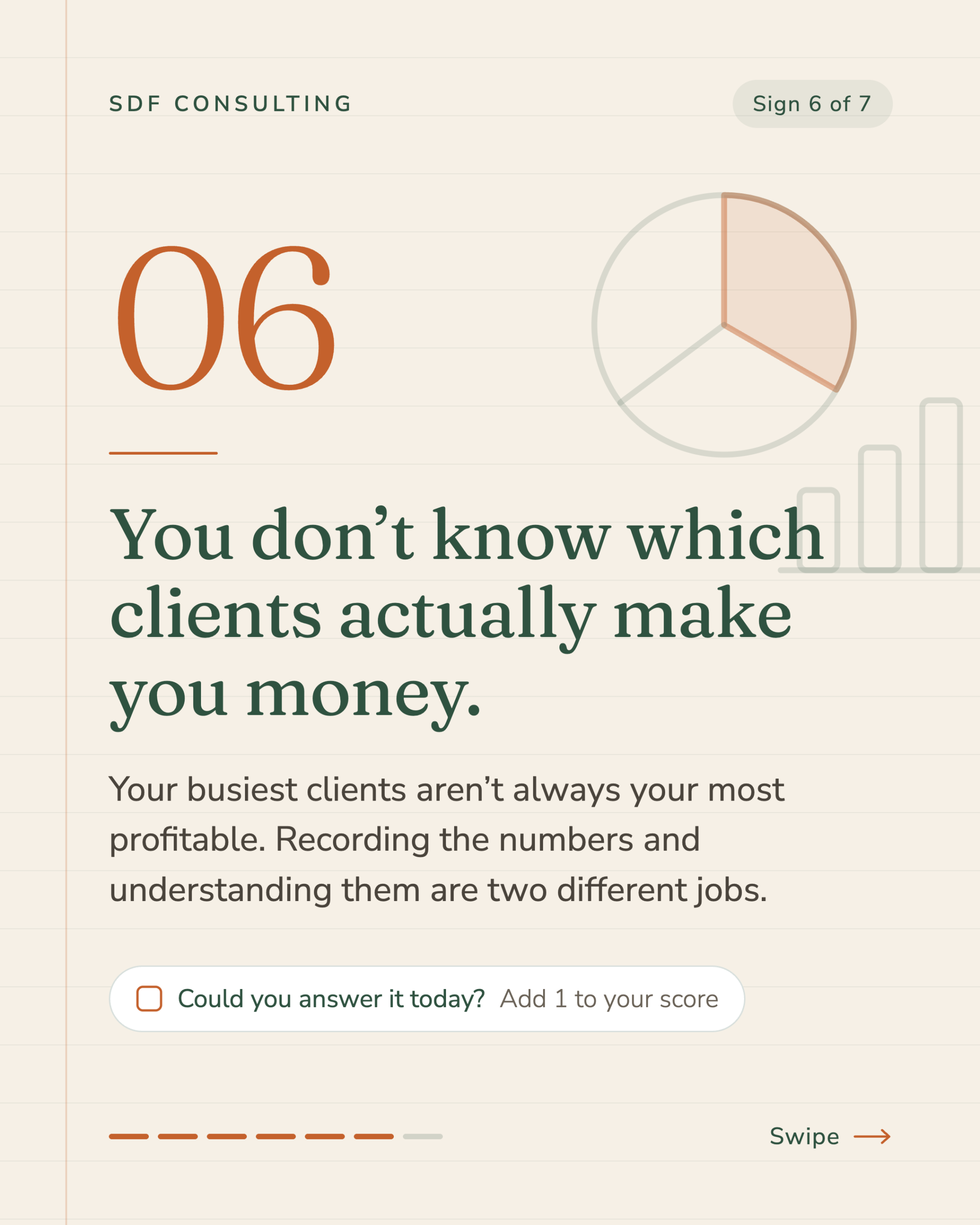
6. You don’t know which clients actually make you money
Your busiest clients aren’t always your most profitable ones. Some take far more time, discounts or follow-up than their fees cover.
Recording the numbers and understanding them are two different jobs. A part-time bookkeeper records what happened. A growing business also needs someone who can tell you which products, services, clients or locations are carrying the business, and which are quietly draining it.
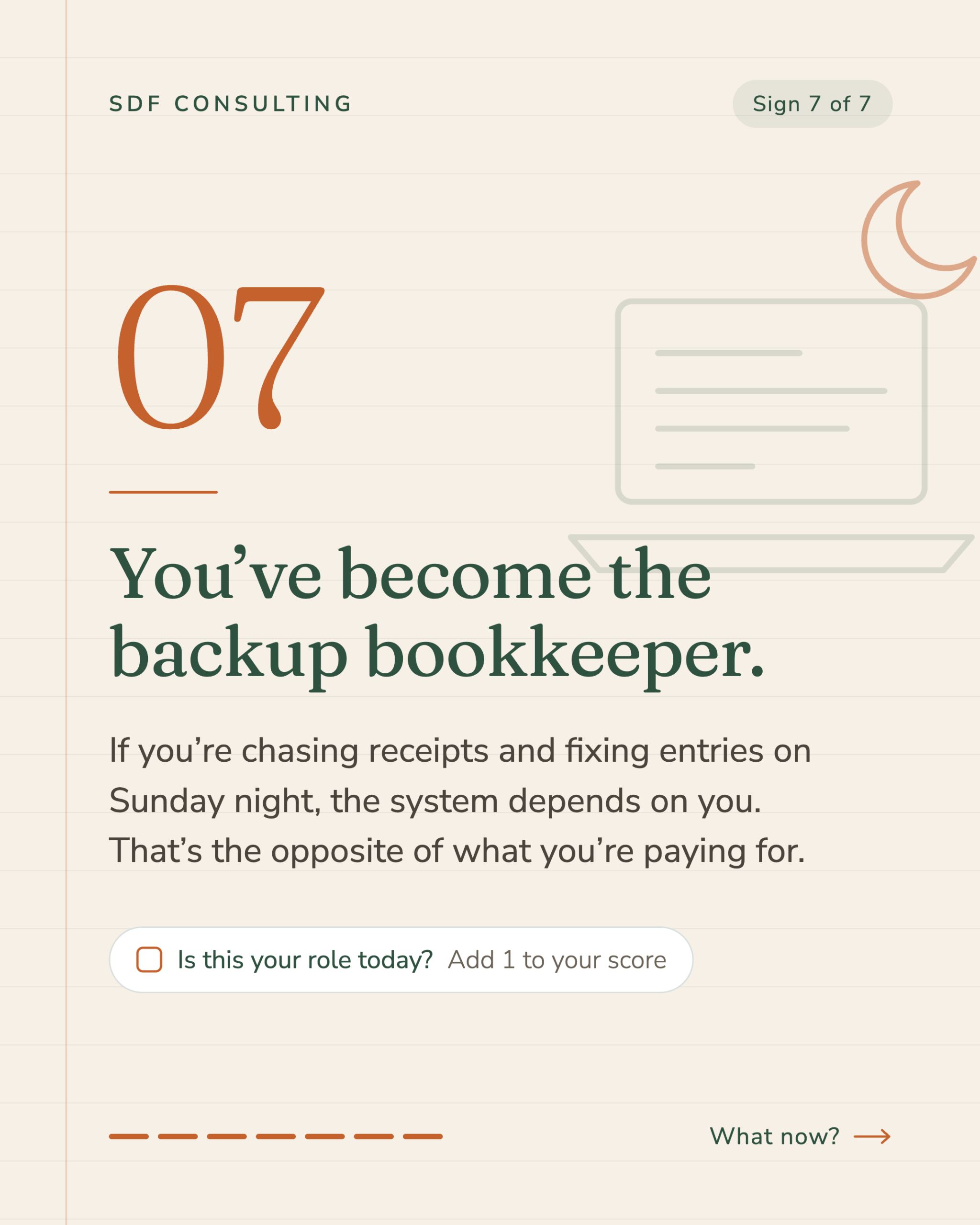
7. You’ve become the backup bookkeeper
If you’re approving every bill, chasing every receipt and fixing entries on Sunday night, the system depends on you. That’s the opposite of what you’re paying for.
Your time is the most valuable resource in the business. Every hour spent untangling the books is an hour not spent on customers, staff or growth.
What’s your score?
Add up your points. Here’s how to read the result.
| Score | What it means |
|---|---|
| 0–2 | Your setup is probably keeping up. Keep an eye on these signs as you grow. |
| 3–4 | Things are starting to slip. It’s a good time to review how your books are run, before small gaps become costly ones. |
| 5–7 | You’ve outgrown your current setup. Your business needs more support than a few hours a month can give. |
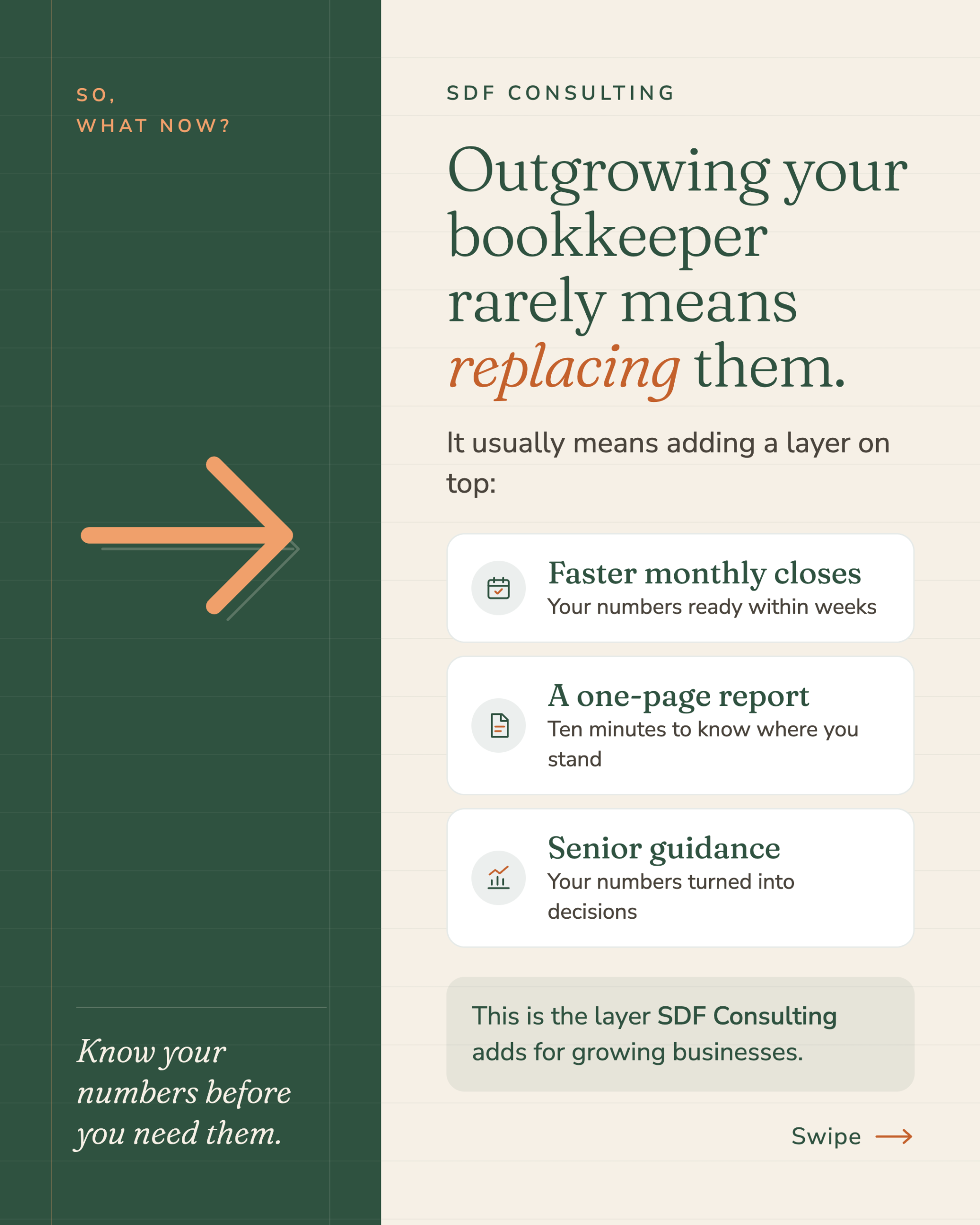
Outgrowing your bookkeeper rarely means replacing them
Here’s the good news: a high score usually doesn’t mean you need a new bookkeeper. A good bookkeeper who knows your business is valuable, and the records they keep are the foundation everything else is built on.
What most growing businesses need is a layer on top of that foundation:
- Faster monthly closes. Your numbers are finished and ready within a couple of weeks of month-end, every month, on a fixed schedule.
- A one-page report you can actually read. Ten minutes is enough to know where you stand: profit, cash, what’s owed to you and what you owe.
- Cash flow forecasting. You can see the next few months coming, including tax payments and large bills, so there are no surprises.
- Senior guidance. Someone experienced reviews the work and turns your numbers into decisions about pricing, hiring and where to focus.
Your bookkeeper keeps the records accurate. This layer helps you use them.
Know your numbers before you need them
The businesses that grow smoothly aren’t the ones with the fanciest software. They’re the ones where the owner knows their numbers before they need them: before the big hire, before the price change, before the tax bill arrives.
If you scored three or more, that’s not a crisis. It’s a sign your business has grown, and that your support should grow with it.
This is the layer SDF Consulting adds for growing businesses. If you’d like a second opinion on where your books stand, get in touch for a no-pressure conversation.
SDF Consulting — Your Trusted Business Advisor