
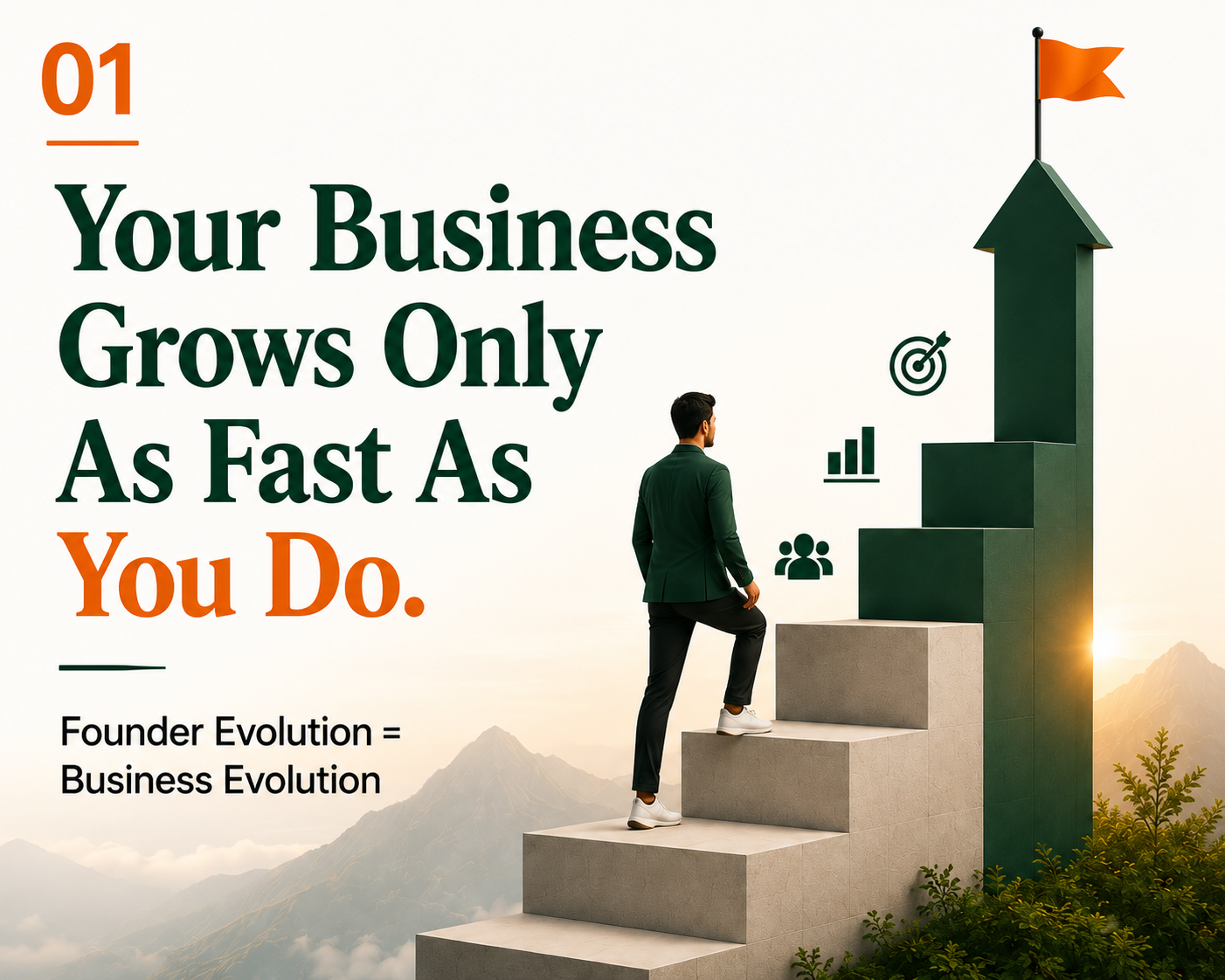
The Business Only Grows As Fast As the Founder Evolves
There’s a pattern I see often working with business owners at different stages of growth. In the early days, the founder is the business. Their instincts, their energy, their hustle — that’s what keeps things moving. And it works. For a while.
But at some point, the same habits that built the business start to hold it back.
The question isn’t whether growth is possible. It’s whether you are ready for it.
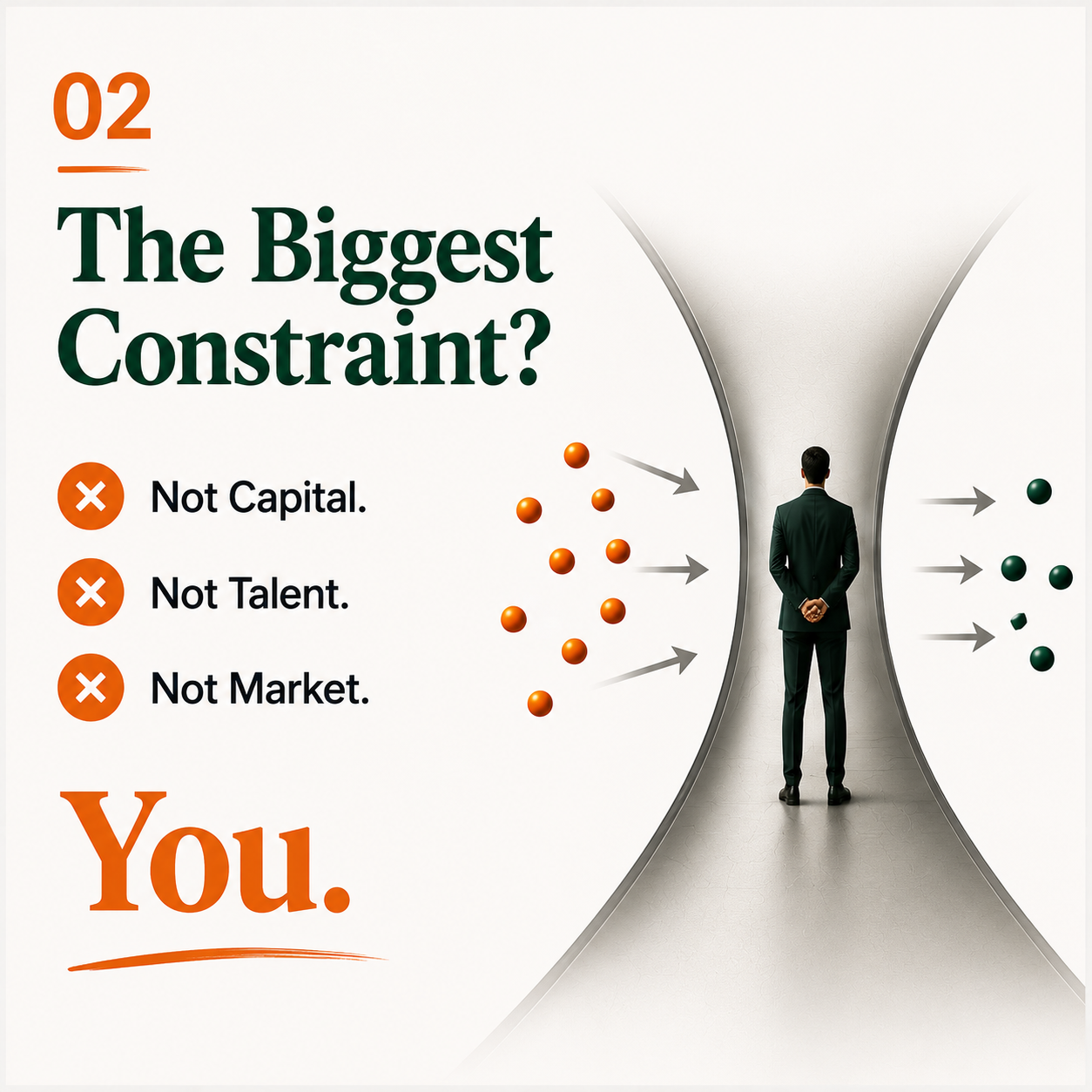
The Real Constraint No One Talks About
Most founders look outward when growth stalls — more marketing, more staff, a better product. And sometimes that’s the right call. But more often, the real constraint is internal.
You can’t build a sophisticated company with unsophisticated thinking.
That’s not a judgment. It’s just honest. The skills that get you to $500K in revenue are genuinely different from the ones that get you to $2M. And the ones that get you to $5M are different again.
The founder who succeeds at each stage is the one willing to grow into those new skills — not the one who doubles down on what used to work.
What the Numbers Reveal
I’m an accountant and fractional CFO, so naturally I see this through a financial lens. And the financials are remarkably honest.
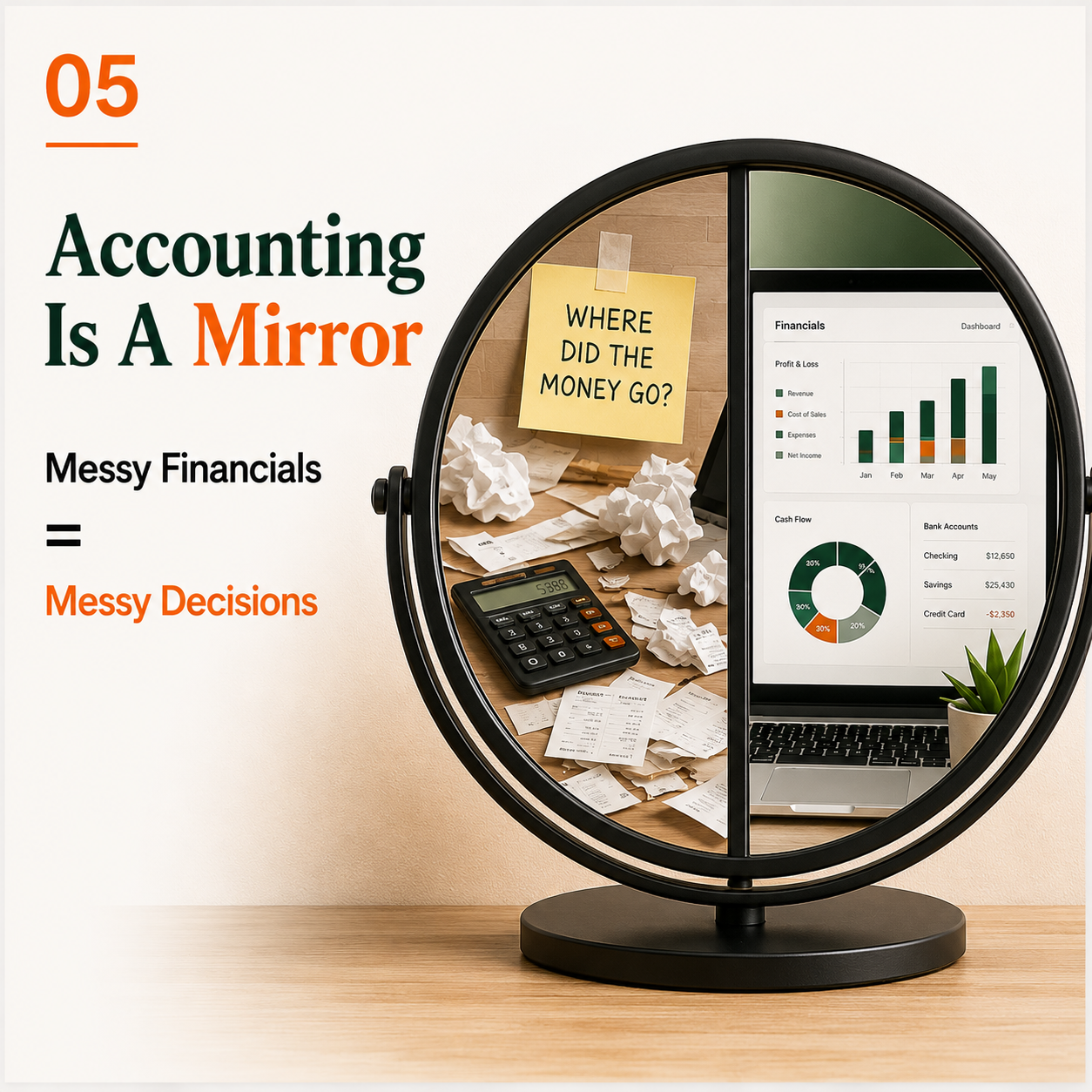
When I look at a business’s books, I can often tell a lot about how the owner thinks and makes decisions. Not because I’m a mind reader — but because the numbers are a mirror.
Here’s what I mean:
Managing from the bank balance.
-
- Many founders make spending and hiring decisions based on what’s sitting in the bank today. It feels practical. But the bank balance doesn’t tell you about the invoice that’s 60 days overdue, the payroll coming up next week, or the tax installment due in three months. Real financial awareness means understanding cash flow, not just cash.
Avoiding structure in the name of speed.
-
- Early-stage companies move fast, and structure can feel like friction. But without clear processes — even simple ones — the same problems keep coming back. Every month is a scramble. Every year-end is a fire drill.
Treating accounting as compliance, not strategy.
-
- This one is very common. Many business owners see their accountant once a year, sign off on the returns, and move on. But the financials can tell you so much more: which services are actually profitable, where the business is leaking money, when you can afford to hire, whether that new contract is worth taking on.
The financials don’t lie. If they’re messy, something upstream is messy too.
What Changes When Founders Evolve
The good news is this: when founders decide to grow into their next level, the business follows.
I’ve seen it happen in real time with clients. When a founder shifts from reacting to forecasting, things change quickly. Decisions get cleaner. Conversations with the team get clearer. Stress drops — not because the business gets easier, but because the owner feels more in control.
A few shifts I see consistently:
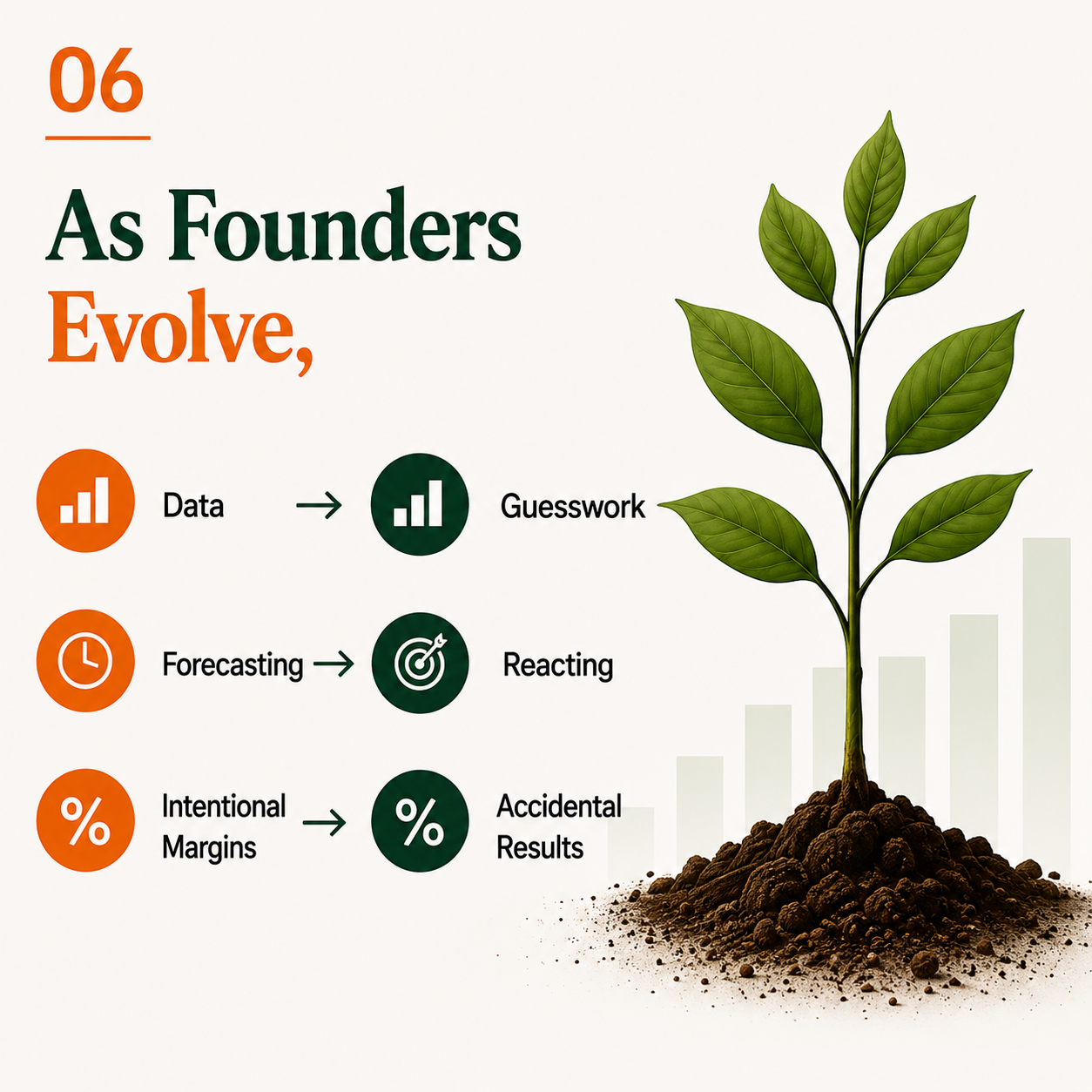
Data replaces guesswork.
-
-
- Instead of going with a gut feeling about whether a service is profitable, you look at the margin. Instead of hoping cash will work out, you model it out. This doesn’t mean analysis paralysis — it means making faster, more confident decisions because you actually know the numbers.
-
Forecasting replaces reacting.
-
-
- Reactive businesses are always catching up. They hire in a panic, cut costs in a panic, and scramble to fund growth. Businesses with even a basic 90-day cash flow forecast can get ahead of problems before they become crises.
-
Margins become intentional.
-
-
- At a certain point, revenue growth is not enough if the margins aren’t there. Founders who evolve start asking harder questions: Should we keep offering this service? Is this client actually profitable? Are we pricing for value or just to win the job?
-
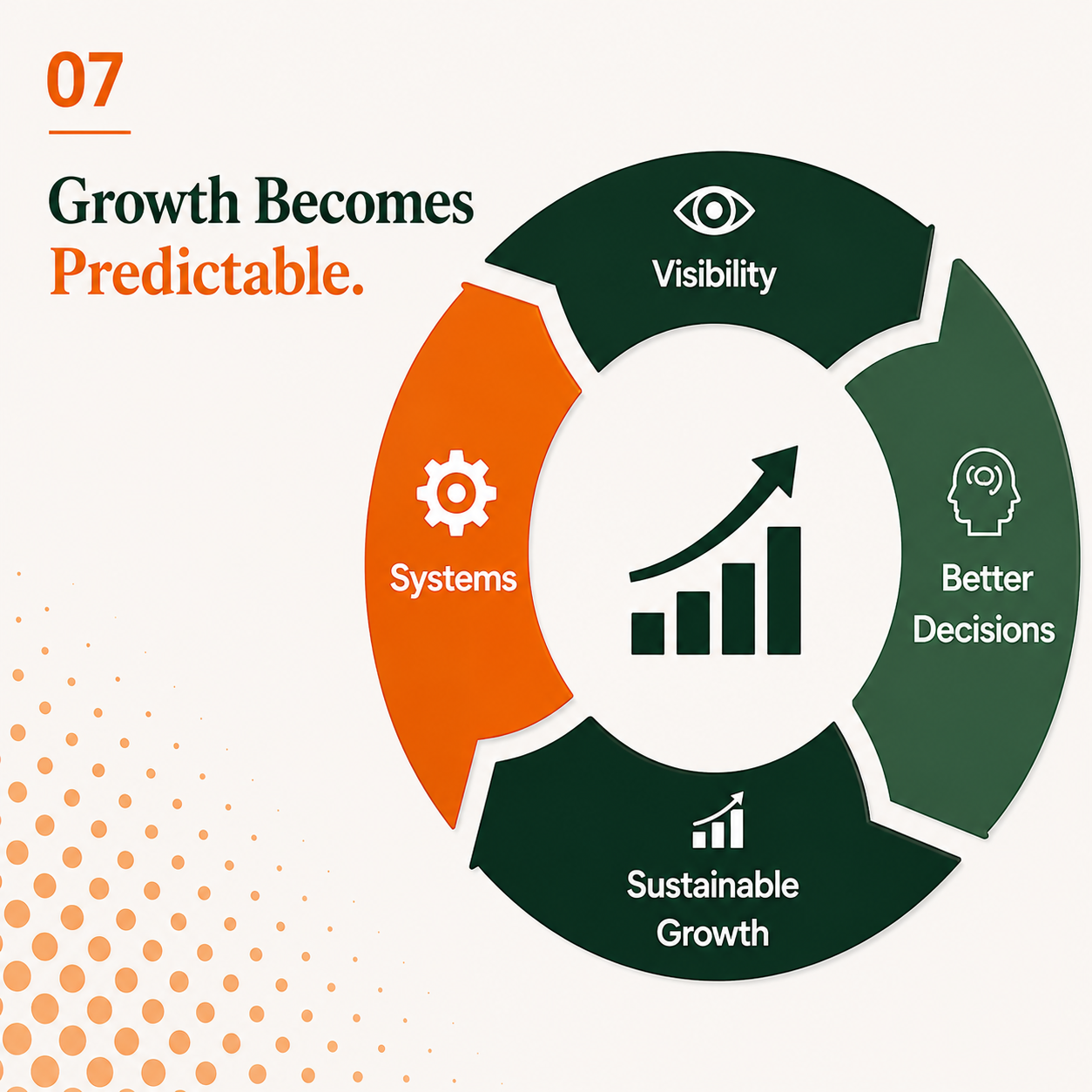
Growth stops being chaotic — and starts becoming predictable.
The Question Worth Sitting With
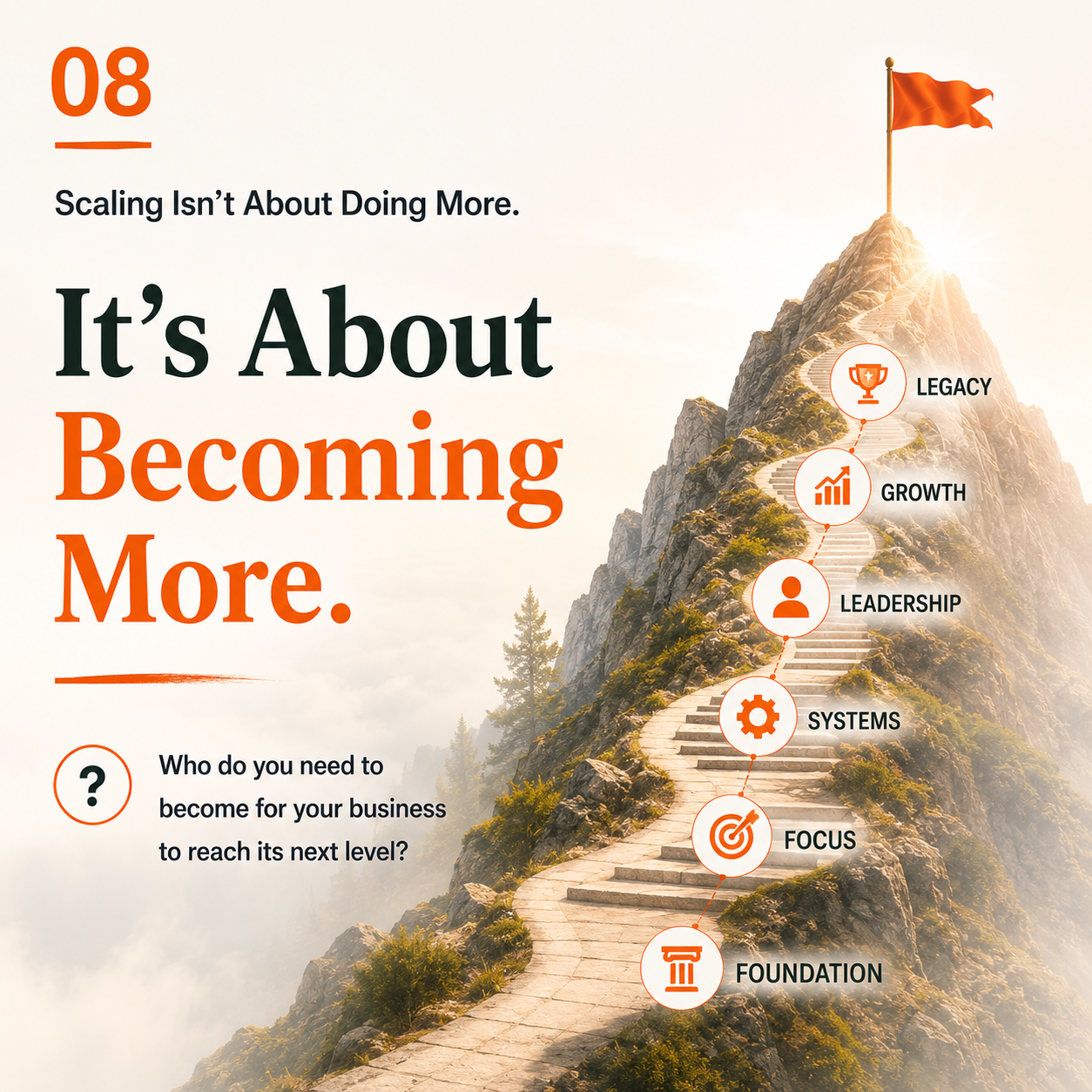
Scaling a business isn’t just about doing more. It’s about becoming more. It’s about being honest enough to recognize where you’re the bottleneck — and humble enough to do something about it.
I’ve had business owners tell me that working on their financials together felt less like accounting and more like a mirror held up to how they run their business. That’s the point.
So here’s the question I’ll leave you with:
Who do you need to become for your business to reach its next level?
Because the business is waiting on your answer.


Arshad is a fractional CFO and business advisor who works with growth-stage business owners to turn their financials into a strategic tool. If you’re ready to use your numbers to drive better decisions, reach out at arshad@sdfconsulting.ca.