
Your Numbers Should Tell a Story, Not Just Balance
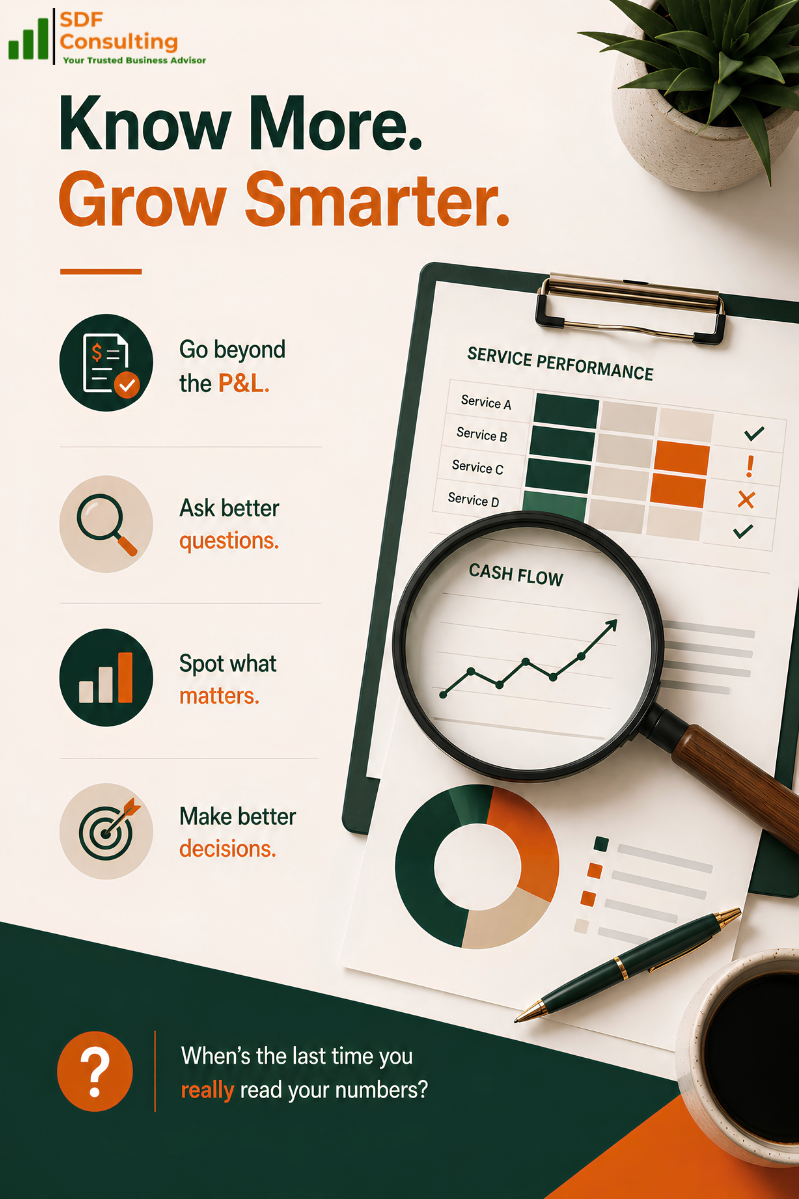
A business owner I know checked her P&L every month. Revenue minus expenses. Numbers lined up. “Good, we’re fine,” she’d think, and move on.
Six months later, she found out one of her service lines had been quietly bleeding money the whole time. Every single monthly report had been “correct.” Not one of them said a thing about it.
That’s the trap a lot of small business owners fall into. A balanced report and a useful report are not the same thing.
Balanced Isn’t the Same as Useful
Your books can tie out perfectly and still leave you flying blind. Debits can match credits every month, and you can still miss the one trend that actually matters, if no one is sitting down and asking what the numbers mean.
This isn’t a knock on bookkeeping basics. Getting the numbers right is the foundation. But it’s only the foundation. A report that balances tells you the math was done correctly. It doesn’t tell you why your margins are slipping, which clients are actually profitable, or whether that “small” expense increase is about to become a real problem.
What “Reading” Your Numbers Actually Looks Like
In practice, this means asking a few honest questions each month, not just filing the report away:
Is each part of the business pulling its weight, or is one service line quietly subsidized by another?
Is an expense creeping up because the business is growing, or because something needs attention?
Does the bank balance actually reflect how healthy things are, or is it flattered by timing, like a big invoice that hasn’t been paid out yet?
None of these questions are complicated. But they only get asked if someone is looking past the bottom line.
Where This Fits Into the Bigger Picture
This is the thinking behind how we work with our clients. We handle the day-to-day, the bookkeeping, payroll, AP, AR, HST filing, and the month-end close. But we don’t stop at “the books are done.” We sit down and talk through what the numbers are actually saying, and what that might mean for a decision you’re facing right now.
We’re cautious about overpromising here. There’s no formula that replaces good judgment, and we’d rather under-claim than build expectations we can’t meet. What we do believe is that financial statements should be a tool for decisions, not just a compliance checkbox you clear once a month.
A Simple Gut Check
If you run a small business, ask yourself this: when’s the last time you actually read your financials, line by line, instead of just checking that the totals added up?
If it’s been a while, that’s worth a second look. Not because something is necessarily wrong, but because the story in your numbers might be telling you something you haven’t heard yet.