
Why “Making Money” and “Having Money” Are Two Very Different Things
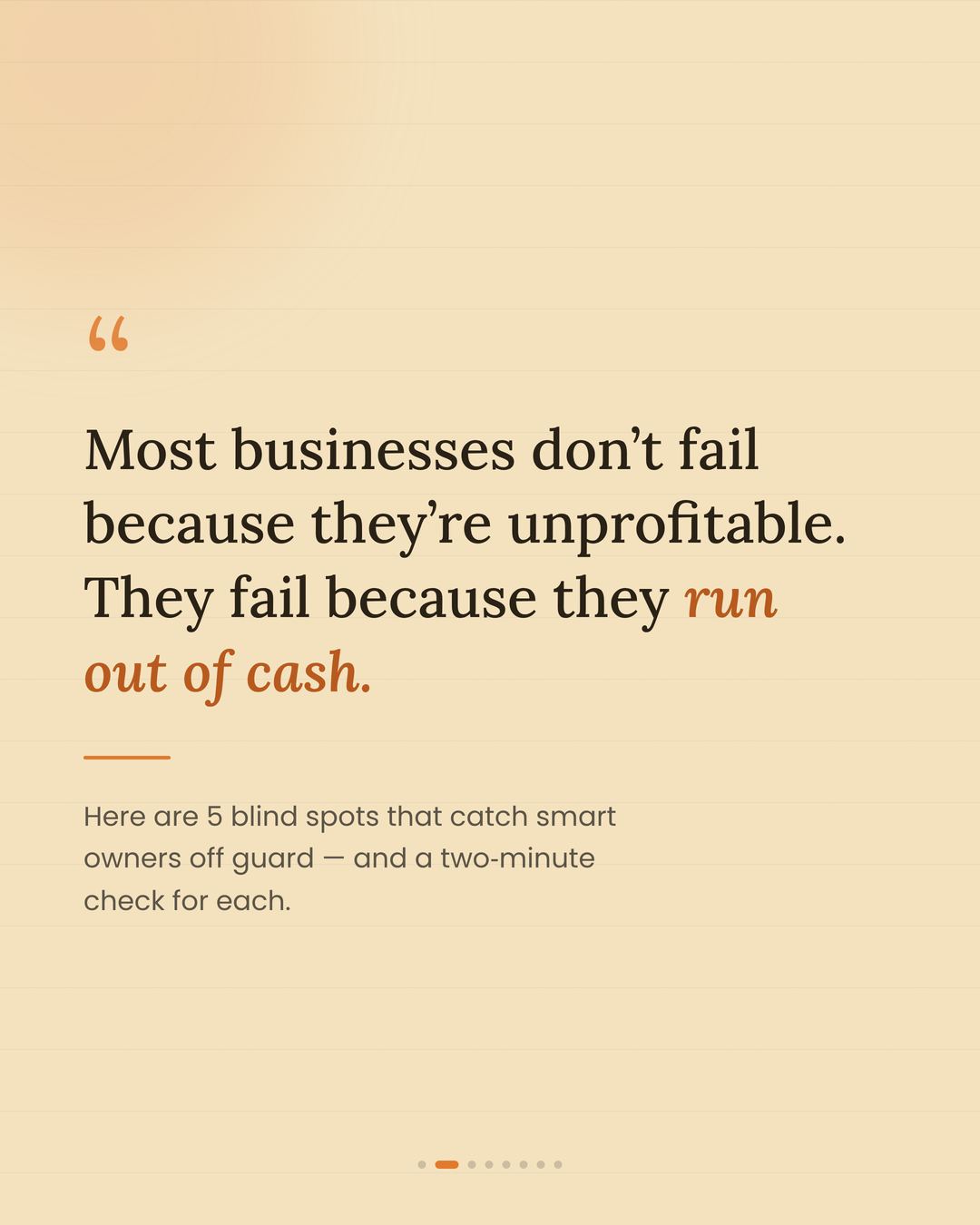
Most business owners don’t go broke because they’re unprofitable. They go broke because they run out of cash — all while “making money” on paper.
It’s one of the cruelest ironies in business: you can have a great quarter, hit your revenue targets, and still find yourself scrambling to cover payroll. That disconnect between profit and cash is where most financial stress actually comes from — not from a lack of sales, but from a lack of visibility into where the money is really going.
Here are five blind spots that catch even experienced owners off guard, and what to do about each one.
1. Profit Doesn’t Equal Cash
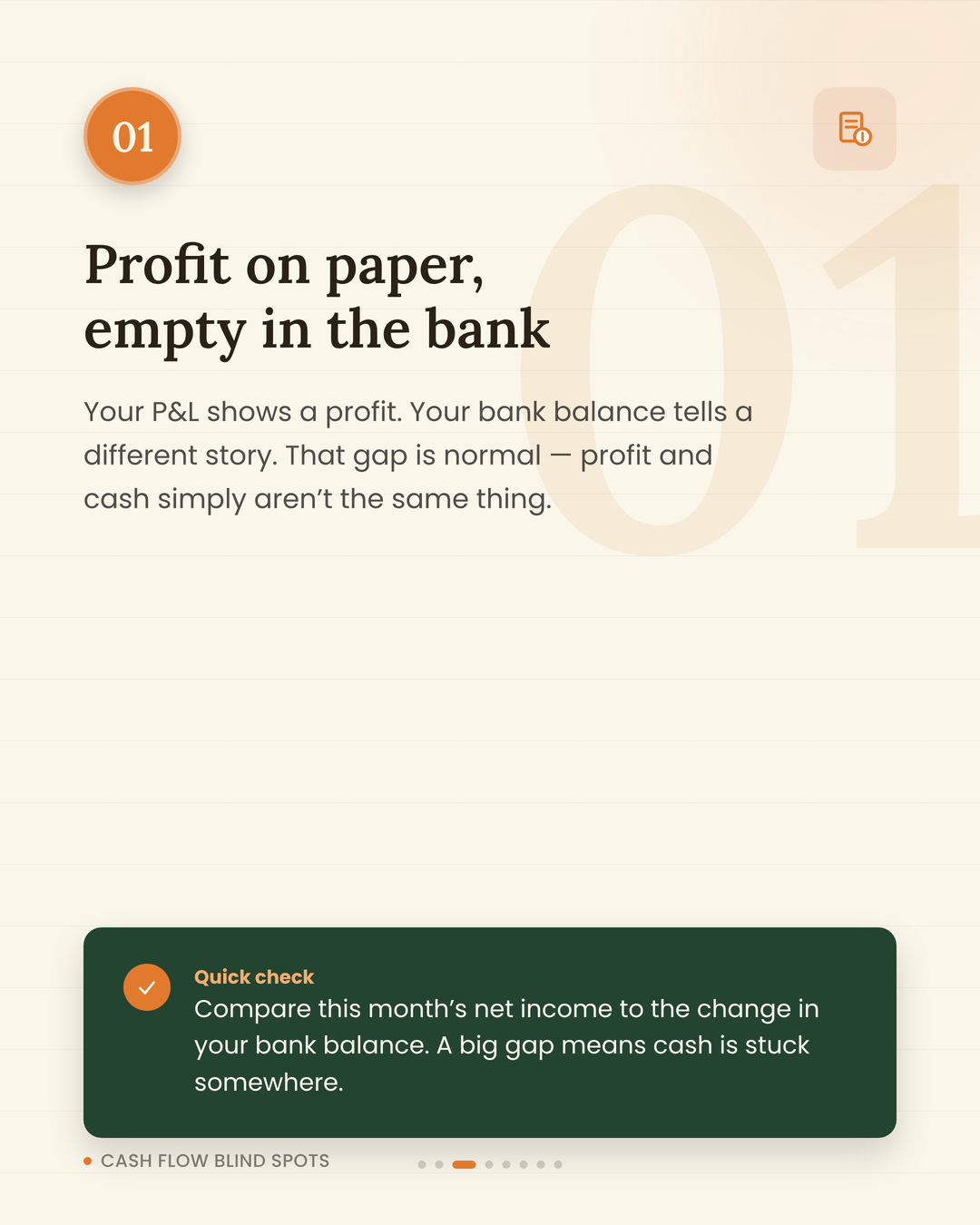
Your profit and loss statement looks great. Revenue is up, expenses are under control, and net income is solidly positive. So why does your bank account tell a completely different story?
The answer lies in timing. Your P&L records income when it’s earned and expenses when they’re incurred — not when the money actually moves. You might have booked a large sale this month that won’t be paid for another six weeks. Meanwhile, this month’s bills are due now, in cash, regardless of what your income statement says.
What to do: Every month, compare your net income to your actual bank balance change. If the two numbers are telling different stories, that gap is where your cash is hiding — usually in unpaid invoices, inventory, or debt payments that don’t show up on the P&L at all.
2. Slow-Paying Customers Cost More Than They Seem
A sale isn’t really a sale until the cash is in your account. Until then, it’s a loan — one you’re extending to your customer, interest-free, often without realizing it.
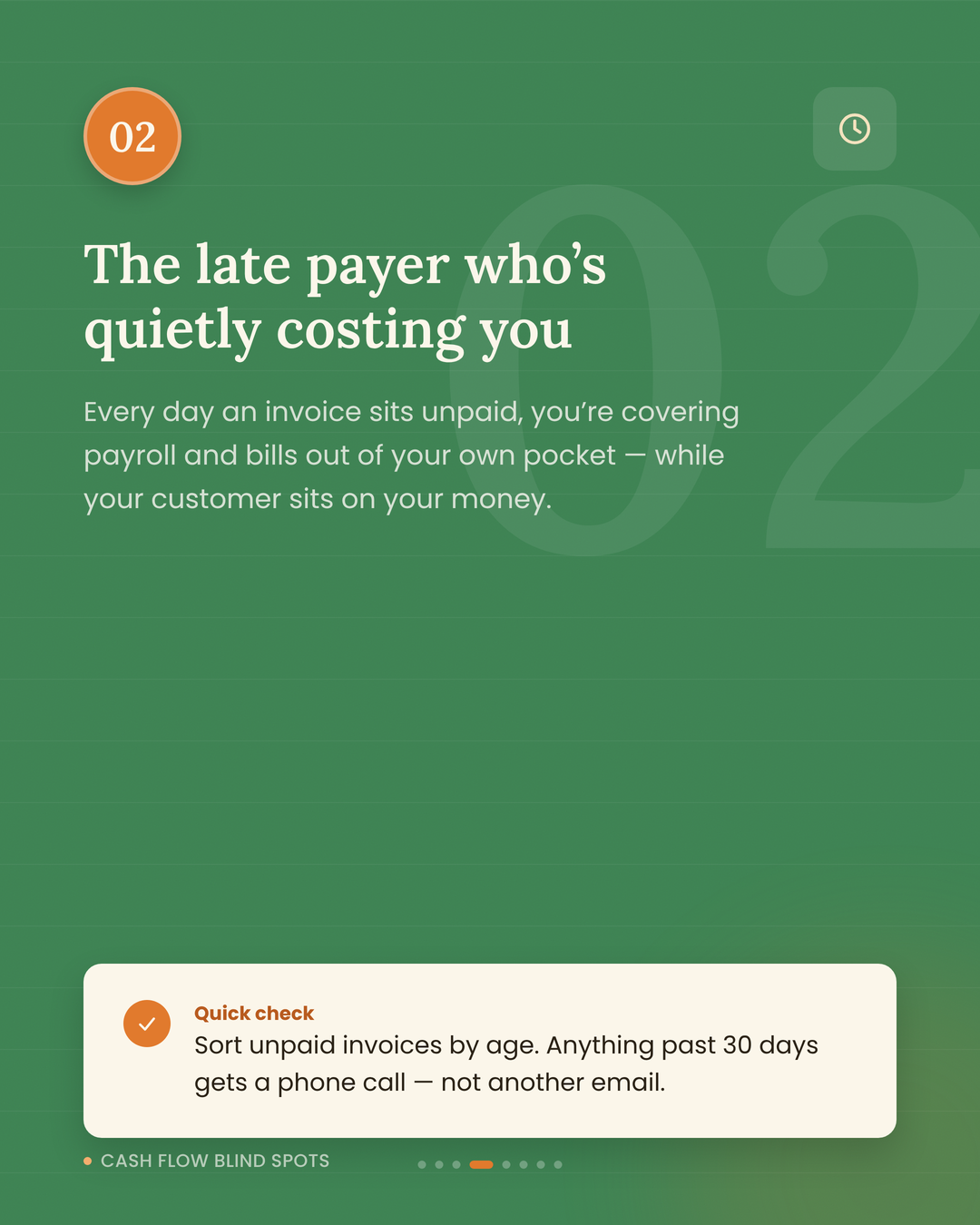
While you wait for that invoice to clear, you’re still covering payroll, rent, and supplier bills out of your own reserves. The longer that invoice sits open, the more it’s quietly costing you, even if the total on paper never changes. A handful of customers who consistently pay late can create a cash crunch that has nothing to do with how much business you’re actually doing.
What to do: Set a hard rule. Anything 30 days or more overdue gets a phone call, not another polite email. Emails are easy to ignore. A call signals that you’re paying attention — and it usually gets results faster than a fourth reminder in someone’s inbox.
3. Small Recurring Charges Add Up in Silence
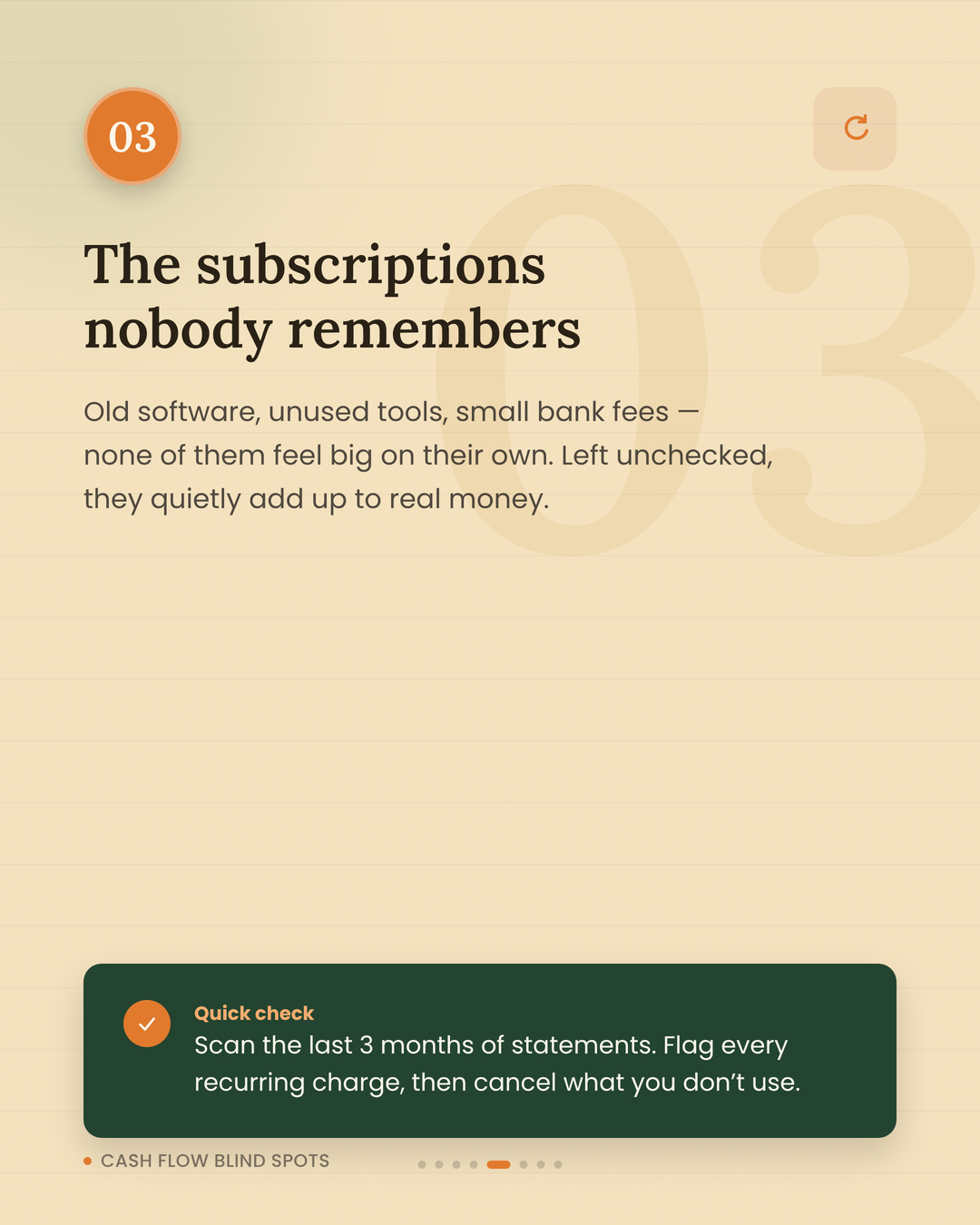
Software subscriptions, old tools you forgot to cancel, small processing fees, memberships nobody uses anymore — individually, none of these feel like a big deal. That’s exactly why they survive. A $19 monthly charge doesn’t trigger alarm bells. But stack ten or twelve of these together, and you’re looking at a meaningful drain that never shows up as a single, noticeable expense.
These charges are dangerous precisely because they’re invisible. They don’t get reviewed, questioned, or cut, because no one ever sees the total — only the individual line items scattered across months of statements.
What to do: Once a quarter, scan your last three months of bank and credit card statements and flag every recurring charge. Total them up. You’ll often be surprised by how much is going out the door for tools you stopped using months ago.
4. Non-Monthly Bills Sneak Up
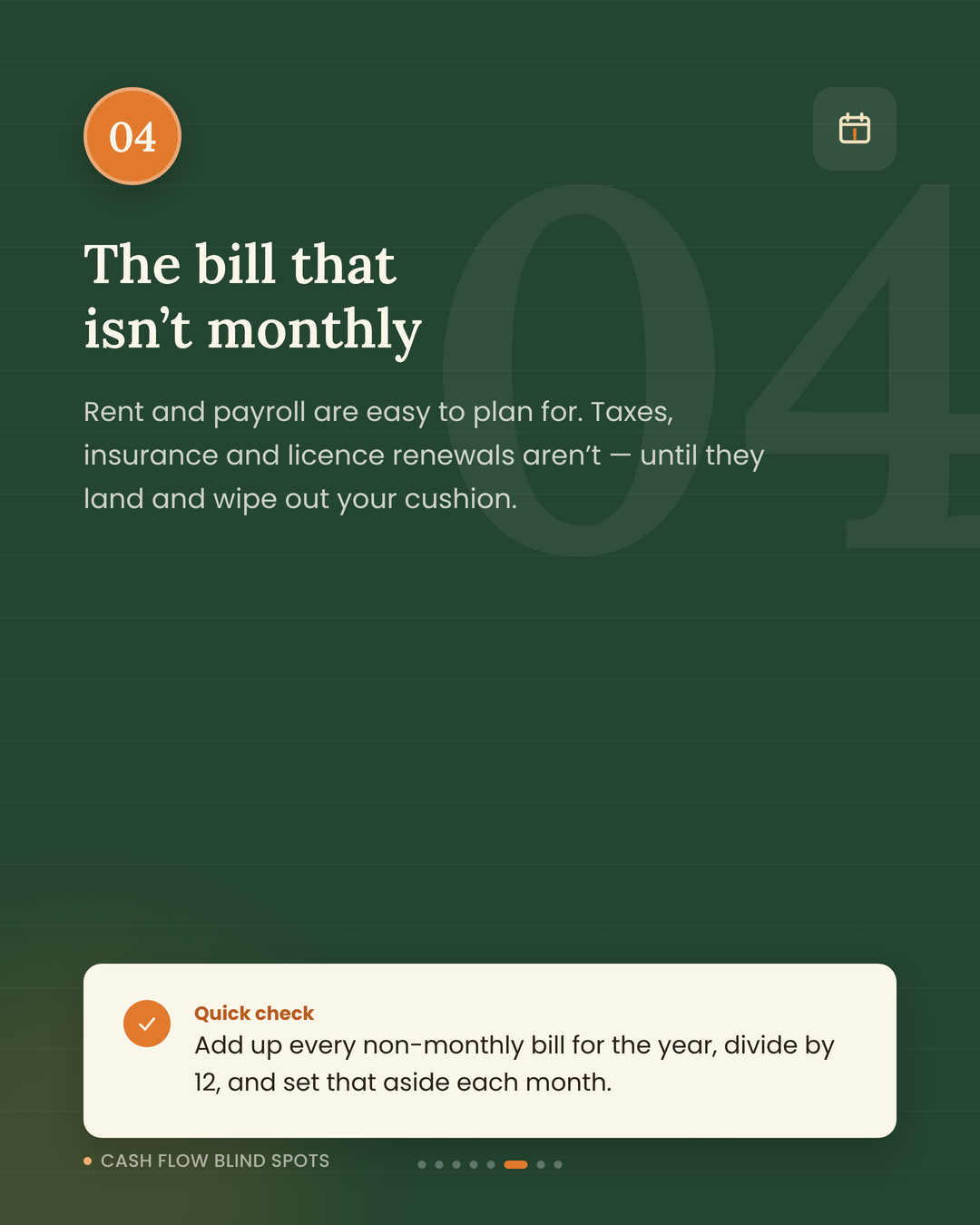
Some of your biggest expenses don’t show up every month — which is exactly what makes them so dangerous. Annual insurance premiums, quarterly tax installments, licensing renewals — these bills feel almost optional right up until the day they’re due, at which point they can wipe out your cash cushion in a single hit.
Because these expenses aren’t part of your regular monthly rhythm, they’re easy to forget until they land, often at the worst possible time.
What to do: Add up all your annual and non-monthly obligations, divide the total by 12, and set that amount aside every single month — even though the bill itself only comes once or twice a year. When the payment finally comes due, you’re not scrambling. You already have it covered.
5. Growth Can Drain Cash Faster Than It Builds It
This is the one that trips up owners who think they’re doing everything right. A big new order comes in. A major client signs on. It feels like the moment you’ve been working toward — but growth often demands cash before it delivers it.
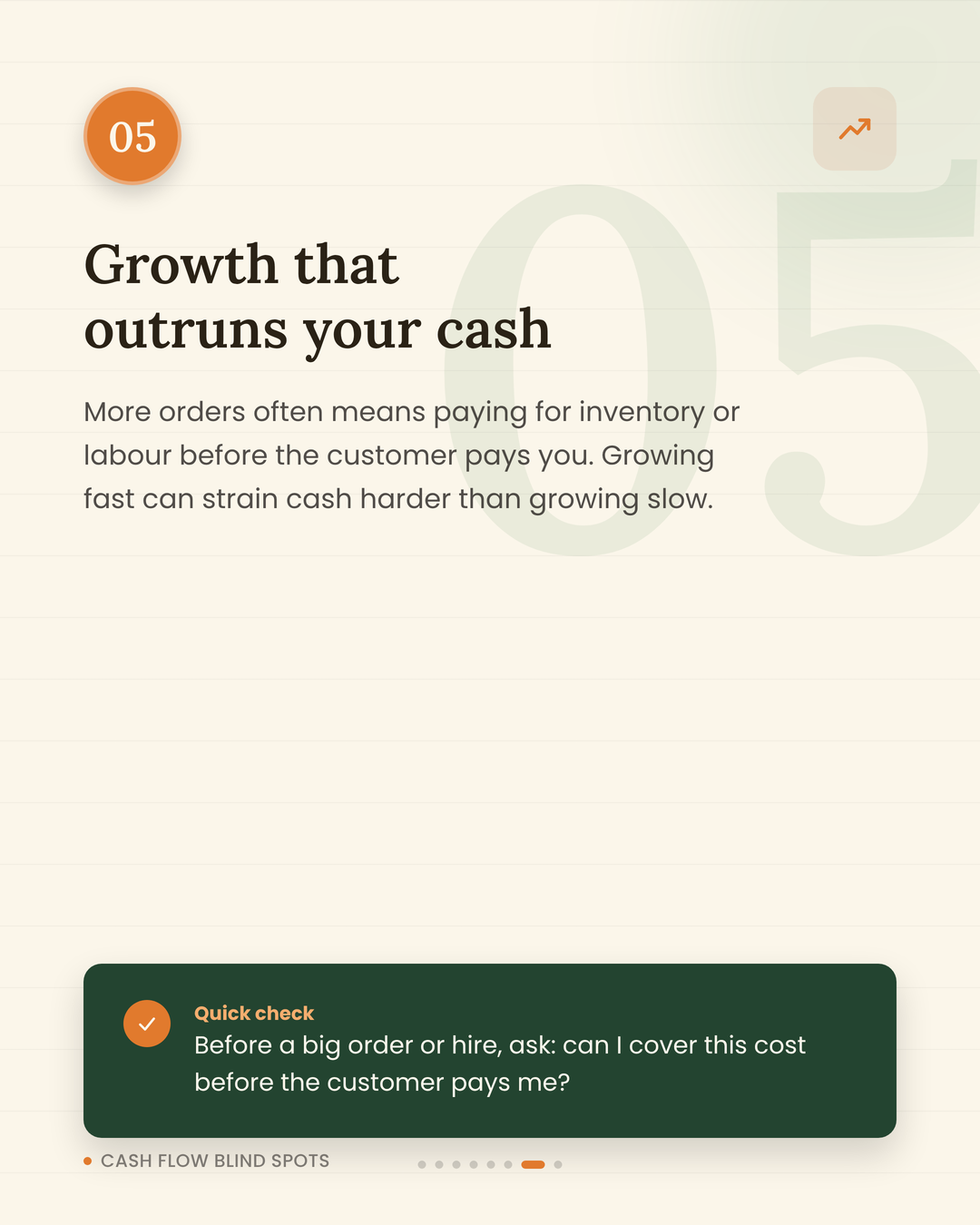
You may need to hire, buy inventory, or increase production capacity well before the customer’s payment actually arrives. The bigger and more exciting the opportunity, the bigger the cash gap can be between spending and getting paid. Plenty of businesses have grown themselves into a cash crisis, not because the growth was bad, but because nobody planned for the cash timing it required.
What to do: Before you take on a big order or make a big hire, ask one question: can you cover the cost before the customer pays you? If the honest answer is no, you need a plan — a deposit from the client, a line of credit, or a phased approach — before you say yes.
The Bottom Line
None of this requires an accounting degree. It requires checking the right numbers on a regular basis — monthly, not just at tax time. Profit tells you how your business is performing. Cash flow tells you whether you can survive long enough to enjoy that performance. Most owners who run into trouble weren’t blindsided by a lack of profit — they were blindsided by a lack of visibility into their cash.
Start with one number this month: your net income versus your actual change in bank balance. That single comparison will tell you more about the health of your business than almost anything else on your books.