
Most Owners Don’t Lose Money in One Big Moment
By Arshad Mirza, SDF Consulting — Your Trusted Business Advisor
When business owners think about financial risk, they picture the dramatic stuff: a lawsuit, a bad hire, a client who walks. But that’s rarely how the real damage happens.
In reality, most owners don’t lose money in one big moment. They lose it in a hundred small ones they never notice.
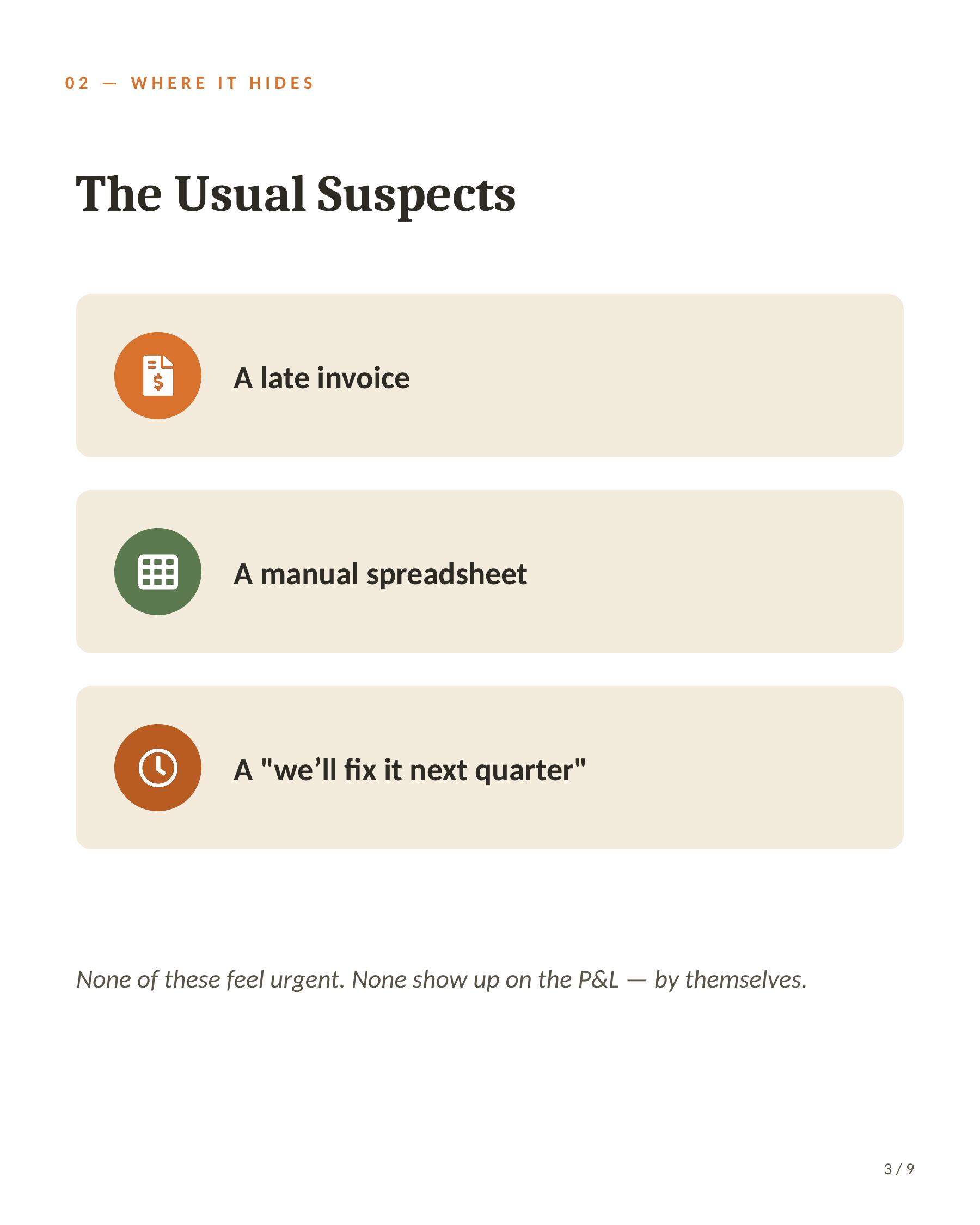
A late invoice here. A manual spreadsheet there. A “we’ll fix it next quarter” that quietly becomes “we’ll fix it next year.” None of it feels urgent in the moment. None of it triggers alarm bells. It just sits there, unaddressed, until it compounds into something much bigger than the sum of its parts.
This is the nature of operational friction — and it’s one of the most underestimated threats to a growing business.
How Small Delays Turn Into Big Problems
Here’s the part that catches most owners off guard: friction doesn’t announce itself. It builds quietly, in the background, while everyone is focused on the “real” work.
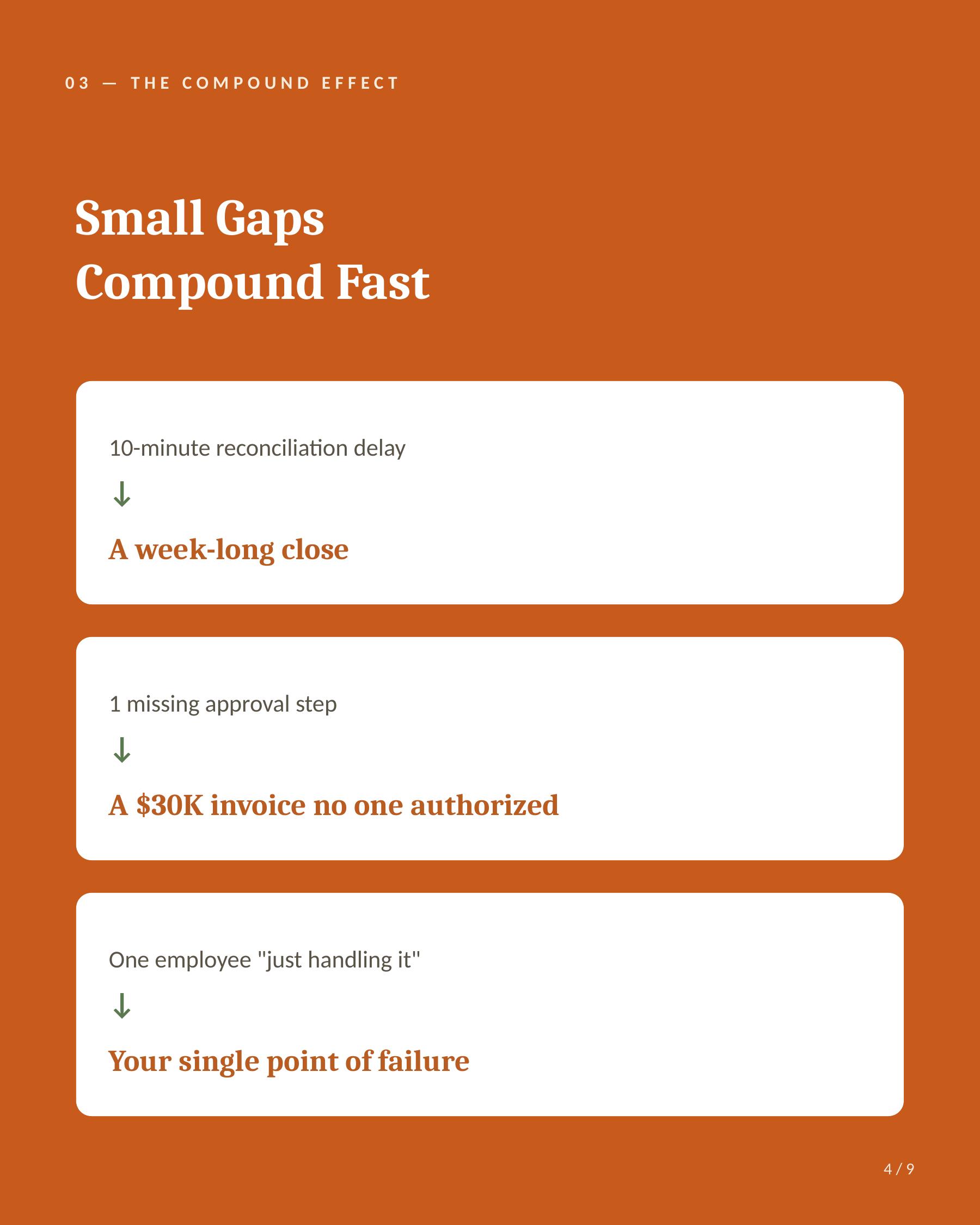
A 10-minute delay in recording a transaction becomes a week-long scramble at month-end close. A missing approval step becomes a $30,000 invoice that nobody remembers signing off on. A spreadsheet that “just needs updating” becomes the single point of failure that nobody has time to fix.
None of these started as emergencies. They started as inconveniences — the kind of thing that gets pushed to the bottom of the to-do list because there’s always something more pressing. But inconvenience has a way of compounding into crisis when it’s left unattended long enough.
What Systemic Friction Actually Looks Like
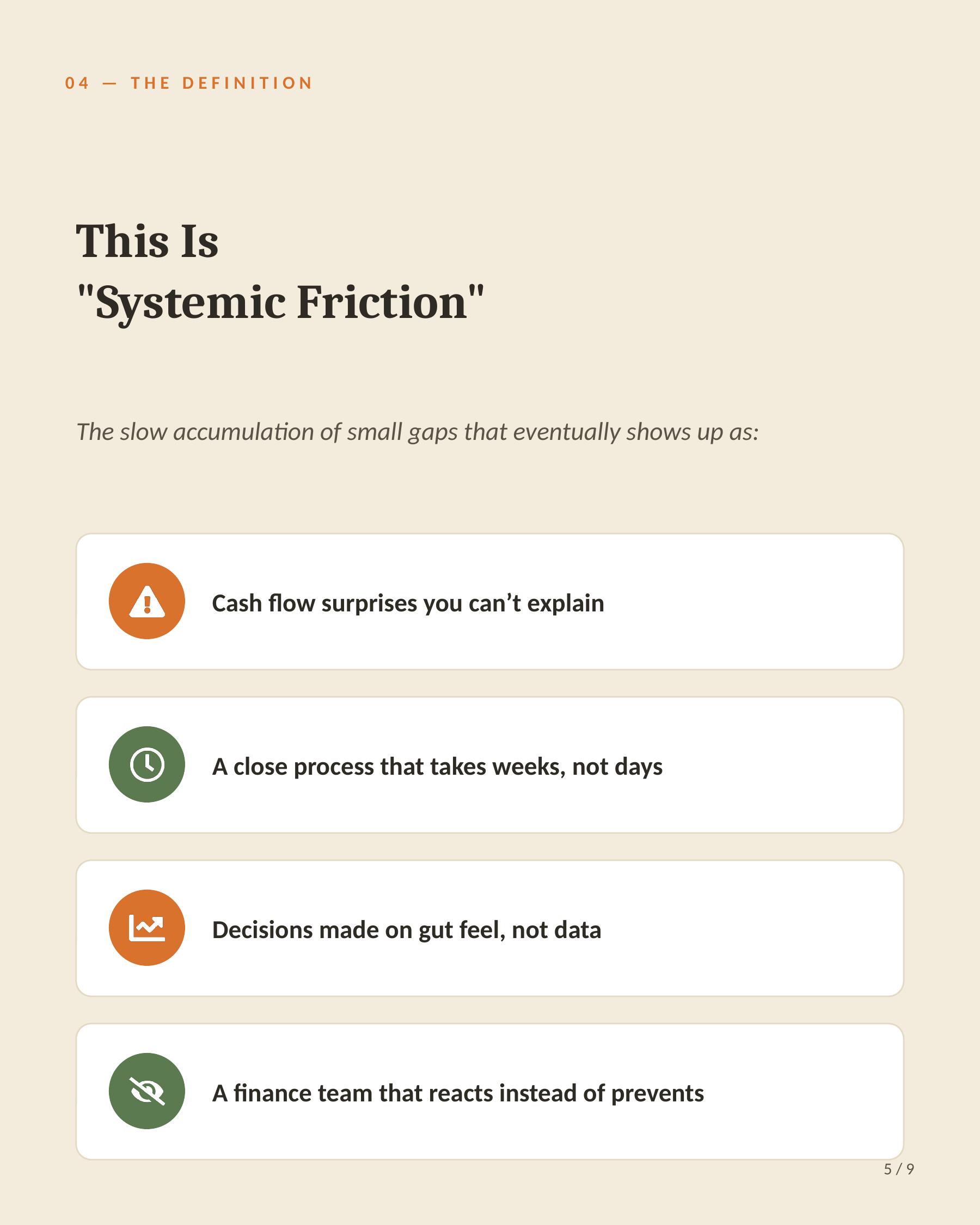
Systemic friction isn’t one specific event. It’s a pattern — a slow accumulation of small breakdowns that eventually shows up in ways you can’t ignore:
- Cash flow surprises. You think you have more runway than you do, because the numbers weren’t tracked in real time.
- Slow closes. What should take a few days at month-end stretches into weeks, because your processes weren’t built to move quickly.
- Gut-feel decisions. Instead of making calls based on current data, you’re making them based on instinct — because the real numbers arrive too late to be useful.
Individually, each of these feels manageable. Together, they create an environment where you’re constantly reacting instead of planning. You’re not steering the business anymore. You’re just trying to keep up with it.
Why You Don’t Feel It Until It’s Too Late
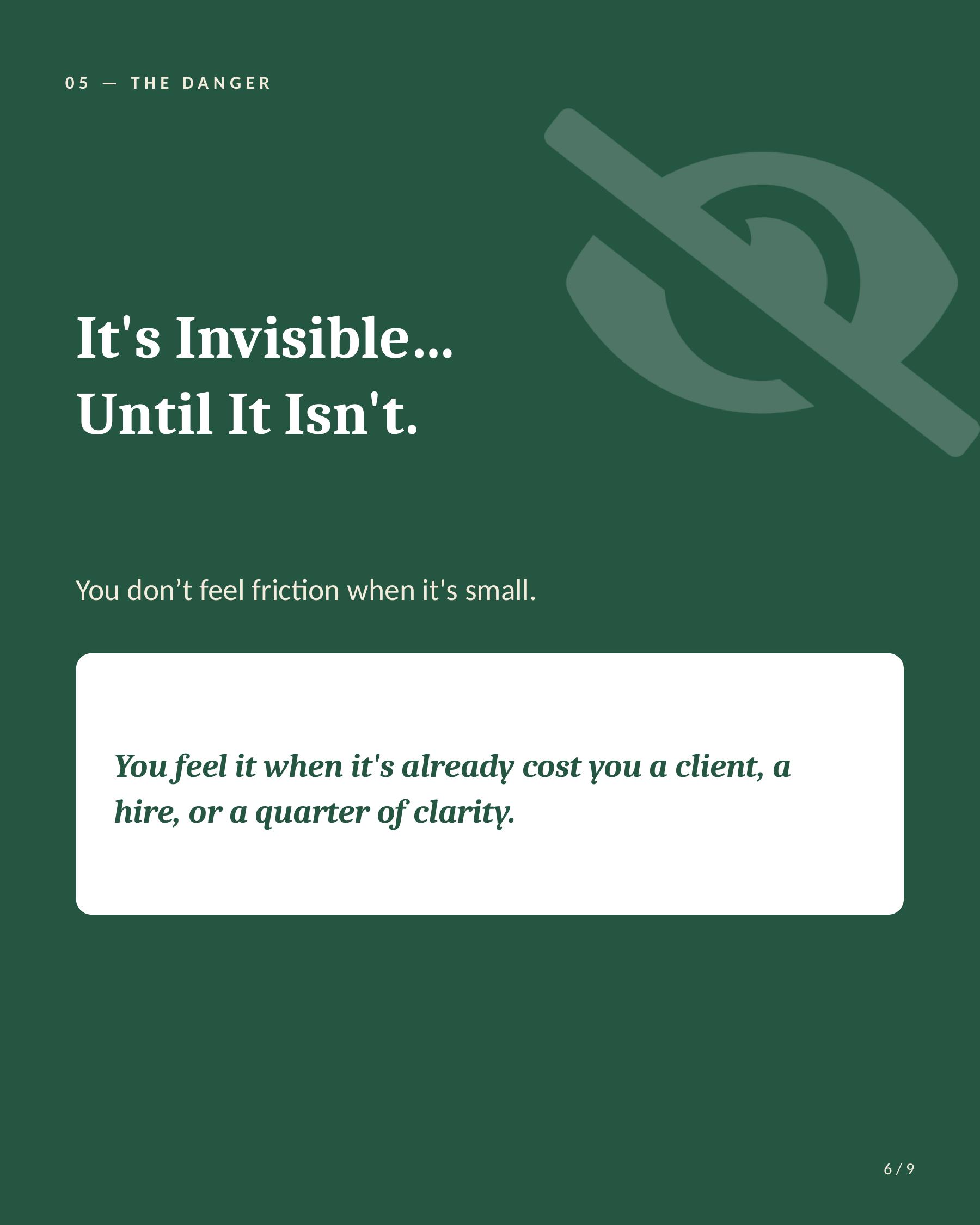
This is the most dangerous part of systemic friction: you don’t feel it when it’s small.
A missed reconciliation doesn’t feel like a big deal in the moment. A delayed approval doesn’t seem worth chasing down right away. But these small gaps accumulate silently, and by the time they surface, they’ve already cost you something significant — a client relationship, a hire you couldn’t afford to make, or a full quarter of financial clarity you can never get back.
By the time the friction becomes visible, it’s no longer a minor fix. It’s a full-blown problem that requires real time, real money, and real damage control to resolve.
The Fix Isn’t a Bigger Team — It’s Tighter Systems
When owners start to feel this kind of friction, the instinct is often to throw more people at the problem. Hire another bookkeeper. Add another layer of oversight. Bring in more hands.
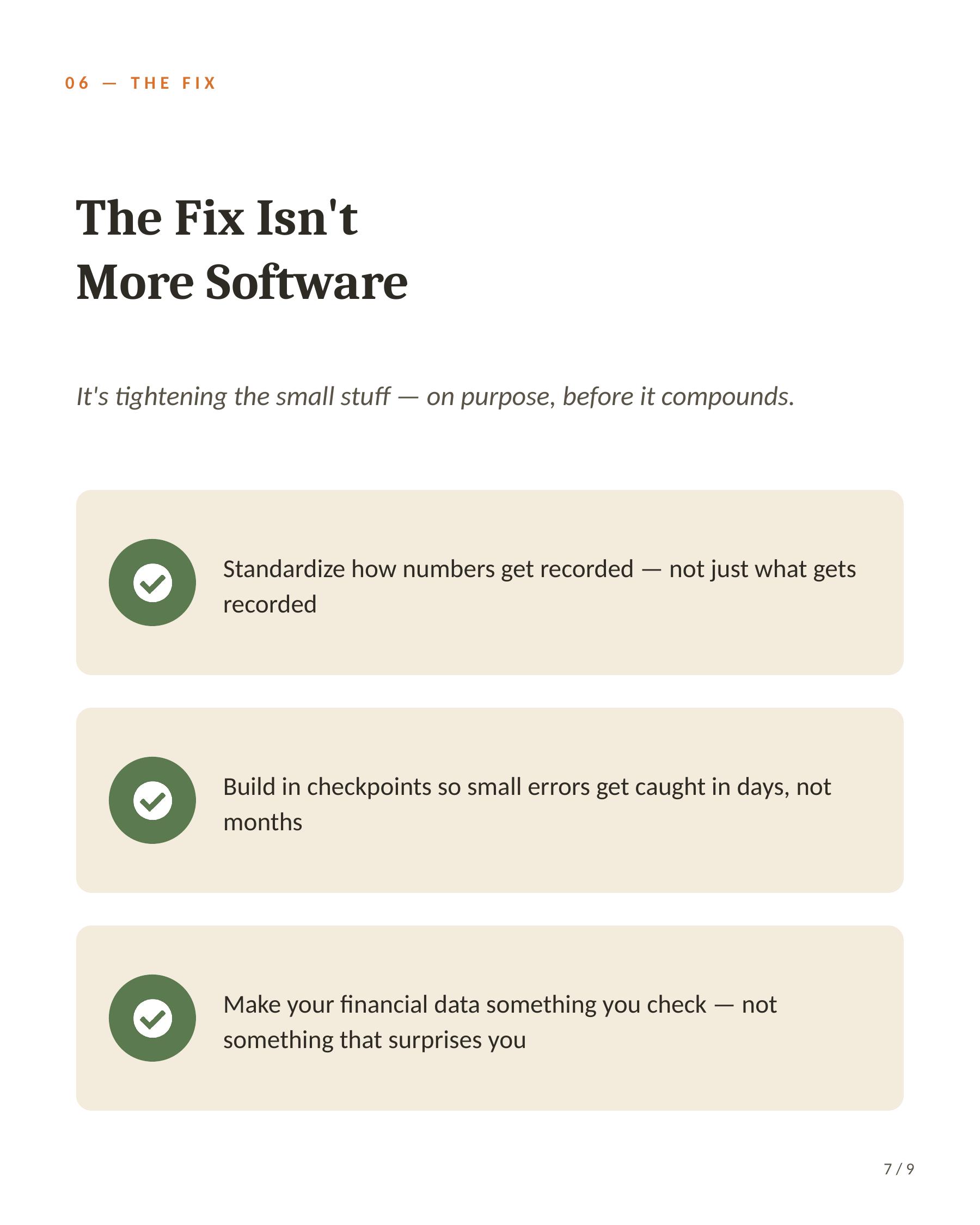
But more people without better systems just means more friction, faster. The real fix isn’t headcount. It’s tightening the small stuff before it has a chance to compound.
That means:
- Standardize How Numbers Get Recorded
When every transaction is recorded the same way, every time, you eliminate the guesswork that leads to errors. Standardization isn’t glamorous, but it’s the foundation that everything else depends on.
- Build in Checkpoints
Errors are inevitable. The goal isn’t to eliminate them entirely — it’s to catch them fast. Regular checkpoints mean a mistake gets flagged in days, not discovered three months later when it’s much harder to trace and much more expensive to fix.
- Make Your Numbers Something You Check — Not Something That Surprises You
The healthiest businesses treat their financials as a living dashboard, not a quarterly surprise. When you’re checking your numbers regularly, nothing sneaks up on you. You see problems while they’re still small enough to solve easily.
The Real Question Every Owner Should Ask
Every business has friction. That’s not a flaw — it’s a fact of operating anything with moving parts. The real question isn’t whether friction exists in your business. It’s whether you’re the one finding it, or whether it’s finding you.
Owners who stay ahead of friction build the habit of looking for it — auditing processes, questioning delays, and closing gaps before they widen. Owners who don’t end up finding out about their friction the hard way: through a missed payment, a bad quarter, or a client who left because something fell through the cracks.
The good news is that fixing this doesn’t require a massive overhaul. It requires attention to the small stuff, consistently, before it has the chance to become the big stuff.