
The Most Dangerous Misconception in Business Growth
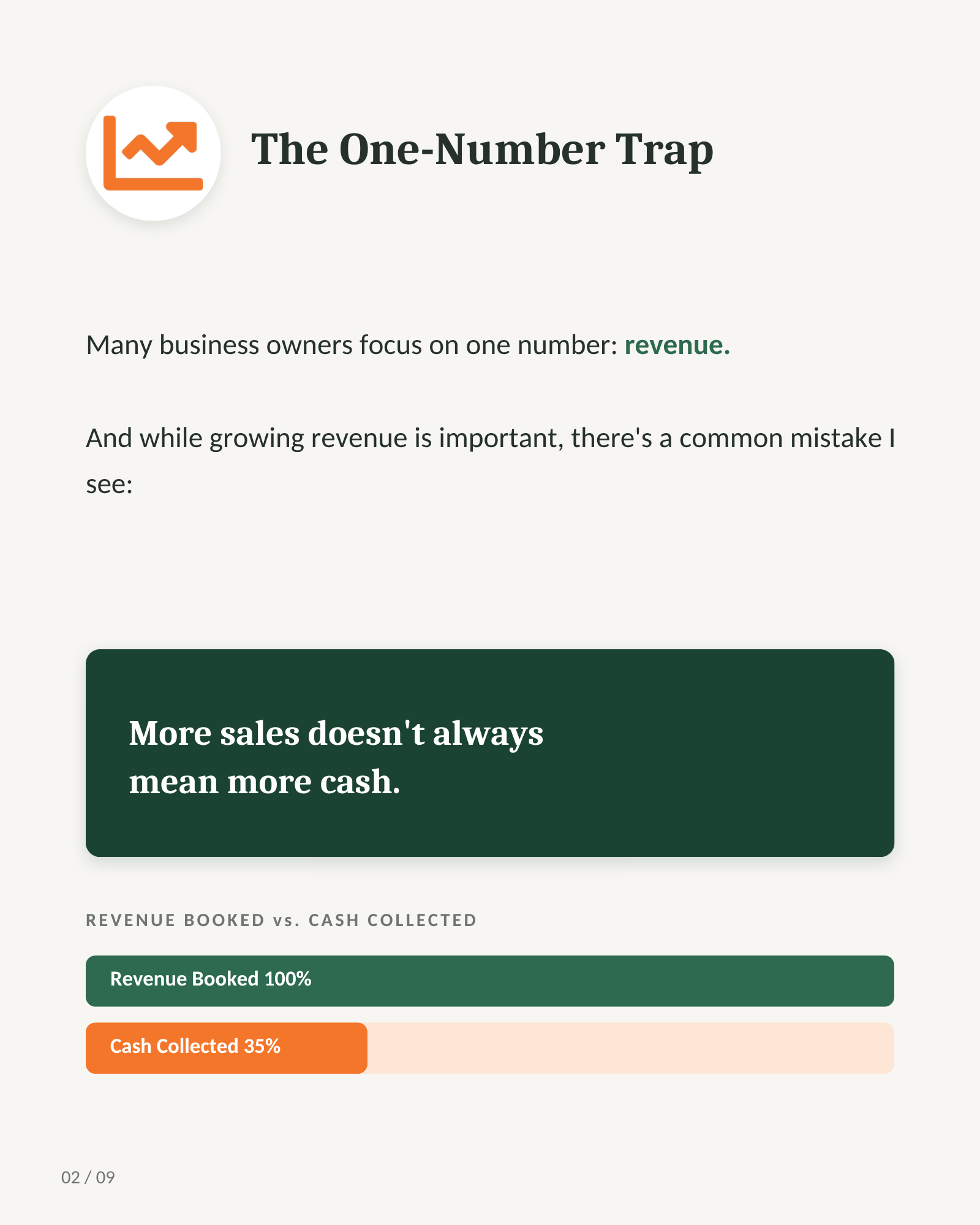
For many business owners, revenue is the headline metric. It is the number that attracts attention, signals momentum, and often serves as the primary measure of success. Higher sales are typically viewed as evidence that the business is moving in the right direction.
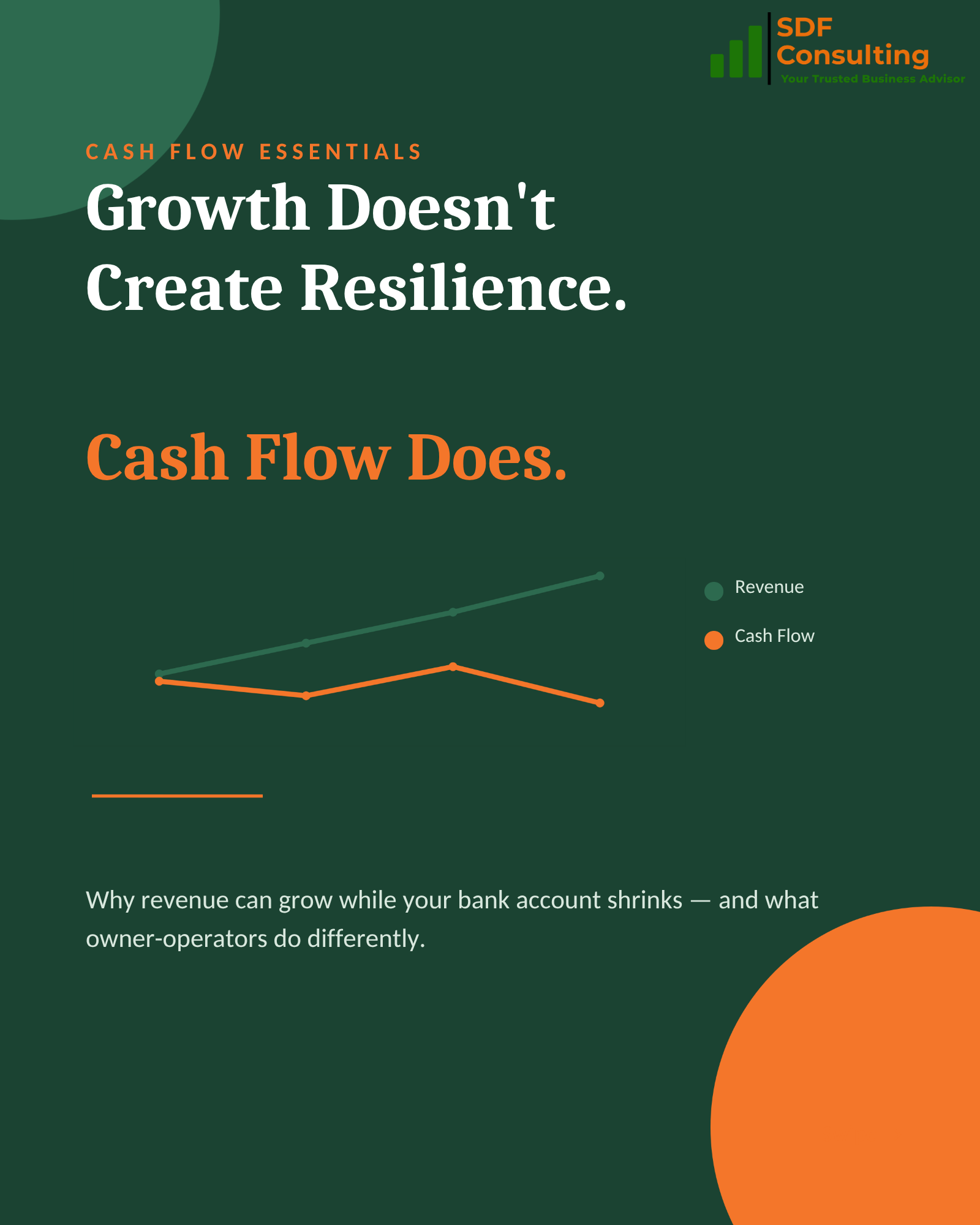
However, revenue alone does not determine the financial strength of an organization.
In fact, one of the most common challenges facing growing companies is the assumption that increasing sales automatically translates into greater financial stability. While growth can be a positive indicator, it does not guarantee resilience. Businesses can achieve record-breaking sales and still experience cash shortages, operational strain, and financial stress.
The truth is that growth consumes cash before it generates cash. As a result, a business can appear highly successful on paper while simultaneously facing liquidity challenges behind the scenes.
The companies that endure market cycles, navigate uncertainty, and create long-term enterprise value understand a fundamental principle:
Revenue measures activity. Cash flow measures sustainability.
Why Revenue and Cash Flow Are Not the Same Thing
Revenue represents the value of goods or services sold during a specific period. Cash flow represents the actual movement of money into and out of the business.
The distinction is critical.
Consider a company that secures a major contract valued at $500,000. From a revenue perspective, this appears to be a significant achievement. The sales team celebrates, management forecasts growth, and the financial statements reflect strong performance.
Yet the reality may be very different.
If the customer pays on 90-day terms, the business may not receive a dollar of that revenue for three months. In the meantime, the company must purchase inventory, pay suppliers, fund production, compensate employees, cover insurance, service debt, and manage everyday operating expenses.
The contract may be profitable.
The business may even be growing rapidly.
But without sufficient liquidity, it may struggle to fund its obligations while waiting to be paid.
This is the paradox that many growing businesses encounter: the faster they grow, the greater their demand for working capital.
Growth without cash flow discipline can create financial pressure rather than financial strength.
The Businesses That Thrive Understand the Cash Conversion Cycle
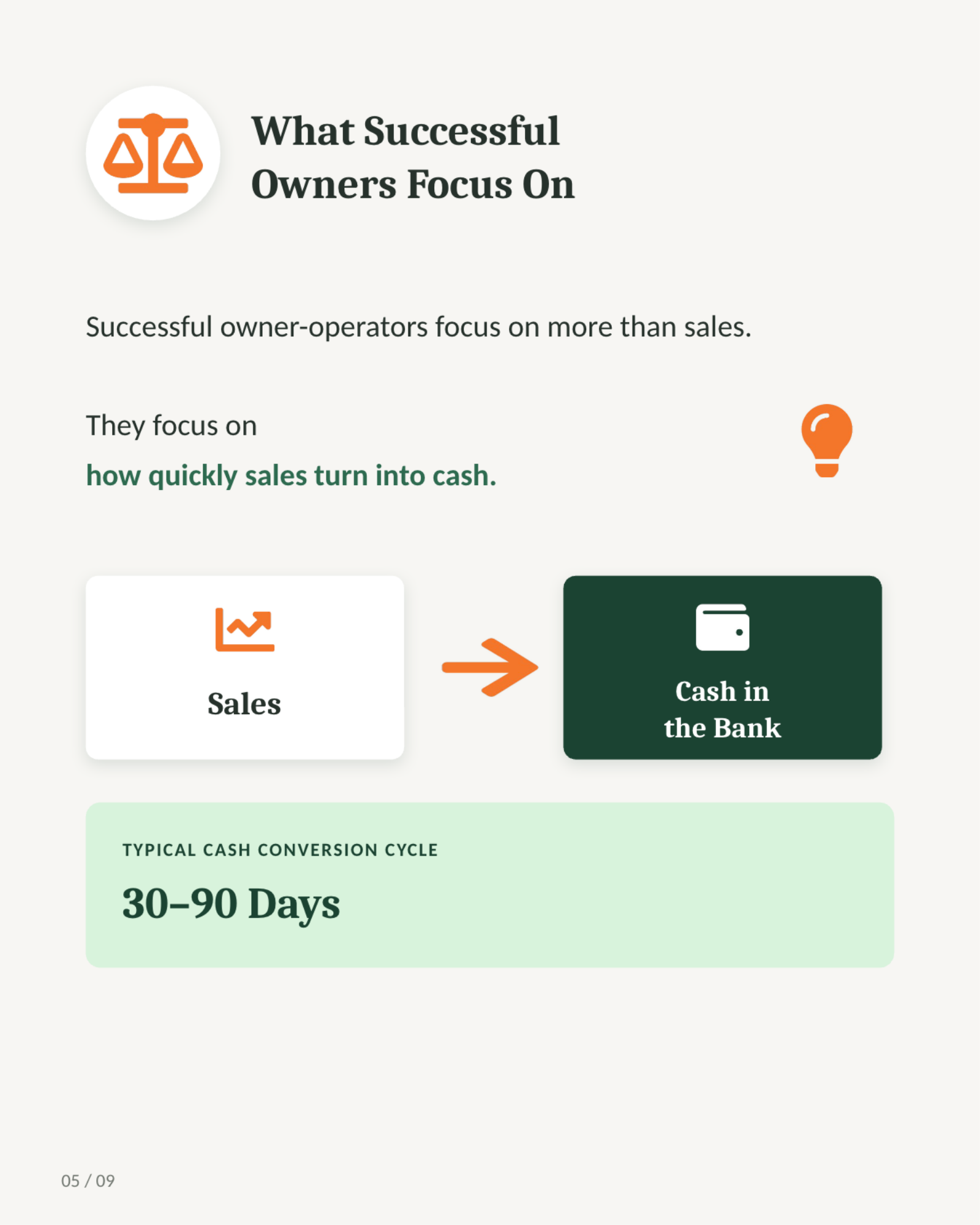
Highly successful owner-operators do not focus exclusively on generating sales. They focus on how efficiently those sales are converted into cash.
This requires a deep understanding of the cash conversion cycle—the amount of time it takes for money invested in operations to return to the business as collected revenue.
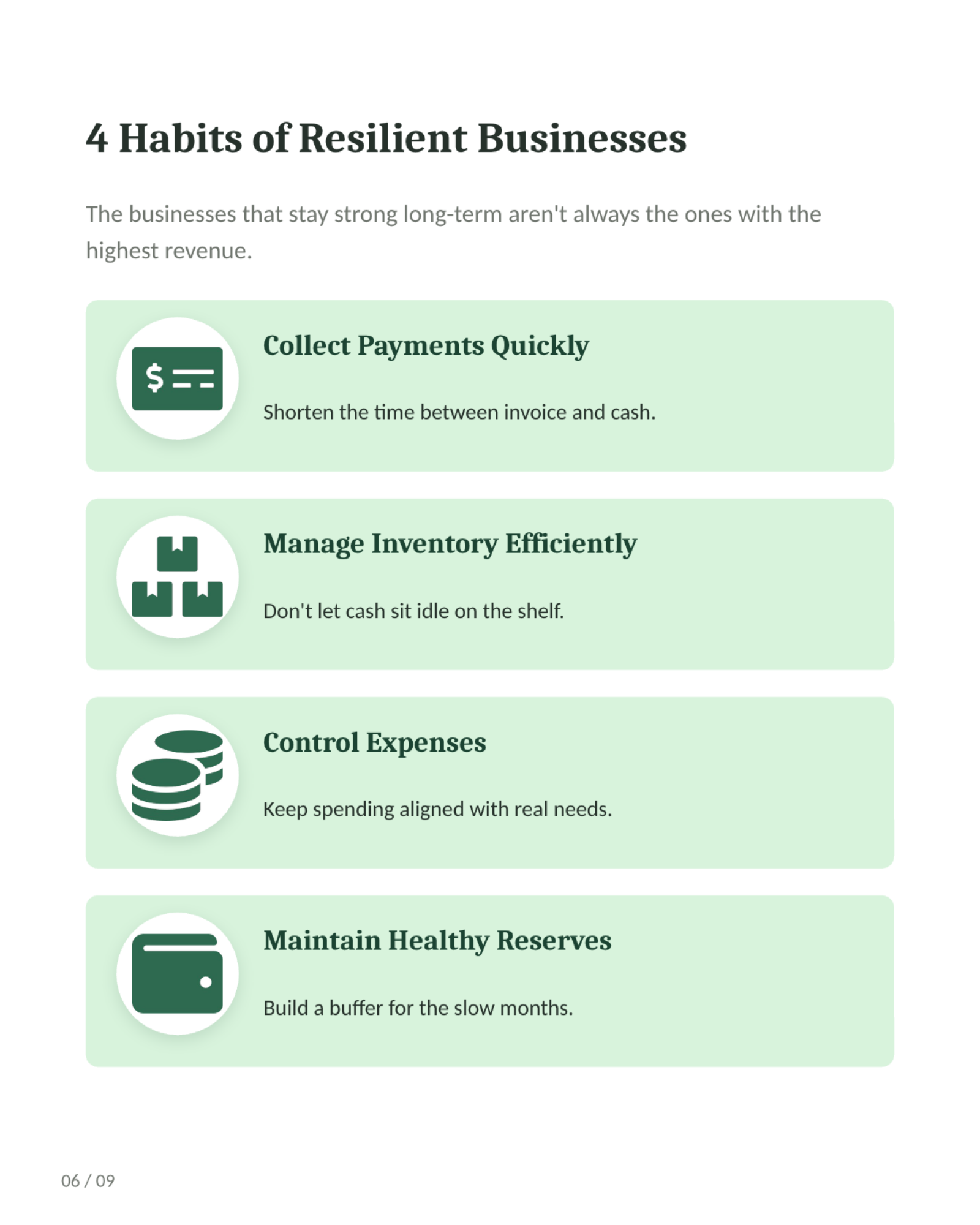
The most resilient organizations continually improve this cycle by optimizing three key areas:
-
Collecting Customer Payments Faster
Revenue only creates value when it becomes cash.
Businesses with strong collection processes reduce outstanding receivables, establish clear payment terms, and actively monitor customer payment behavior. By accelerating collections, they improve liquidity and reduce dependence on external financing.
Every day a receivable remains unpaid is another day cash remains unavailable to support operations and growth initiatives.
-
Managing Inventory Efficiently
Excess inventory often represents cash trapped inside the business.
While inventory is essential for serving customers, carrying too much inventory can significantly constrain liquidity. Effective businesses balance customer demand with operational efficiency, ensuring they maintain sufficient stock without unnecessarily tying up working capital.
Inventory management is not simply an operational concern—it is a cash flow strategy.
-
Maintaining Expense Discipline
As organizations grow, spending often increases alongside revenue. New hires, technology investments, facilities, and expanded operations can quickly consume available cash.
Strong leaders recognize that sustainable growth requires disciplined expense management.
They continually evaluate whether costs are generating strategic value and remain focused on preserving margins and protecting cash reserves.
Revenue growth is important, but profitable growth is what ultimately strengthens a business.
Why Liquidity Creates Strategic Flexibility
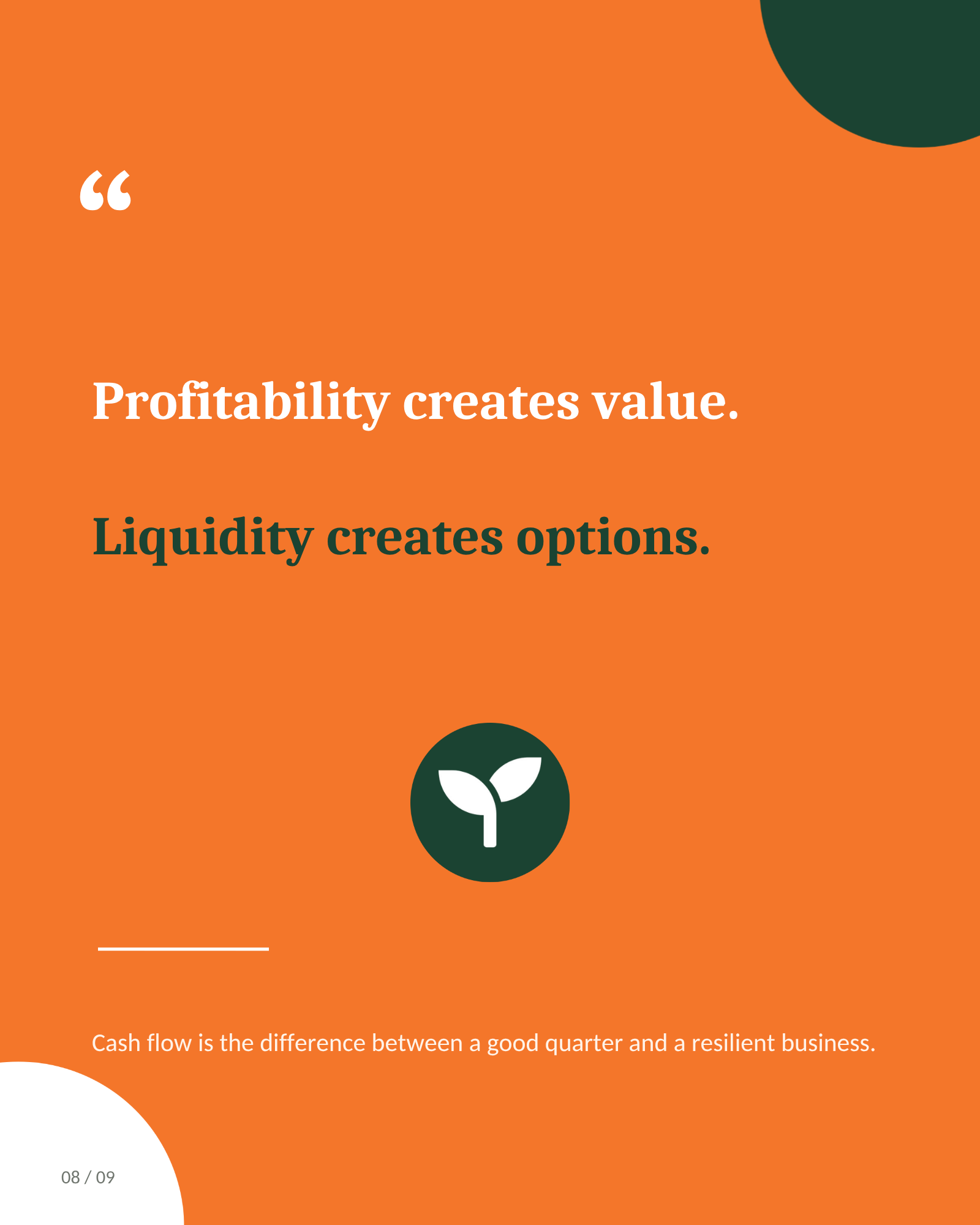
Profitability and liquidity serve different purposes.
Profitability demonstrates that a business model is creating economic value over time. Liquidity determines whether the organization has the financial flexibility to respond to opportunities and challenges in real time.
A business with healthy cash reserves can:
- Invest confidently in growth initiatives
- Navigate economic uncertainty
- Manage unexpected disruptions
- Capitalize on strategic acquisition opportunities
- Retain key employees during challenging periods
- Avoid unnecessary reliance on external debt
In contrast, a business operating with constrained liquidity often finds itself reacting rather than leading. Strategic decisions become limited by immediate cash requirements rather than guided by long-term objectives.
Cash provides optionality, and optionality is one of the most valuable competitive advantages a business can possess.
Building a More Resilient Business
The strongest businesses are not necessarily those generating the highest revenue.
They are the organizations that consistently convert revenue into cash, manage working capital effectively, and maintain the financial flexibility required to adapt and grow.
These businesses understand that sustainable success is built on more than top-line performance. It requires a balanced approach that combines growth, profitability, and liquidity.
When leaders focus exclusively on sales, they risk overlooking the financial engine that keeps the organization moving forward.
When they focus on cash flow, they gain visibility into the true health of the business.
A Final Thought
Over the years, one lesson has remained consistently true:
Revenue tells you how much business you’re doing.
Profitability tells you how much value you’re creating.
Cash flow tells you whether you’re able to continue growing.
Growth captures attention. Profitability earns credibility. But liquidity creates resilience.
And in business, resilience is what allows success to endure.