
Executive take:
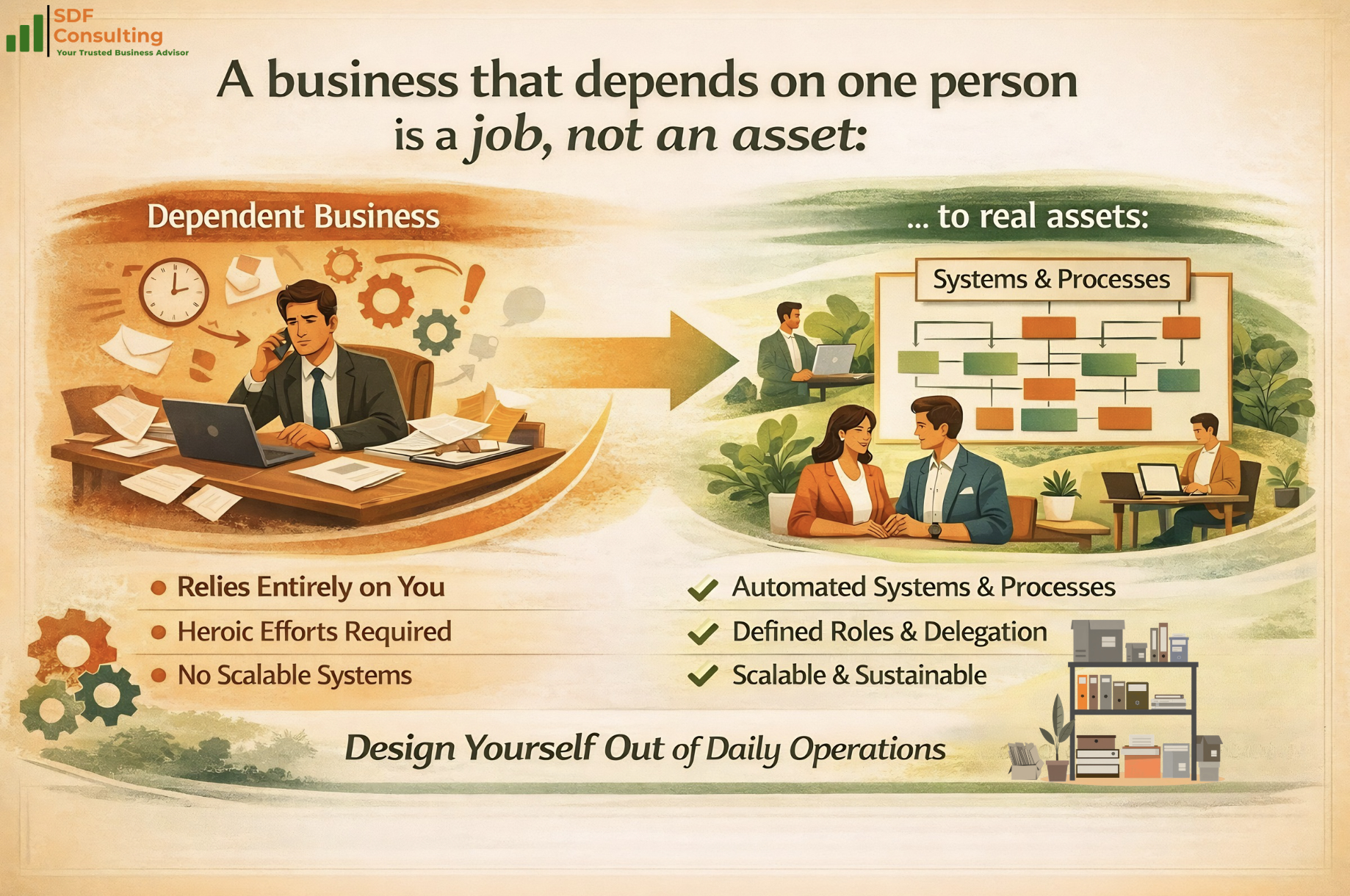
If the business stops when you stop, it’s a job. An asset runs, scales, and creates value without a single point of failure.
Here’s a clean way to think about it:
The Litmus Test
Ask three questions:
- Can the business operate for 90 days without you?
- Is revenue driven by systems or by your personal effort and reputation?
- Could someone else step into your role with documented processes?
If the answer is “no” to most → you own a job.
If the answer is “yes” → you’re building an asset.
Job vs Asset (Simplified)
A Job
- Revenue tied to one individual
- Tribal knowledge in someone’s head
- Clients say: “We work with you”
- Vacations = revenue anxiety
An Asset
- Documented processes and controls
- Delegated delivery and decision‑making
- Clients say: “We work with the firm”
- Time away doesn’t hurt cash flow
Why This Matters
- Valuation: Buyers don’t pay for dependency risk
- Scalability: One person caps growth
- Burnout: Personal effort is not leverage
- Exit options: An owner‑dependent business is hard to sell, easy to quit
The Real Shift
Moving from operator → owner means:
- Designing systems, not heroic effort
- Hiring for replacement, not relief
- Letting go of being indispensable
Ironically, the moment the business doesn’t need you anymore is when it becomes most valuable—to others and to you.