
The 6-Number Health Check for Your Business
Why revenue doesn’t tell the whole story, and the six numbers that do
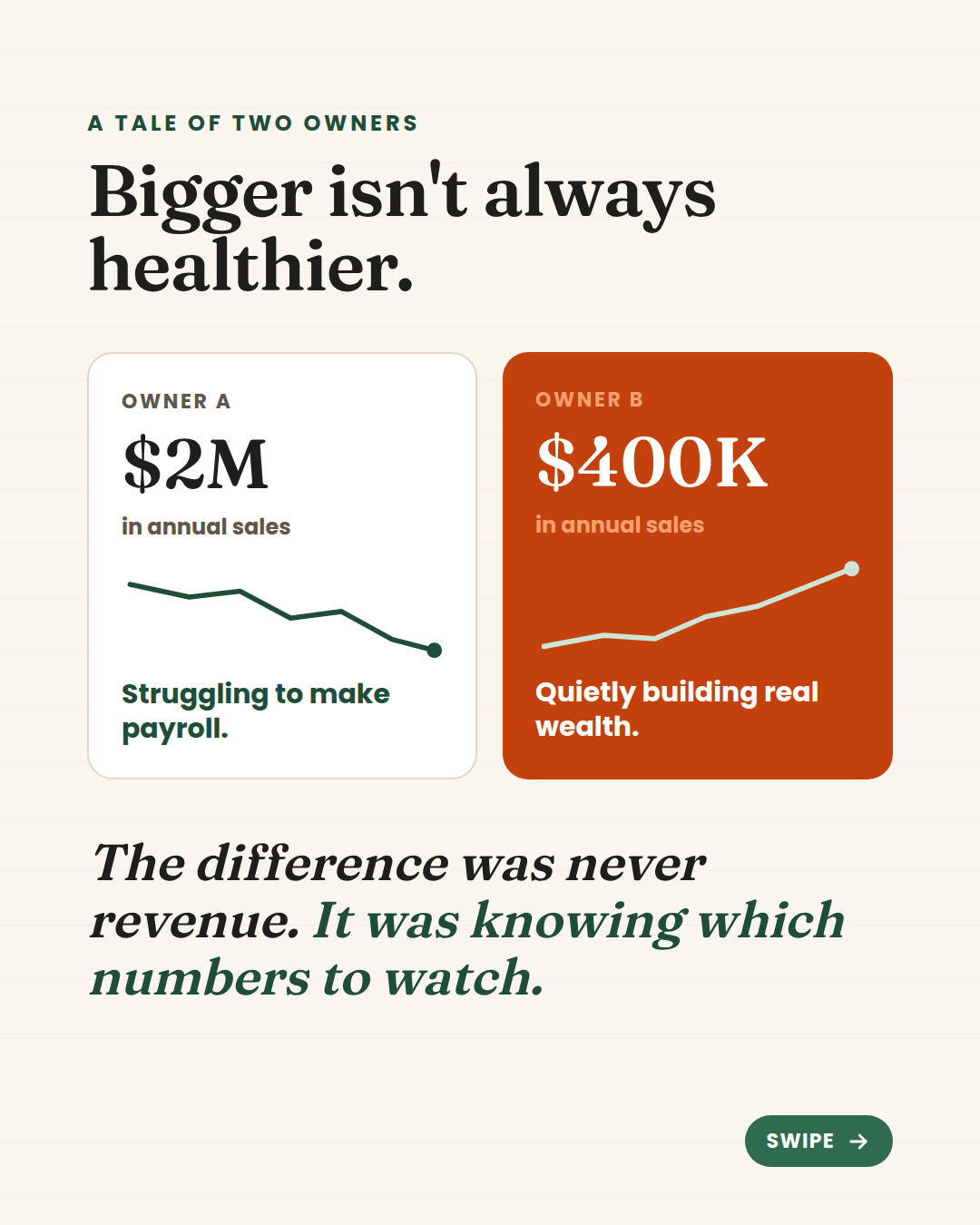
I’ve sat across the table from owners doing $2 million in sales who were struggling to make payroll, and from owners doing $400,000 who were quietly building real wealth.
The difference was never revenue. It was knowing which numbers to watch.
Revenue is the number most owners talk about, and it’s easy to see why. It’s visible, it’s exciting, and it feels like progress. But revenue only tells you how much money passed through the business. It says nothing about how much stayed, how quickly it arrived, or how exposed you are if something goes wrong.
If finance isn’t your background, the good news is you don’t need to become an accountant. You need a short list of numbers you understand, check regularly, and act on. Here’s mine.
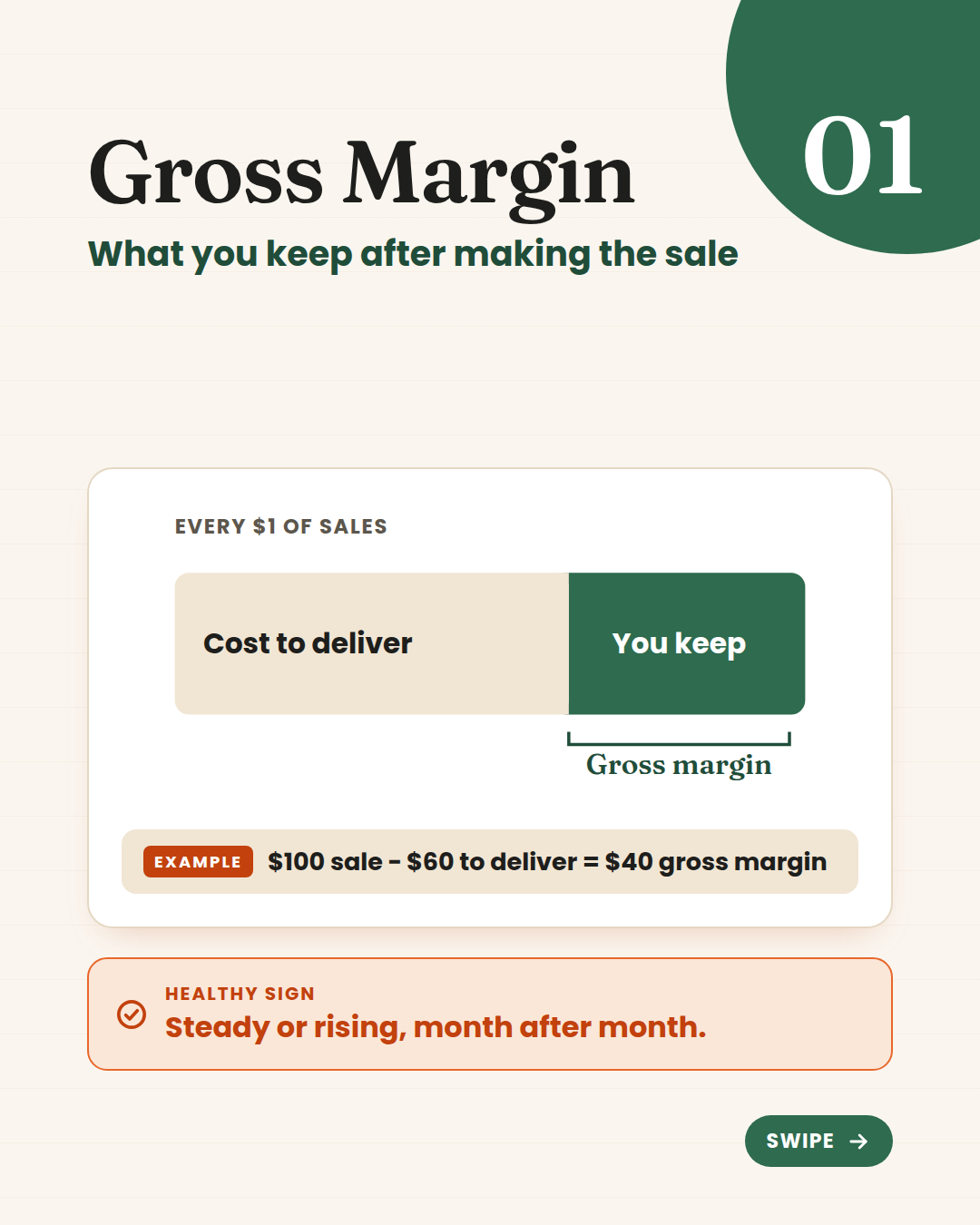
1. Gross Margin: What You Keep After Making the Sale
Take what a customer pays you, then subtract what it directly cost you to deliver that product or service: materials, labour on the job, subcontractors, shipping. What’s left is your gross margin.
For example, if you complete a $10,000 job and the materials and crew cost $6,500, your gross margin is $3,500, or 35%.
This number matters because everything else in your business, including rent, salaries, marketing, and your own paycheque, has to be paid out of it. If gross margin is shrinking, growing sales will only make you busier, not richer. Rising supplier costs, underpriced quotes, and discounting to win work are the usual culprits.
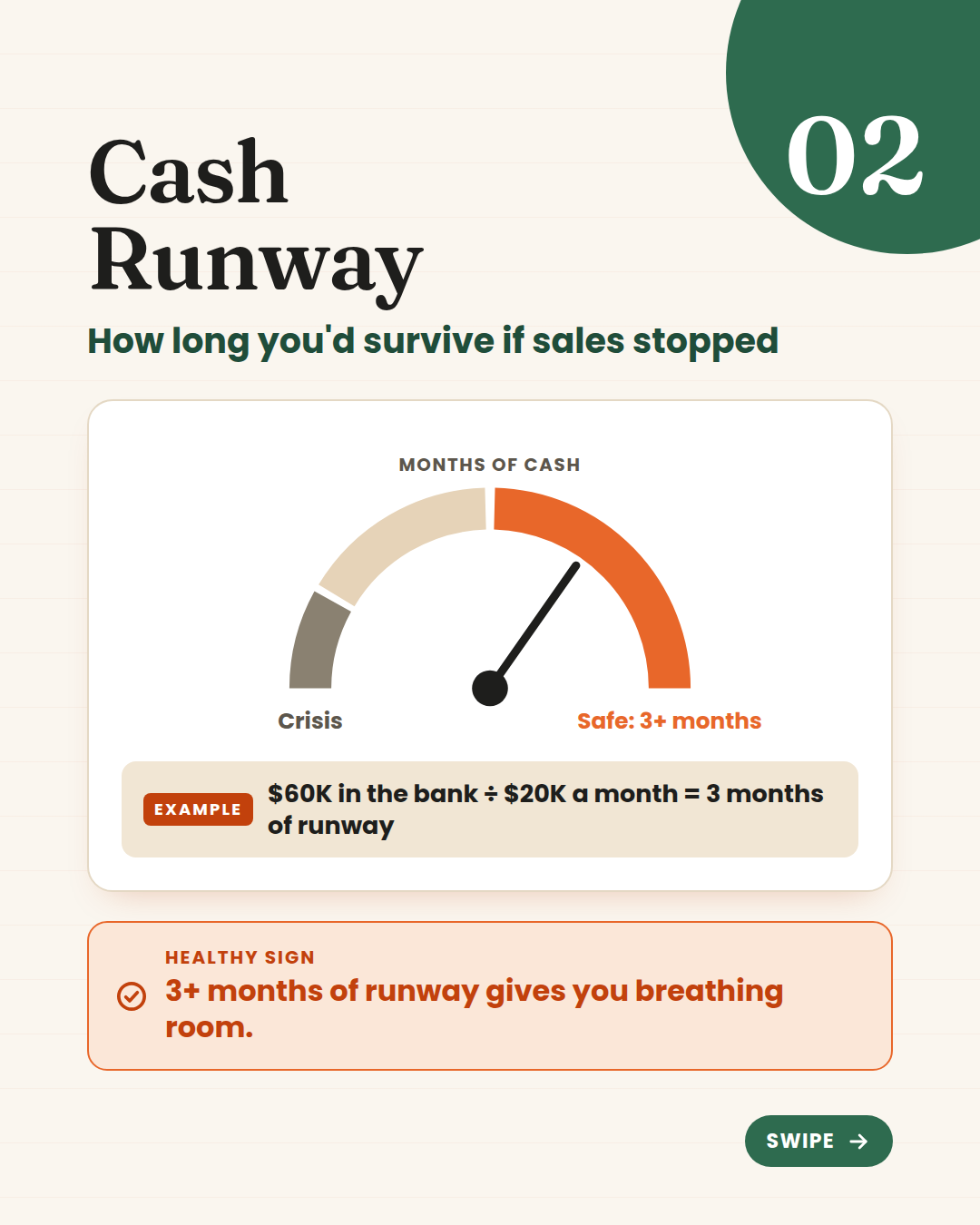
2. Cash Runway: How Long You Could Survive If Sales Stopped
Divide the cash in your bank account by what it costs to keep the doors open each month. The result is how many months you could operate with no new money coming in.
If you have $90,000 in the bank and your monthly operating costs are $30,000, you have three months of runway.
Three months or more gives you breathing room to make decisions calmly. Under one month means every slow week becomes a crisis, and crisis decisions are rarely good ones. Runway is the number that lets you sleep at night, and it’s the one most owners only think about when it’s already too low.
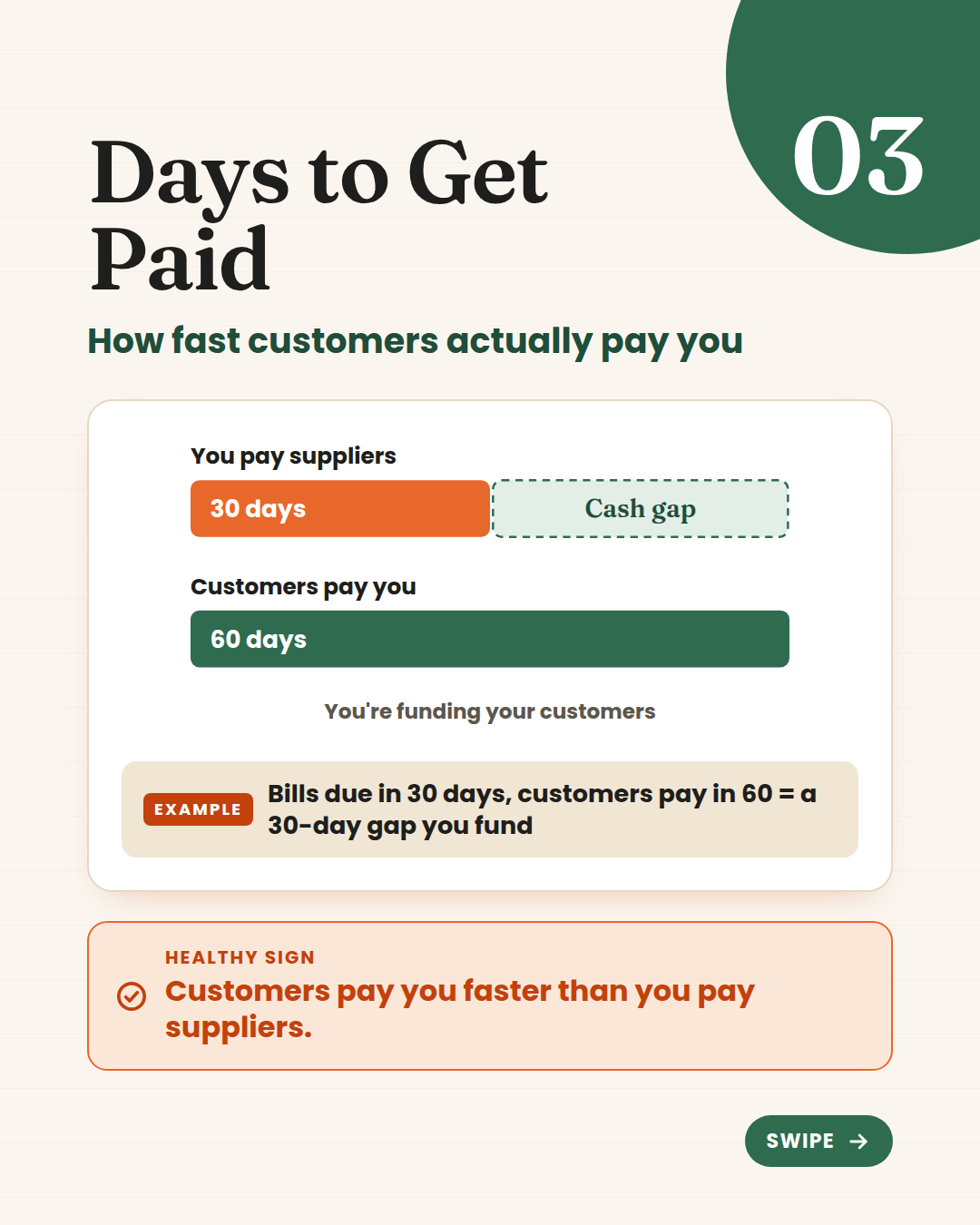
3. Days to Get Paid: How Fast Customers Actually Pay You
A sale isn’t money until it’s in your account.
Look at how many days, on average, it takes from sending an invoice to receiving payment. Then compare that to how quickly you have to pay your own suppliers. If customers take 60 days to pay but your suppliers want payment in 30, you’re financing your customers’ businesses with your own cash.
This is how profitable companies run out of money. On paper, everything looks healthy. In the bank account, the cash is always somewhere else. Tightening payment terms, invoicing promptly, requiring deposits, and following up consistently on overdue accounts can free up more cash than almost any other change.
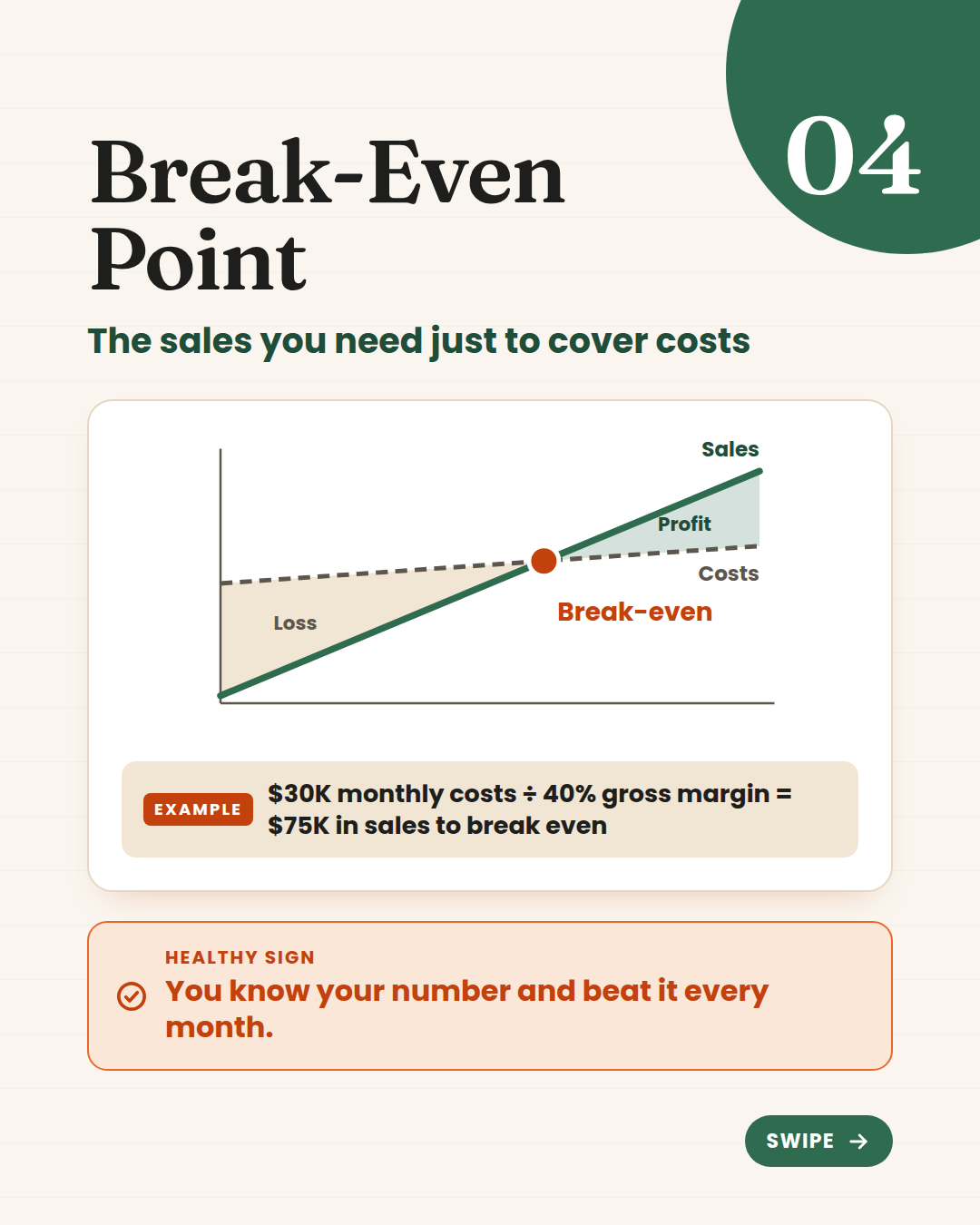
4. Break-Even Point: The Sales You Need Just to Cover Costs
Your break-even point is the monthly sales figure where you stop losing money. Below it, you’re in the red. Every dollar above it contributes to profit.
Most owners I meet have never calculated it, and yet it shapes nearly every major decision. Should you hire another employee? Move to a bigger space? Lower your prices to win more work? Each of those choices moves your break-even point, and knowing where it sits tells you exactly how much additional sales volume you’d need to justify the change.
Once you know this number, you stop guessing. You can look at a slow month and know immediately whether it’s a concern or just noise.
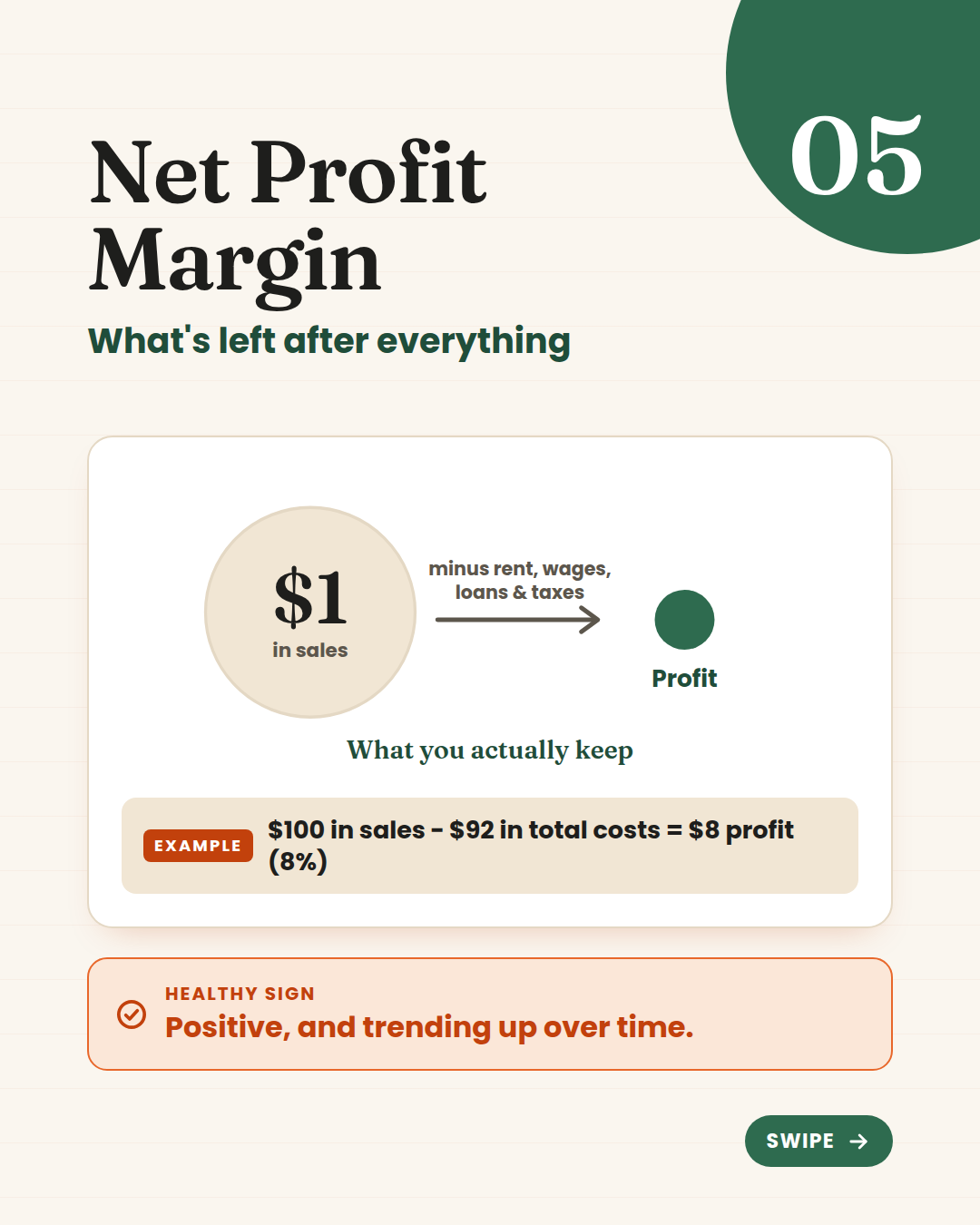
5. Net Profit Margin: What’s Left After Everything
After rent, wages, software, insurance, loan payments, and taxes, what percentage of each sales dollar do you actually keep?
If your business brings in $800,000 a year and $56,000 is left at the end, your net profit margin is 7%.
This is the truest measure of whether the business is working for you, or you’re working for it. A business with strong revenue and a thin net margin carries a lot of risk for very little reward. Tracking this number over time shows you whether growth is actually making you better off, or just making the operation bigger and more complicated.
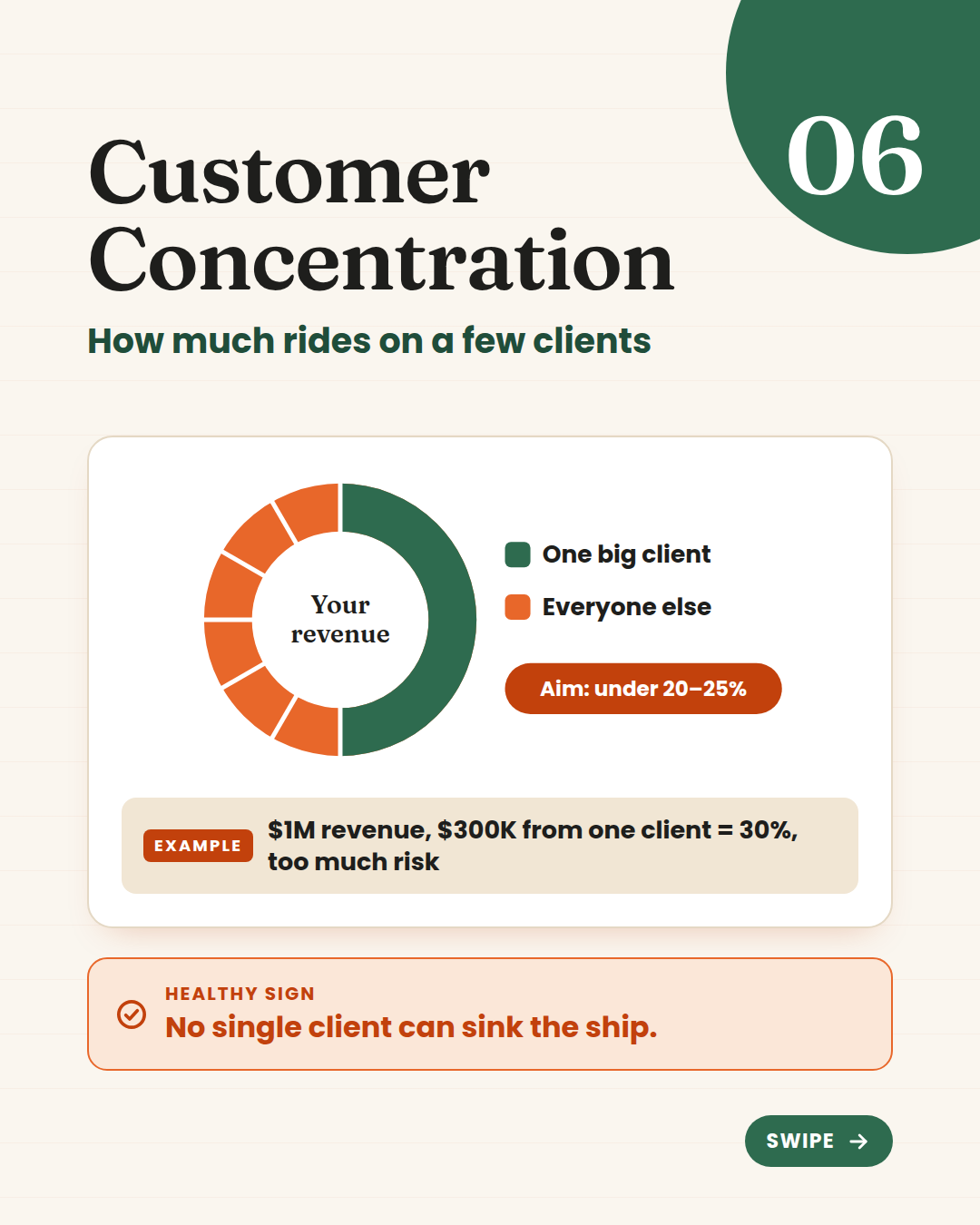
6. Customer Concentration: How Much Depends on a Few Clients
Look at your revenue by customer. If one client makes up more than 20 to 25% of your sales, your business is only as stable as that relationship.
Large clients are valuable, and landing one often feels like a turning point. But heavy dependence carries hidden costs. That customer gains leverage over your pricing, your terms, and your priorities. And if they leave, get acquired, or simply cut their budget, the impact can be severe.
One lost account shouldn’t put your company at risk. If it would, that’s a signal to deliberately broaden your customer base before you’re forced to.
Putting the Health Check to Work
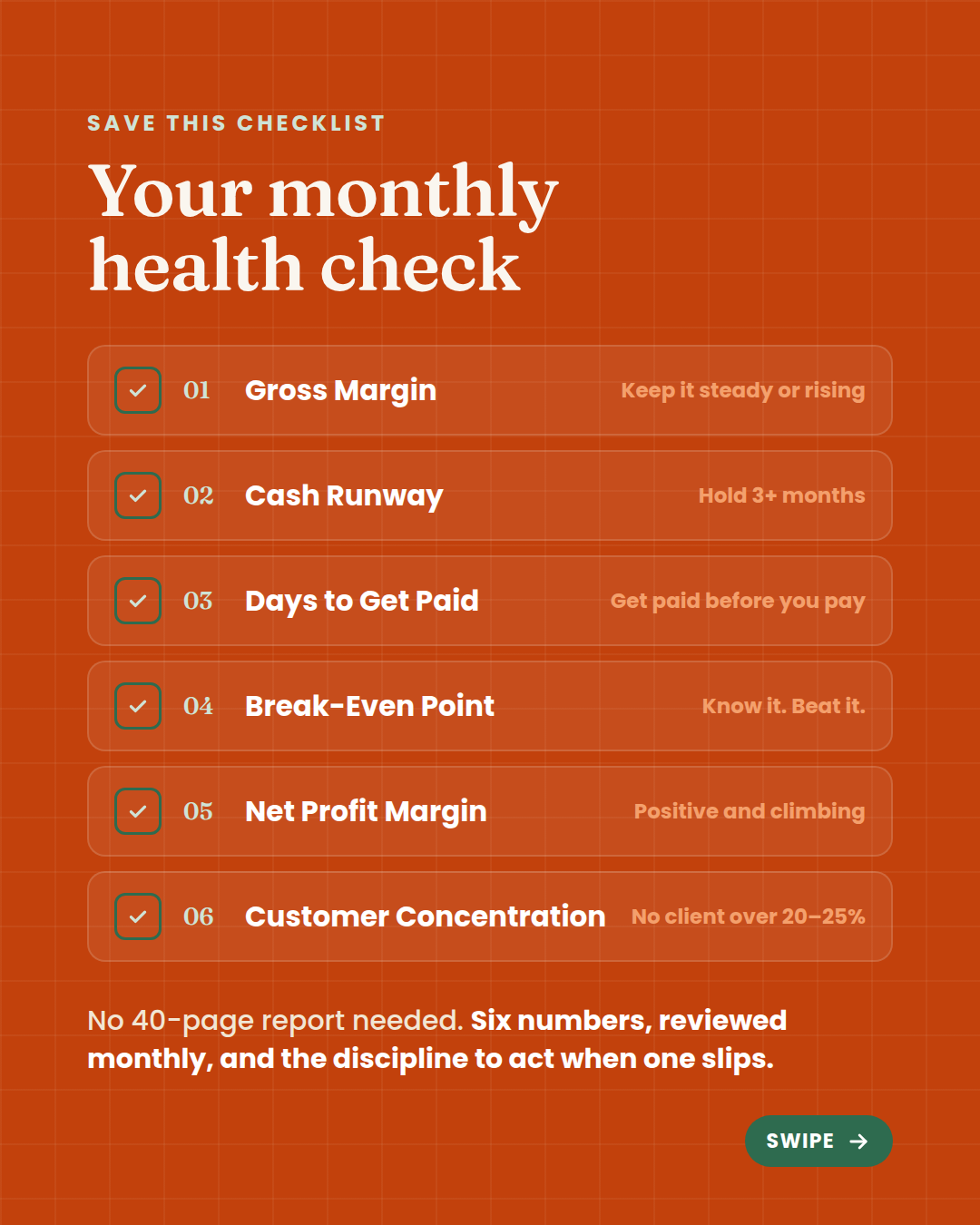
You don’t need a 40-page financial report. You need these six numbers, reviewed monthly, and the discipline to act when one of them moves in the wrong direction.
A simple approach is to set aside one hour at the start of each month. Pull the six figures, write them down alongside the previous month’s, and ask one question of each: is this getting better or worse, and why? Over time, you’ll start to see patterns long before they show up as a cash shortfall or a disappointing year-end.
Revenue tells you how big the business is. These numbers tell you whether it will last.
Your Next Step
Which of these do you track today, and which one would surprise you if you calculated it this week?
If you’re not sure where to start, or you’d like a second set of eyes on what your numbers are telling you, that’s exactly what we do at SDF Consulting. We help business owners turn financial information into clear decisions, without the jargon. Reach out to book a conversation.
SDF Consulting: Your Trusted Business Advisor