
EBITDA vs. Net Income: Why Your “Profit” Might Be Lying to You
Ever close out a great year — strong sales, busy crews, a full pipeline — and think “we crushed it”… but your bank account tells a different story?
If that disconnect sounds familiar, you’re not imagining things. And you’re not alone. It’s one of the most common — and most costly — points of confusion for business owners. Nine times out of ten, the culprit is the same: you’re looking at EBITDA when you should be looking at Net Income.
They sound similar. They’re often used almost interchangeably in casual conversation. But they answer two very different questions, and mixing them up can lead you to make decisions that feel smart on paper and hurt in real life.
Let’s break it down.
What EBITDA Actually Tells You
EBITDA stands for Earnings Before Interest, Taxes, Depreciation, and Amortization. In plain English, it’s the money your business generated before you account for:
- Interest on loans and financing
- Taxes owed to the government
- Depreciation of equipment, vehicles, and property over time
- Amortization of intangible assets like patents or goodwill
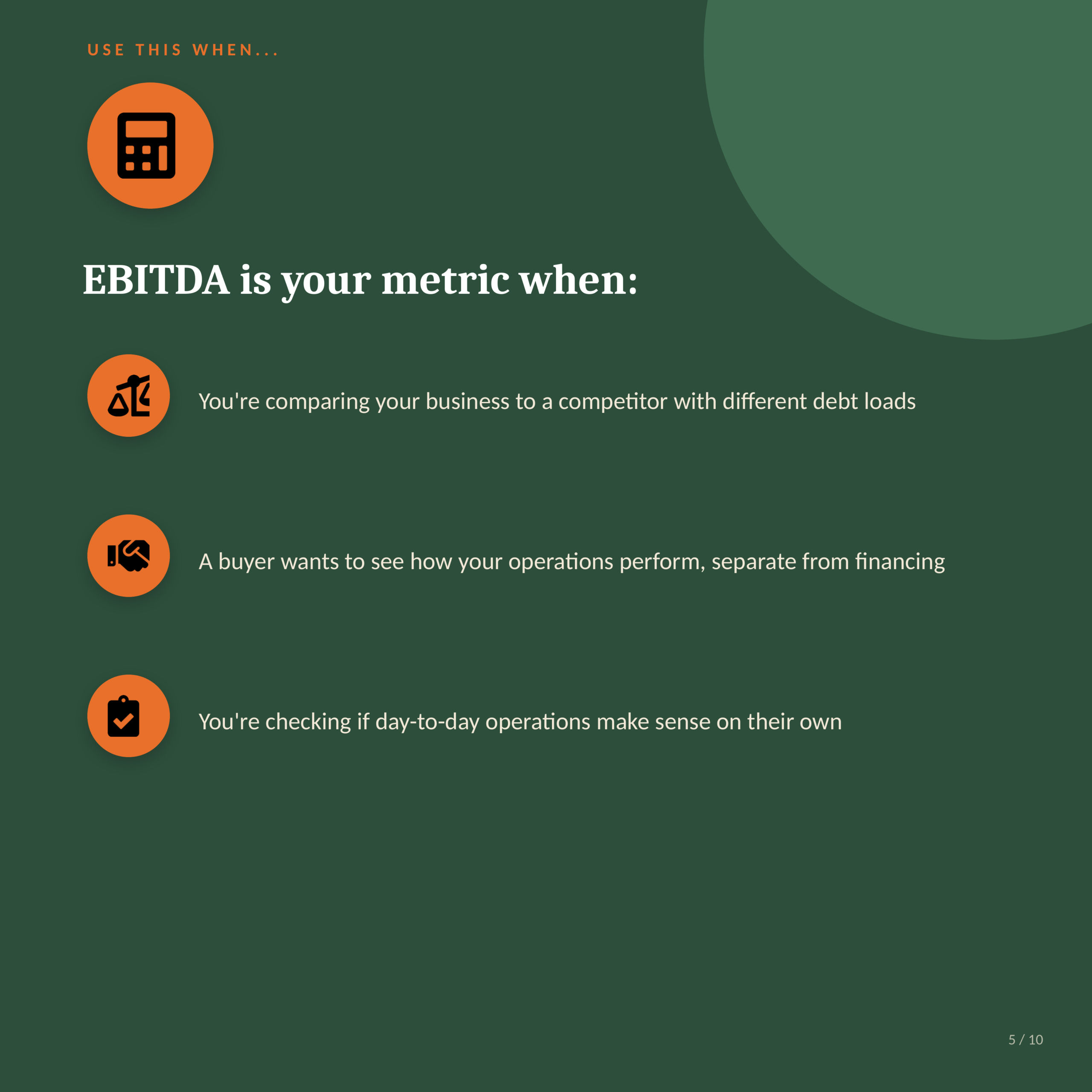
EBITDA strips all of that away and asks a narrower question: how well does the core engine of this business actually run? It’s a measure of operational performance — are you selling well, pricing well, and controlling day-to-day costs — completely separate from how you’ve chosen to finance the business or how the tax code treats your assets.
That’s genuinely useful information. It’s why lenders, investors, and buyers lean on EBITDA so heavily — it lets them compare businesses apples-to-apples, without one company’s aggressive equipment financing or another’s tax strategy muddying the picture.
But here’s the catch: EBITDA is a performance metric, not a cash metric. It was never designed to tell you what’s actually sitting in your bank account.
What Net Income Actually Tells You
Net Income is the number left standing after everything has been paid — interest, taxes, depreciation, amortization, and every other expense on the books. It’s the bottom line in the truest sense.
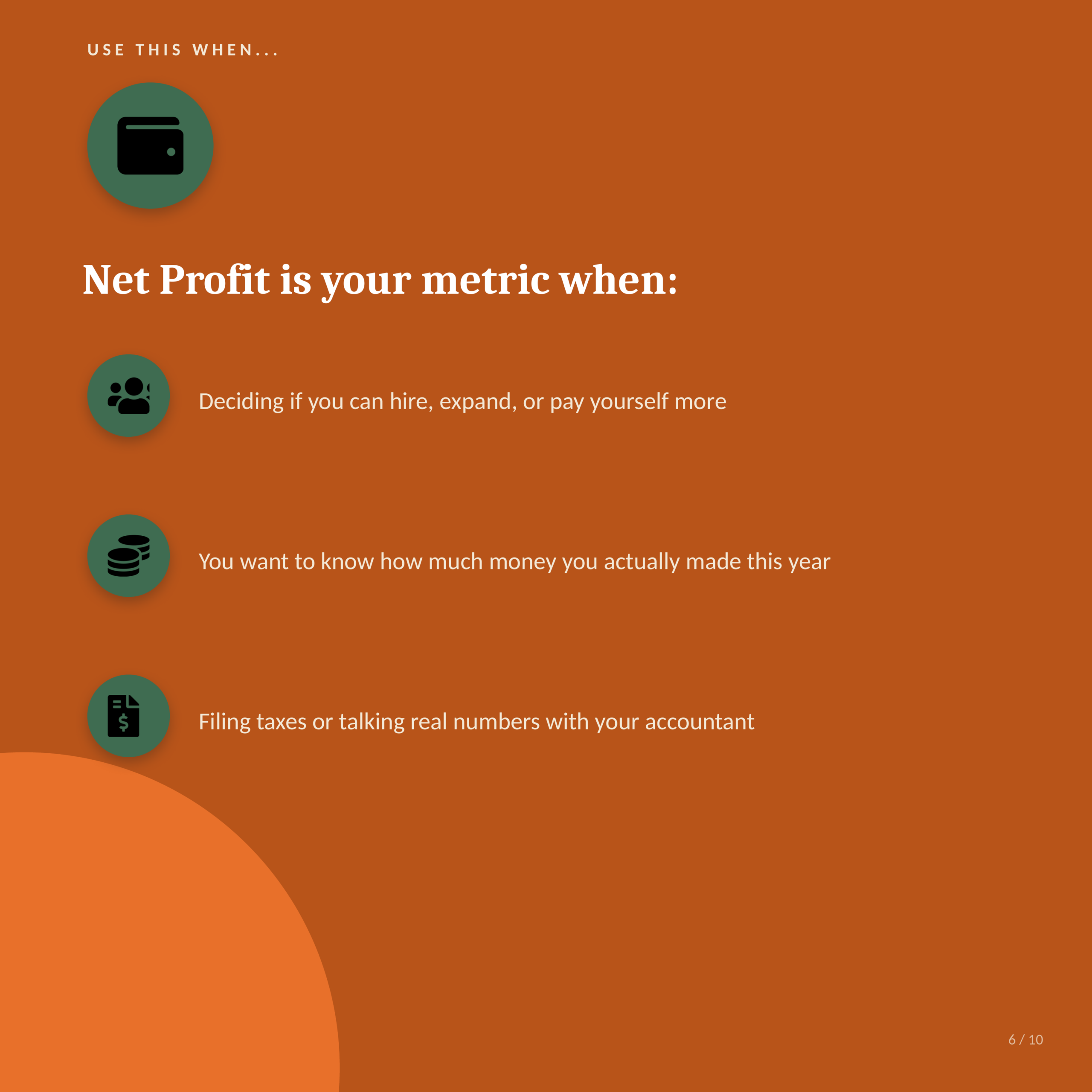
This is the number that answers the question owners actually care about at 11pm on a Sunday: Did we really make money this year — or did we just move a lot of money around?
If EBITDA is about how fast the treadmill is spinning, Net Income is about whether you’re actually getting anywhere.
Where Owners Get Tripped Up
Here’s the scenario that catches so many business owners off guard.
You take out a loan to buy a new truck, a piece of equipment, or a fleet upgrade. Business is humming. Sales are strong. Crews are efficient. Your EBITDA looks fantastic — because EBITDA doesn’t care that you just took on a five-year loan.
Then the loan payments start hitting. Principal and interest, month after month. Suddenly, after everything is paid, there’s barely anything left over. Maybe nothing at all.
On paper, according to EBITDA, the business looks healthy — even thriving. But your bank account is telling you a much tighter story. That gap between “the business looks great” and “I can’t sleep at night” is almost always a gap between EBITDA and Net Income.
This isn’t a one-time trap, either. It shows up again and again:
- Growth-stage companies taking on debt to scale, whose EBITDA climbs while Net Income stays flat or shrinks under the weight of new financing.
- Equipment-heavy businesses — construction, manufacturing, logistics — where depreciation and loan payments quietly eat every dollar of operational profit.
- Owners preparing to sell, who get excited by a strong EBITDA multiple without stress-testing what actual cash flow looks like once debt service is layered back in.
In every one of these cases, the business isn’t necessarily doing anything wrong. But if the owner is only watching EBITDA, they’re flying with half the instrument panel covered up.
Why You Can’t Just Pick One
It might be tempting to say “fine, I’ll just track Net Income then — that’s the real number.” But that’s a mistake in the other direction.
Net Income can mask a genuinely healthy operation. A single large depreciation write-off, an aggressive tax strategy, or a one-time interest expense can drag Net Income down in a year when the actual operations of the business were excellent. If you only watch Net Income, you might panic and cut costs, freeze hiring, or turn down growth opportunities — when the real story is that operations are fine and the noise is coming from financing or accounting decisions.
That’s the real lesson here: EBITDA and Net Income aren’t competing metrics. They’re complementary ones. Each one is incomplete without the other.
- EBITDA tells you whether the core business — the sales, the service delivery, the day-to-day cost control — is fundamentally sound.
- Net Income tells you whether the way you’ve structured debt, taxes, and asset purchases is letting that operational strength actually show up as money in the bank.
Read together, they tell you the full story: is the engine strong, and is the rest of the machine built well enough to let that strength reach you?
A Simple Way to Think About It
Picture two business owners, both with the exact same operations — same revenue, same margins, same team. One financed their equipment with a large loan; the other paid cash and owns everything outright.
Their EBITDA will look nearly identical, because EBITDA ignores financing decisions entirely.
Their Net Income will look completely different, because one of them is sending a five-figure check to the bank every month and the other isn’t.
Neither number is “wrong.” They’re just answering different questions. The owner who only checks EBITDA might feel confident going into a slow season. The one also watching Net Income knows exactly how much breathing room they actually have.
The Bottom Line
→ EBITDA tells you if your operations are strong.
→ Net Income tells you if you can actually sleep at night.
You need both numbers, looked at side by side, to get a true read on your business. EBITDA without Net Income can give you false confidence. Net Income without EBITDA can obscure genuine operational strength behind financing noise. Together, they’re how you separate “we had a great year on paper” from “we had a great year, period.”
So — have you ever had a great year on paper that didn’t feel like it in your bank account? If so, it might be time to start looking at both numbers side by side, every month, not just at tax time.