
How to Turn EBITDA into Cash Flow: The Number That Really Matters
One of the most common questions I hear from business owners is:
“Our EBITDA looks great, so why does cash always feel tight?”
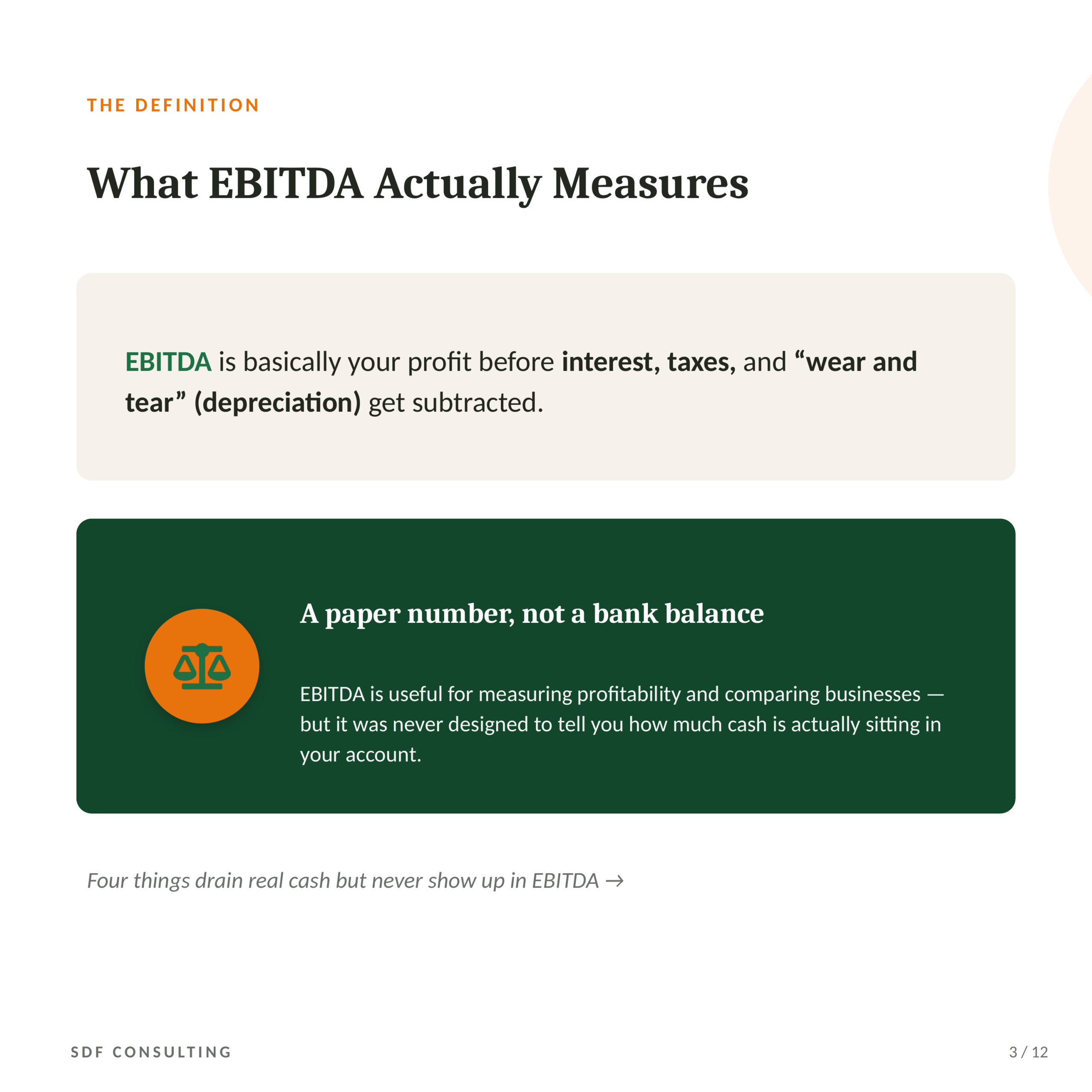
The answer is simple but important: EBITDA measures profitability, not cash flow. While EBITDA is a useful indicator of operating performance, it was never designed to tell you how much cash is actually available to run the business, invest in growth, or pay yourself.
A business can report strong EBITDA and still experience constant cash pressure. Understanding why is one of the most important financial skills a business owner can develop.
EBITDA Is Only Part of the Story
EBITDA, or Earnings Before Interest, Taxes, Depreciation, and Amortization, provides a view of how profitable a company’s operations are before financing decisions, taxes, and certain accounting adjustments are considered.
Because it focuses on operating performance, EBITDA is widely used by investors, lenders, and business owners to compare companies. However, it does not capture several major demands on cash that every business must fund.
As a result, EBITDA often looks significantly better than the actual cash available in the bank.
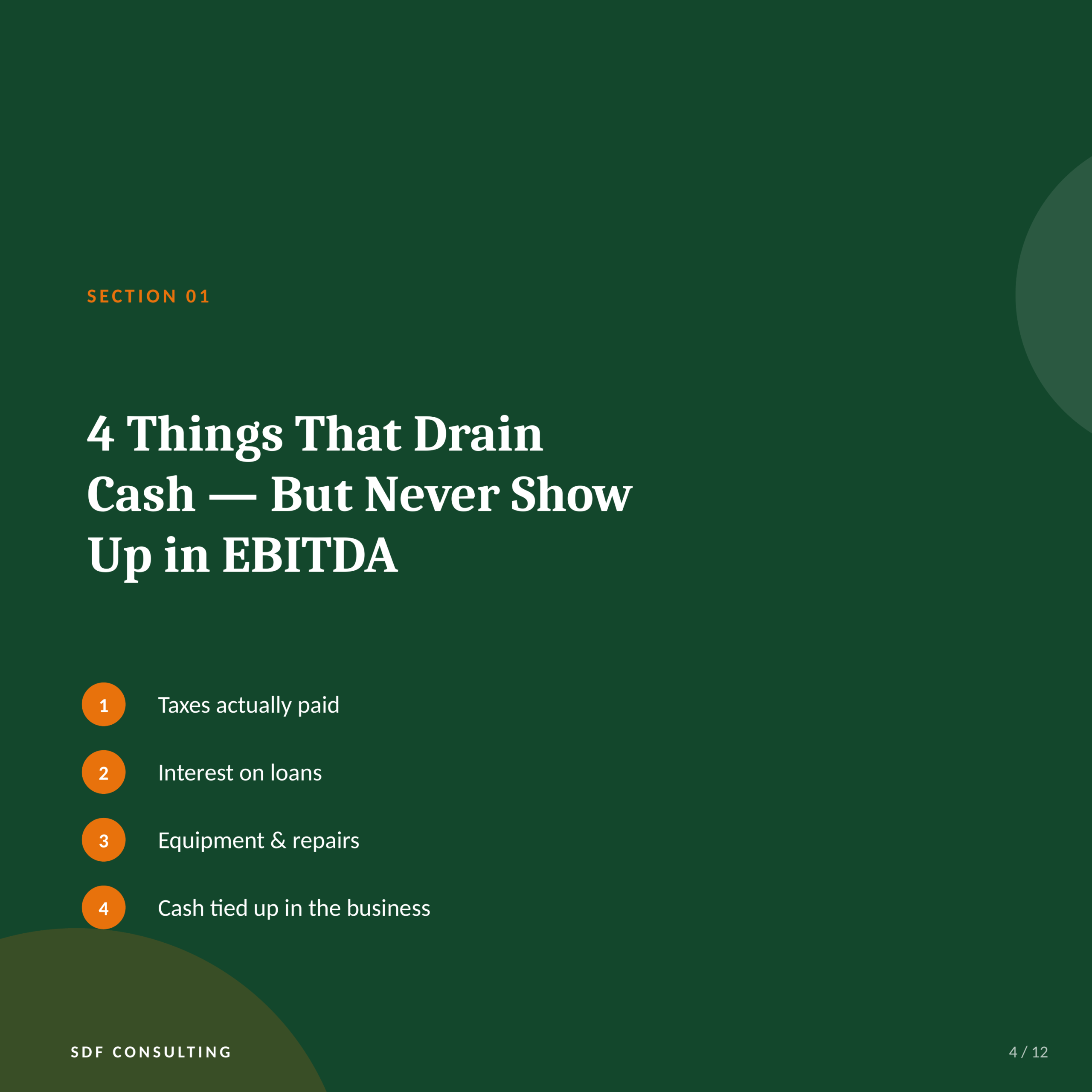
Four Major Uses of Cash That EBITDA Ignores
- Taxes Paid
EBITDA excludes taxes entirely. Yet taxes are a very real cash outflow that reduces the money available to the business.
What matters is not the tax expense recorded on financial statements, but the actual cash paid to tax authorities. As profitability grows, these payments can become substantial and significantly impact cash flow.
- Interest on Debt
EBITDA also ignores interest expense.
Whether it’s a term loan, equipment financing, or a line of credit, lenders are paid with cash, not EBITDA. For leveraged businesses, debt servicing can consume a meaningful portion of operating cash flow, limiting flexibility and reducing funds available for growth.
- Capital Expenditures and Major Repairs
Most businesses must continually invest in equipment, technology, facilities, and infrastructure to maintain operations and remain competitive.
Replacing vehicles, upgrading machinery, renovating facilities, or making major repairs all require cash. While many of these expenditures do not directly impact EBITDA, they have an immediate impact on the bank account.
A company may report excellent EBITDA while spending significant amounts simply to maintain its operating capacity.
- Working Capital Requirements
Perhaps the biggest cash drain is money tied up in the business itself.
When customers take longer to pay, accounts receivable increase. When inventory levels rise, more cash becomes locked in stock sitting on shelves. Even highly profitable growth can create cash pressure because the business must fund receivables and inventory before it collects cash from customers.
This is why many fast-growing companies experience cash shortages despite reporting record profits.
The Formula That Matters
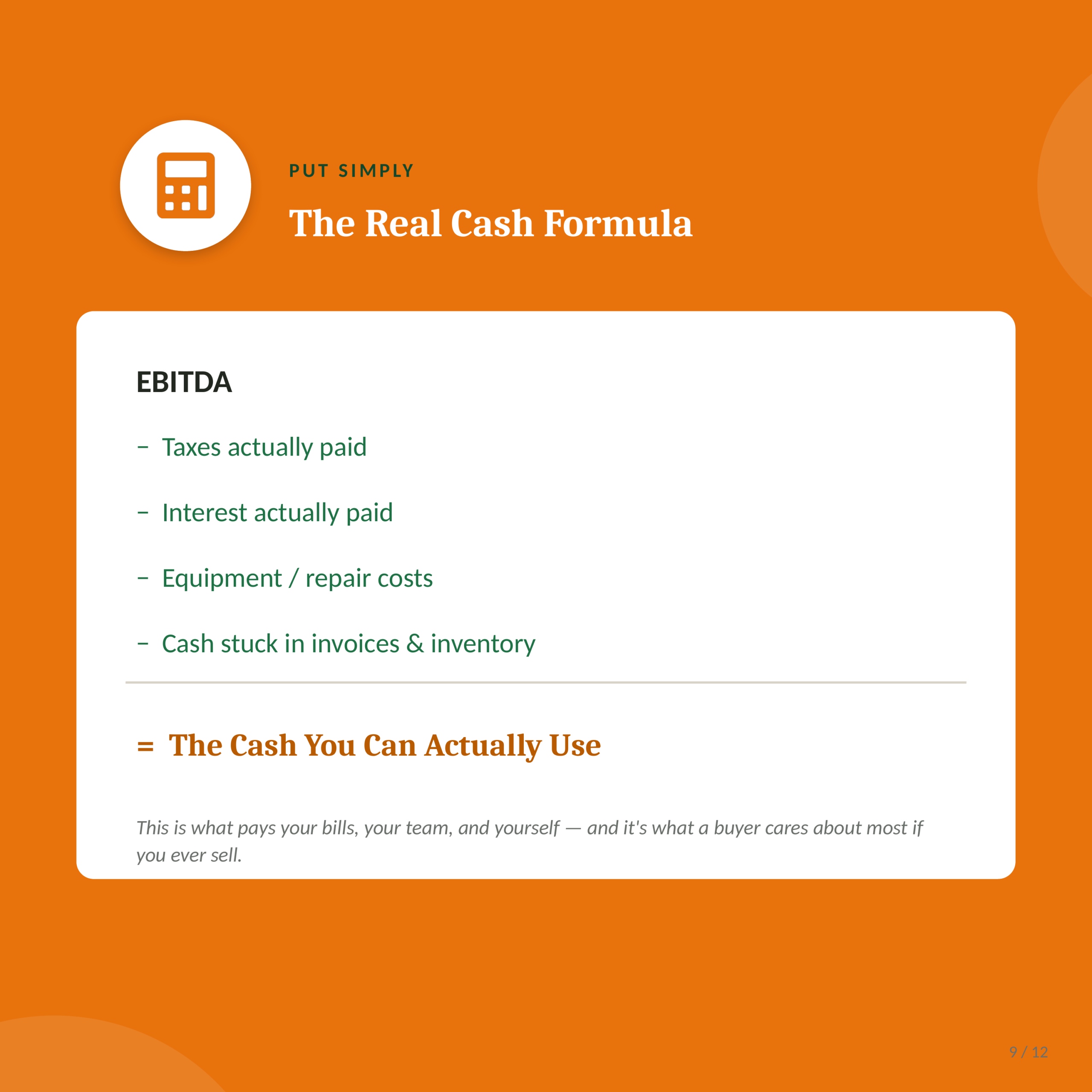
To understand how much cash a business truly generates, leaders should think beyond EBITDA:
EBITDA
– Taxes Paid
– Interest Paid
– Capital Expenditures
– Additional Working Capital Requirements
= Free Cash Flow
Free cash flow is the amount of cash left over to reduce debt, reward shareholders, build reserves, fund acquisitions, or reinvest in growth.
In other words, it is the cash that creates strategic flexibility.
Why Cash Conversion Matters
Sophisticated investors and acquirers rarely stop at EBITDA. They want to understand how efficiently a business converts earnings into cash.
Two companies can generate the same EBITDA, yet one may convert 90% of it into free cash flow while the other converts only 40%. From a valuation and risk perspective, those are very different businesses.
Ultimately, buyers are not purchasing accounting profits. They are purchasing future cash flow.
Final Thought
EBITDA is an important measure of performance, but it is only the starting point. The strongest businesses are not necessarily the ones with the highest EBITDA. They are the ones that consistently convert EBITDA into cash.
Because at the end of the day, profitability may look good on paper, but cash is what pays employees, funds growth, survives downturns, and creates real business value.
The key question every owner should be asking is not, “What was our EBITDA?” but rather, “How much of our EBITDA actually turned into cash?”